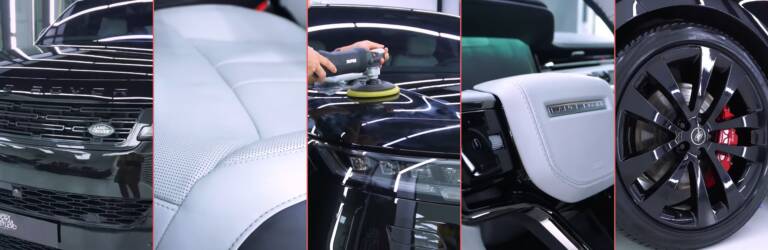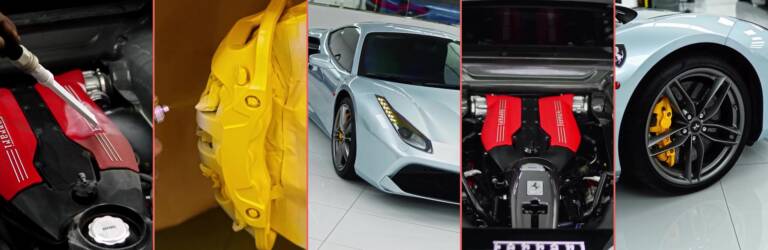
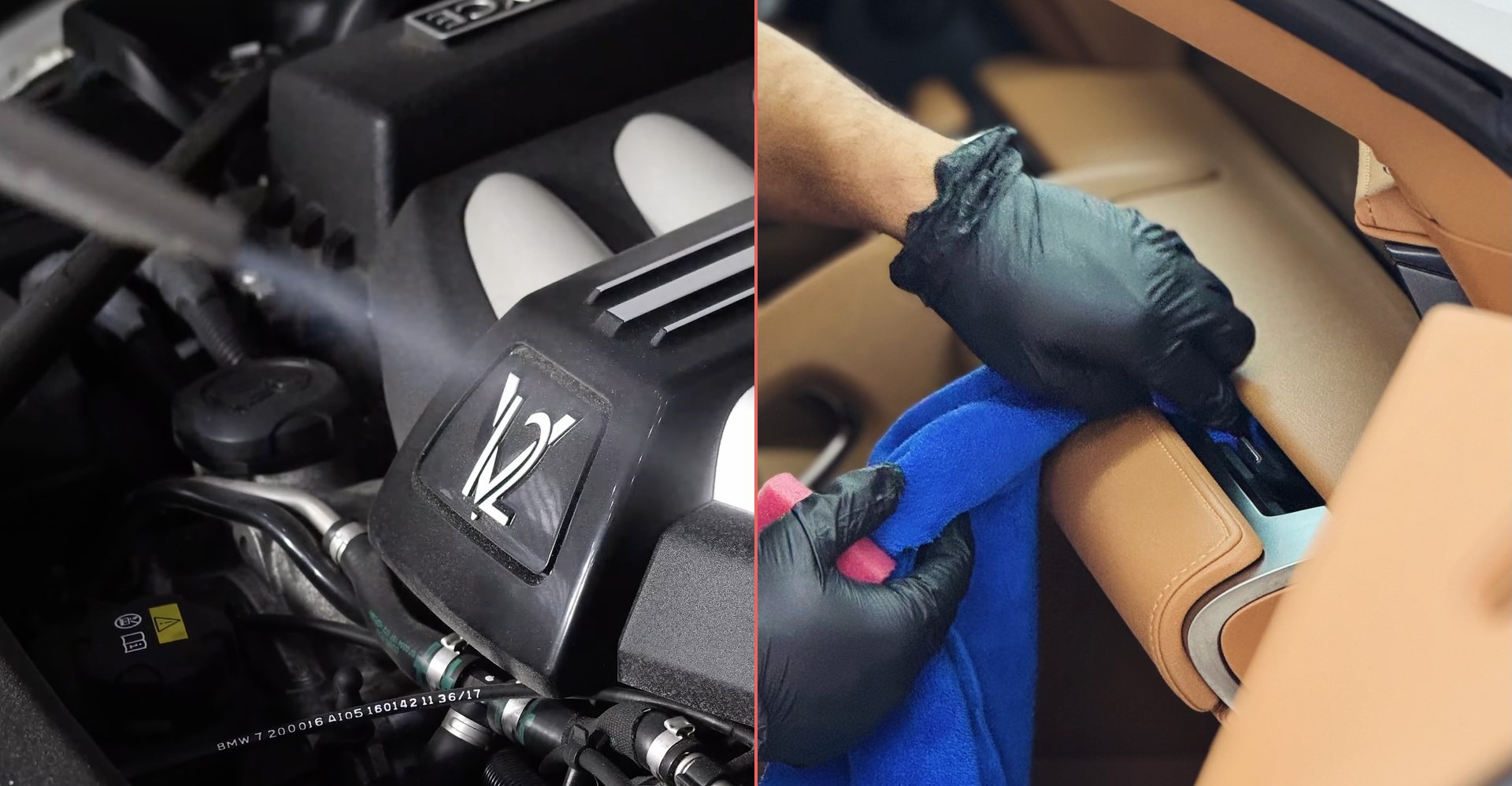
Dry ice cleaning and steam cleaning are both deep cleaning methods for cars, but they solve different problems. Dry ice is better for engine bays, underbodies and anywhere near electrics, because it cleans with frozen CO2 and leaves no moisture behind. Steam is better for interior fabric and upholstery, because heat and a little moisture lift stains, sanitise surfaces and remove odours. On most cars in Dubai, the best result uses both, each where it works best.
Jump to section · 13 parts
- What is dry ice cleaning?
- What is steam cleaning?
- Dry ice vs steam cleaning: side by side
- When is dry ice the better choice?
- When is steam the better choice?
- What are the downsides of each method?
- Is dry ice cleaning safe for paint, PPF and ceramic coatings?
- Why does the choice matter more in Dubai?
- Watch dry ice and steam cleaning on real cars
- How does Apex Detail Studio decide which to use?
- How much does dry ice or steam cleaning cost?
- What our detailing customers say
- Frequently asked questions
Want this done on your car? See our dry ice cleaning in Dubai service for what we clean, how long it takes and a quote on WhatsApp.
Owners often ask us which one is “better”. The honest answer is that it depends on which part of the car you are cleaning. This guide explains how each method works, where each one wins, where each one can cause problems, and how we decide at our Al Quoz studio.
Not sure which your car needs? WhatsApp us your model and a photo of the area, and the team will tell you which method suits it.
What is dry ice cleaning?
Dry ice cleaning (also called dry ice blasting) fires small pellets of solid carbon dioxide at a surface using compressed air. The pellets are around minus 78.5°C. Three things happen when they hit dirt:
- Thermal shock: the extreme cold makes grime, grease and road film brittle, so it cracks and loses its grip on the surface underneath.
- Impact: the pellets knock the brittle layer loose without the grinding effect of sand or grit.
- Sublimation: the dry ice turns straight from solid to gas, expanding rapidly and lifting dirt away. Nothing is left behind except the dirt itself.
Because there is no water and no chemical, dry ice can be used on wiring looms, sensors, connectors, aluminium castings and suspension parts that you would never want to soak. That is why it has become the preferred method for engine bays and underbodies on high-end cars. We cover the method in more depth in our guide to dry ice detailing in Dubai.
What is steam cleaning?
Steam cleaning uses a machine that heats water into pressurised vapour and releases it through a fine nozzle. Professional units produce “dry” steam with a low water content, so surfaces get hot and slightly damp rather than wet. The heat softens and dissolves grease, sticky spills and body oils, and it kills most bacteria and odour-causing microbes on contact.
Steam is gentle on fabric fibres and works its way into seams, stitching, air vents, seat rails and cupholders where brushes struggle. Paired with a microfibre towel or extractor, it lifts dirt out of upholstery and carpets rather than pushing it deeper. For cars that carry children, pets or food, steam is one of the most effective ways to make a cabin hygienic again.
Dry ice vs steam cleaning: side by side
| Factor | Dry ice cleaning | Steam cleaning |
|---|---|---|
| How it cleans | Frozen CO2 pellets, cold shock and impact | Hot, low-moisture vapour that dissolves grime |
| Moisture left behind | None | Small amount, dries quickly |
| Chemicals needed | None | Usually none, sometimes a mild cleaner for stains |
| Best areas | Engine bay, underbody, wheel arches, suspension, chassis | Seats, carpets, mats, headliner edges, vents, door cards |
| Safe near electrics | Yes, it is non-conductive and dry | With care only, moisture must be kept away |
| Sanitising and odours | Limited | Excellent, heat kills bacteria and removes smells |
| Fabric stains | Not suitable | Very effective |
| Baked-on grease and road tar | Very effective | Good on light grease, slower on heavy build-up |
| Equipment | Blasting machine, compressed air, ventilated space | Steam unit, towels, often an extractor |
| Typical use | Restoration, concours prep, engine and underbody detailing | Interior deep clean and sanitisation |
When is dry ice the better choice?
Choose dry ice when the area is mechanical, electrical or hard to dry. In practice that means:
- Engine bays: oil mist, sand and baked grime come off covers, hoses and castings without water near the electrics. See our engine bay cleaning guide.
- Underbodies and wheel arches: Dubai sand and road film build up in places a pressure washer only pushes around. Dry ice lifts it without forcing water into joints and bushings.
- Suspension and brake components: it cleans around calipers, arms and subframes so they can be inspected or protected.
- Classic and collector cars: where originality matters and water could start corrosion. Read how we approach dry ice restoration on classic cars.
Here is what that looks like on a V12 engine bay in our studio.
You can read the full story of that car in our Aston Martin Rapide PPF and dry ice article.
When is steam the better choice?
Choose steam when the area is soft, absorbent or needs sanitising:
- Fabric seats and carpets: steam loosens coffee, juice and sweat stains so they can be extracted.
- Floor mats and boot liners: heat breaks down ground-in dirt and kills bacteria.
- Air vents, seat rails and cupholders: steam reaches gaps where dust and sticky residue collect.
- Alcantara and suede-type trims: a light pass of steam, used carefully, refreshes the nap and removes trapped dirt. We used this on the inserts during our Lancia Delta Integrale restoration.
- Odour removal: smoke, food and pet smells live in fibres, and heat is one of the few things that reaches them.
Leather is a special case. Short, controlled steam can help lift grime from textured leather, but too much heat or moisture dries it out. On leather we usually rely on dedicated leather cleaners and conditioners, as in our GMC Denali leather restoration.
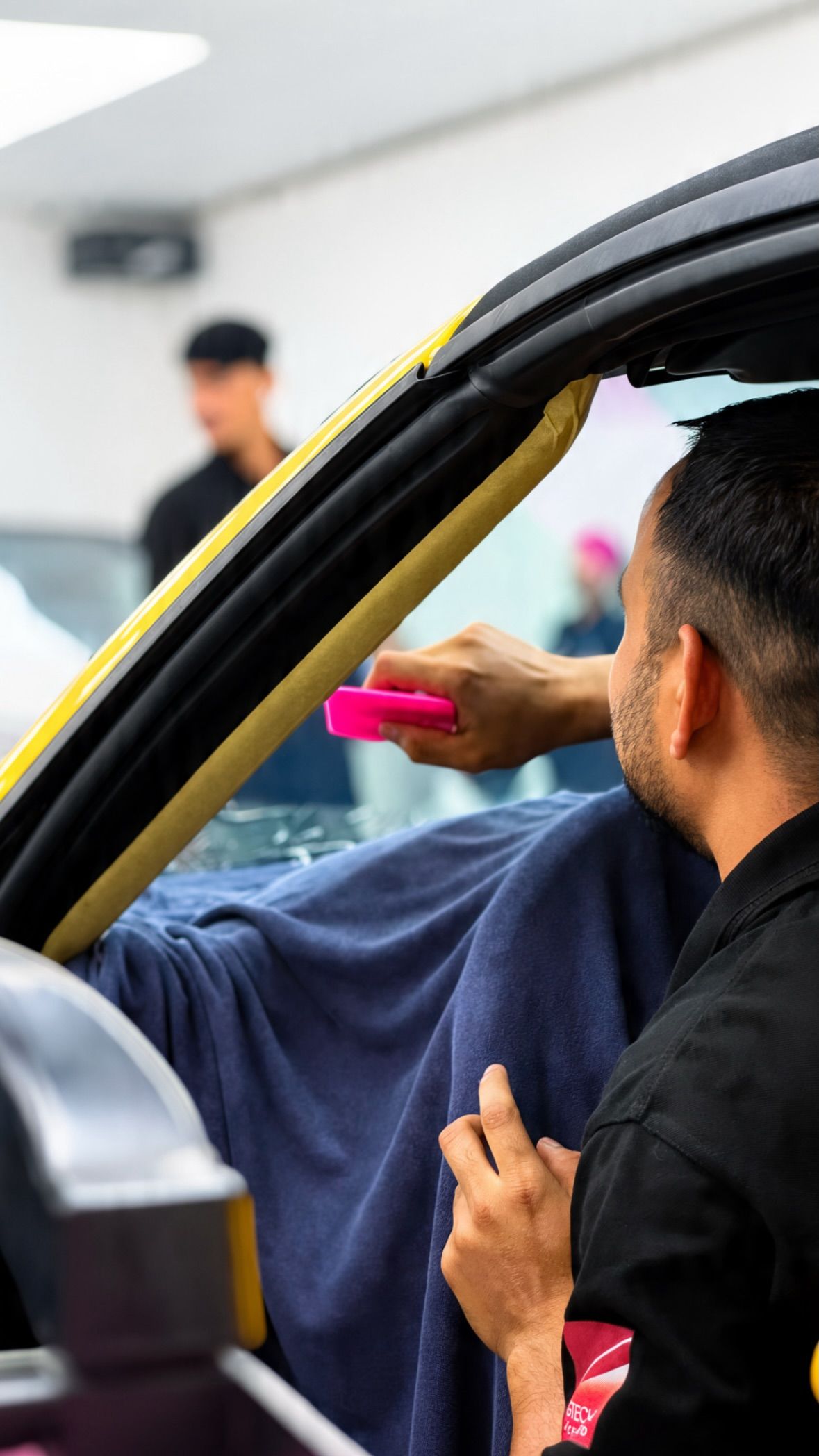
Book a deep clean
Send your model and a few photos on WhatsApp and the team will reply with a quote.
What are the downsides of each method?
Neither method is perfect, and a good detailer knows the limits of both.
Dry ice:
- It does not sanitise fabric or remove deep stains from upholstery.
- It needs specialist equipment, a strong air supply and a ventilated workspace, because the CO2 gas has to disperse safely.
- It is loud, and it costs more to run than steam.
- Used carelessly on thin, soft or already failing paint, it can lift weak finishes. Pressure and pellet size must be set to the surface.
Steam:
- Moisture near electrics, airbag modules or seat sensors is a risk if the operator is careless.
- Too much heat can soften adhesives (headliners are the classic example), warp thin plastics or dry out leather.
- It is slow on thick grease and baked-on deposits in engine bays.
- Fabric must be dried properly, or a damp cabin in Dubai humidity can develop a musty smell.
Is dry ice cleaning safe for paint, PPF and ceramic coatings?
On sound factory paint, dry ice at the correct pressure is non-abrasive and safe. On paint protection film and ceramic coatings we are more conservative: we lower the pressure, keep a distance, and avoid film edges so we never lift an edge or stress the coating. For general bodywork, a proper hand wash is still the right tool. Dry ice earns its cost on the areas a wash cannot reach.
Why does the choice matter more in Dubai?
The UAE climate is hard on both the outside and the inside of a car. Fine sand works its way into engine bays, wheel arches and underbodies, where it mixes with oil and heat into a crust that water and soap struggle to move. That is dry ice territory. Inside, cabin temperatures in summer bake spills into fabric, and the air conditioning recirculates dust and bacteria through the vents. That is where steam does its best work. Most cars here benefit from dry ice underneath and steam inside. You can read more about the local case for dry ice in 5 benefits of dry ice cleaning in Dubai.
Watch dry ice and steam cleaning on real cars
These are full jobs from our Al Quoz studio, filmed for the Apex Detail Studio YouTube channel. The dry ice videos show engine bays and underbodies being cleaned with no water. The Bentley video shows steam doing its job inside the cabin.
Dry ice cleaning
Steam cleaning
In this Bentley Continental interior detail, high-temperature steam is used to sanitise the cabin and break down grime, alongside soft brushes for the delicate trim.
How does Apex Detail Studio decide which to use?
We inspect the car first and plan by area, not by method:
- Engine bay: dry ice, then dressing for plastics and rubber.
- Underbody, arches and suspension: dry ice, often before PPF or a protective coating so the surfaces underneath start clean.
- Cabin fabric, carpets and mats: steam and extraction, then fully dried.
- Leather: dedicated leather cleaning and conditioning, with steam only where it helps.
- Paintwork: a safe hand wash, then paint correction or protection if the car needs it.
If you want to compare dry ice with conventional washing and degreasing, our article on dry ice vs traditional car detailing covers that side.
How much does dry ice or steam cleaning cost?
At Apex Detail Studio, dry ice and steam cleaning are quoted per car. The price depends on the size of the vehicle, its condition, and which areas you want cleaned: an engine bay alone is a very different job from a full underbody and interior. Send your car’s details on WhatsApp to +971 58 549 2739 and the team will reply with a figure.
Your car's stay at Apex
How it works
- 1
Book
Message us on WhatsApp. No deposit needed to book.
- 2
Drop off or collection
Bring the car to Al Quoz, or we collect it from anywhere in Dubai.
- 3
The work
Done by hand in our studio, with the car kept indoors.
- 4
Handover
We walk you through the result and the aftercare.
Open every day except Friday. Visits by appointment.
What our detailing customers say
Frequently asked questions
Is dry ice cleaning better than steam cleaning?
Neither is better overall. Dry ice is better for engine bays, underbodies and anywhere near electrics because it leaves no moisture. Steam is better for fabric seats, carpets and sanitising the cabin.
Can steam cleaning damage my engine?
Steam used carelessly can push moisture into connectors, sensors and fuse boxes. That is why we use dry ice for engine bays instead.
Does dry ice cleaning leave any residue?
No. The dry ice turns into gas on contact, so only the loosened dirt is left to remove. There is no water and no chemical residue.
Can dry ice be used on car interiors?
It can be used on some hard interior surfaces, but it does not remove stains from fabric or kill bacteria in upholstery. Steam and extraction are the better tools for most interiors.
Does steam cleaning remove bad smells from a car?
Yes. Heat reaches the bacteria and residues that cause smells in fabric, carpets and vents. Severe smoke odours may need further treatment after steaming.
How long does a dry ice engine bay clean take?
Most engine bays take a few hours including preparation, masking and dressing. Larger or very dirty engines take longer, and we confirm timing when we quote.
Where can I get dry ice or steam cleaning in Dubai?
Apex Detail Studio offers both at our studio in Al Quoz. WhatsApp +971 58 549 2739 to book or ask for a quote.