
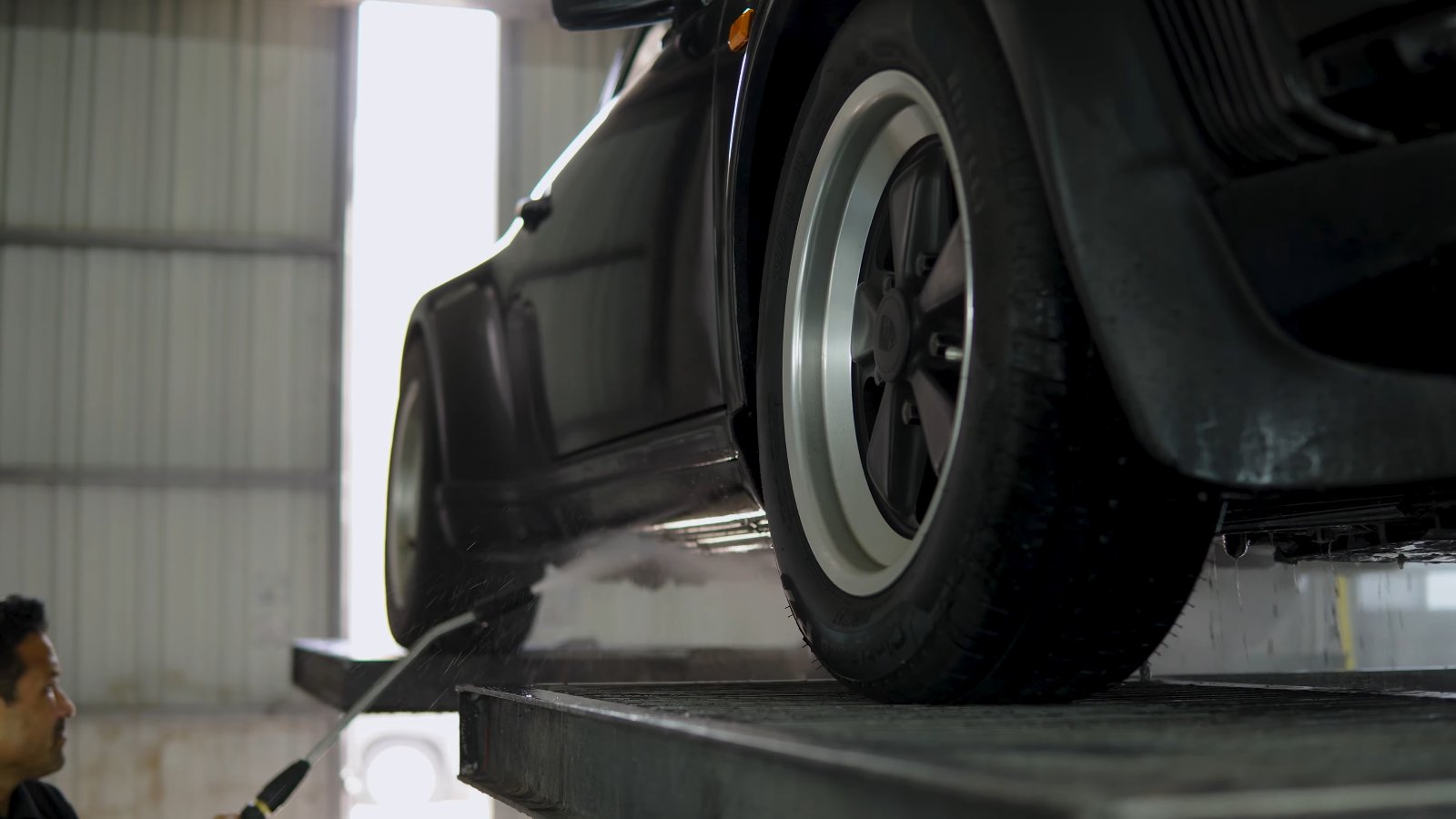
Dry ice cleaning in Dubai. Nothing left behind.
Engine bays, underbodies, arches and brakes cleaned with dry ice at our Al Quoz studio. No water, no chemicals, no residue.
Dry ice cleaning, in short.
Dry ice cleaning (also called dry ice blasting or dry ice detailing) cleans a car with pellets of frozen CO2 fired by compressed air. The pellets crack grime loose and turn straight to gas, so there is no water, no chemical and no residue. At Apex Detail Studio in Al Quoz, Dubai, we use it on engine bays, underbodies, wheel arches, suspension and brakes, on everything from daily drivers and EVs to classics and supercars.
- Service
- Dry ice cleaning and dry ice blasting for cars
- Areas cleaned
- Engine bay, underbody, sills, wheel arches, suspension, brakes
- Method
- Frozen CO2 pellets at about minus 78.5°C. No water, no chemicals
- Safe on
- Electrics, sensors, rubber, seals, trim, classics and EVs
- Time
- Engine bay: a few hours. Full underbody: usually a day or less
- Price
- Engine bay from AED 750 + VAT. Underbody and full jobs quoted per car
Where water can’t go, dry ice can.
Dubai sand mixes with oil and heat into a crust under the car and around the engine. A pressure washer pushes it around and forces water into joints, bushings and connectors. Dry ice lifts it off and turns to gas, so there is nothing left to dry.
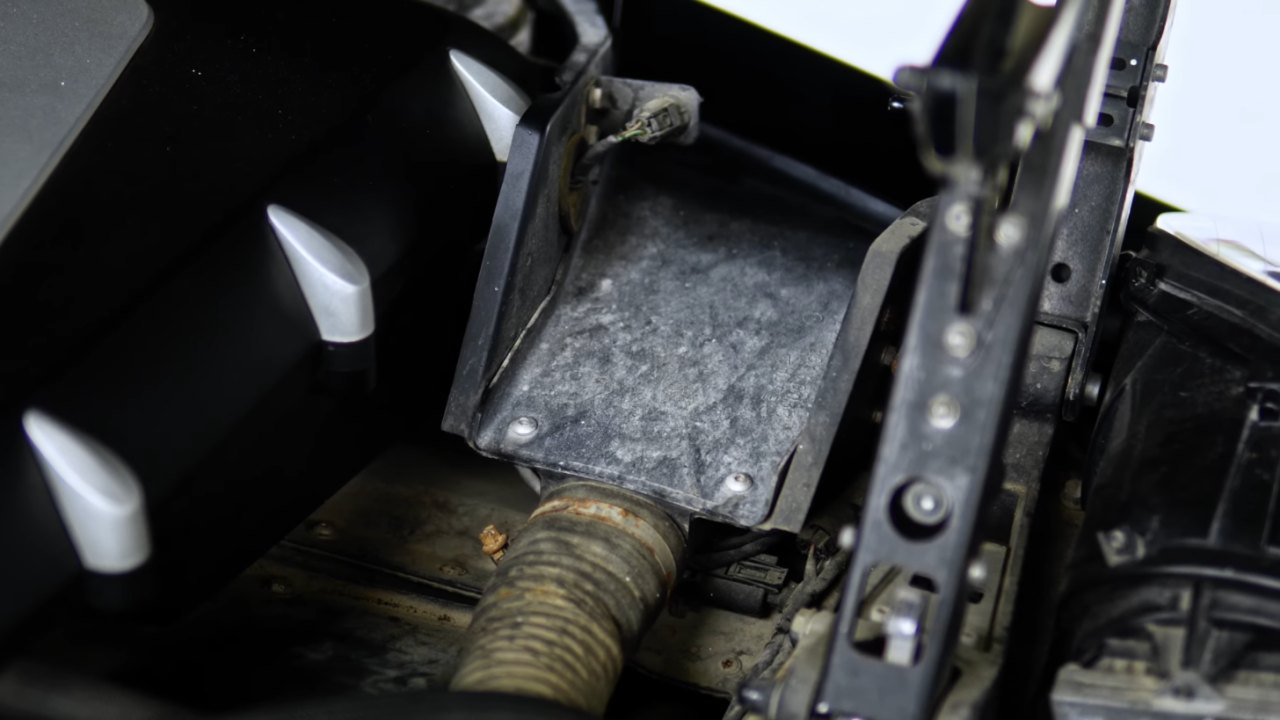 Before
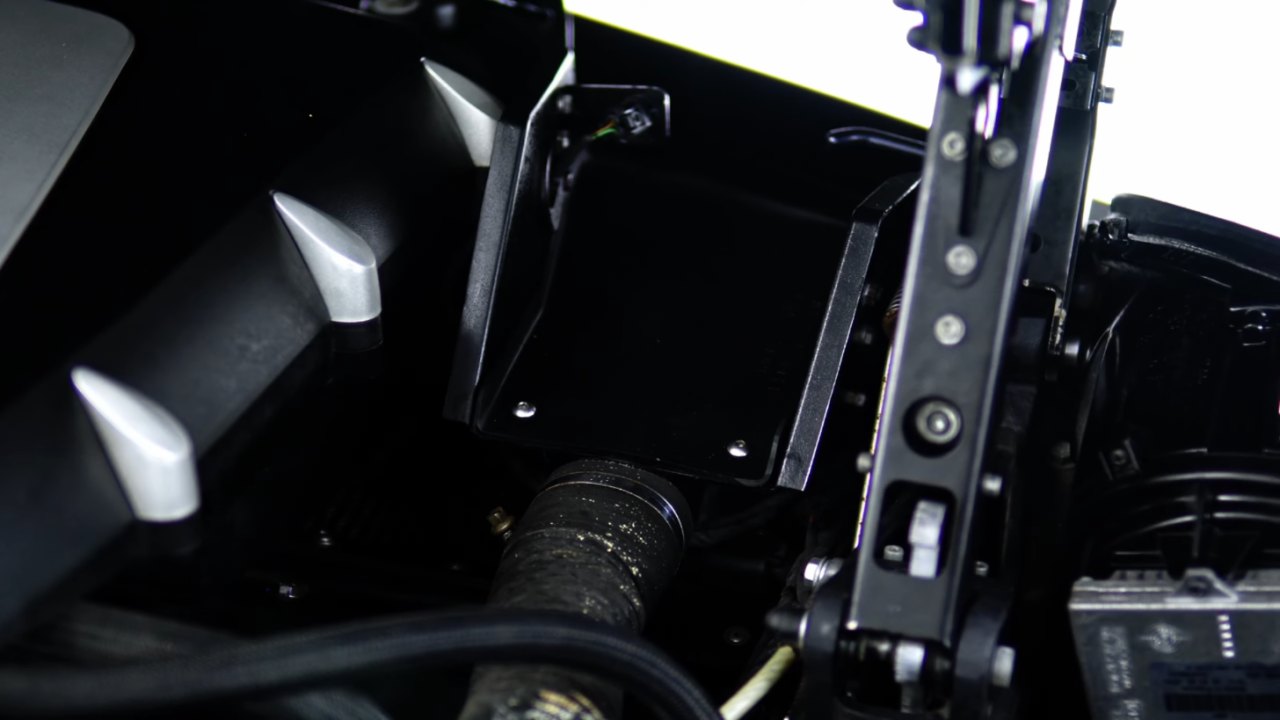 After
AfterMercedes-Benz SLR McLaren. The same air box before and after dry ice. No water, no chemicals.
Grime off. Nothing left behind.
The engine bay of a Mercedes-Benz SLR McLaren, before and after dry ice. Drag across to compare.
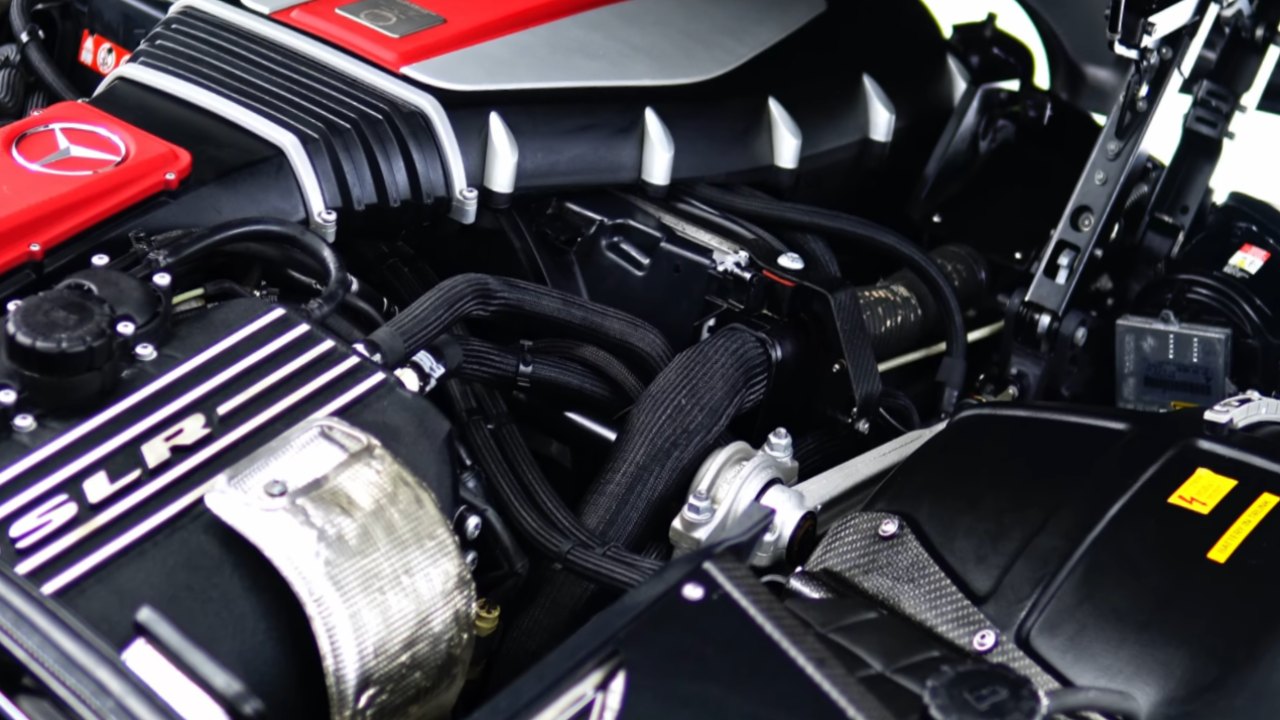
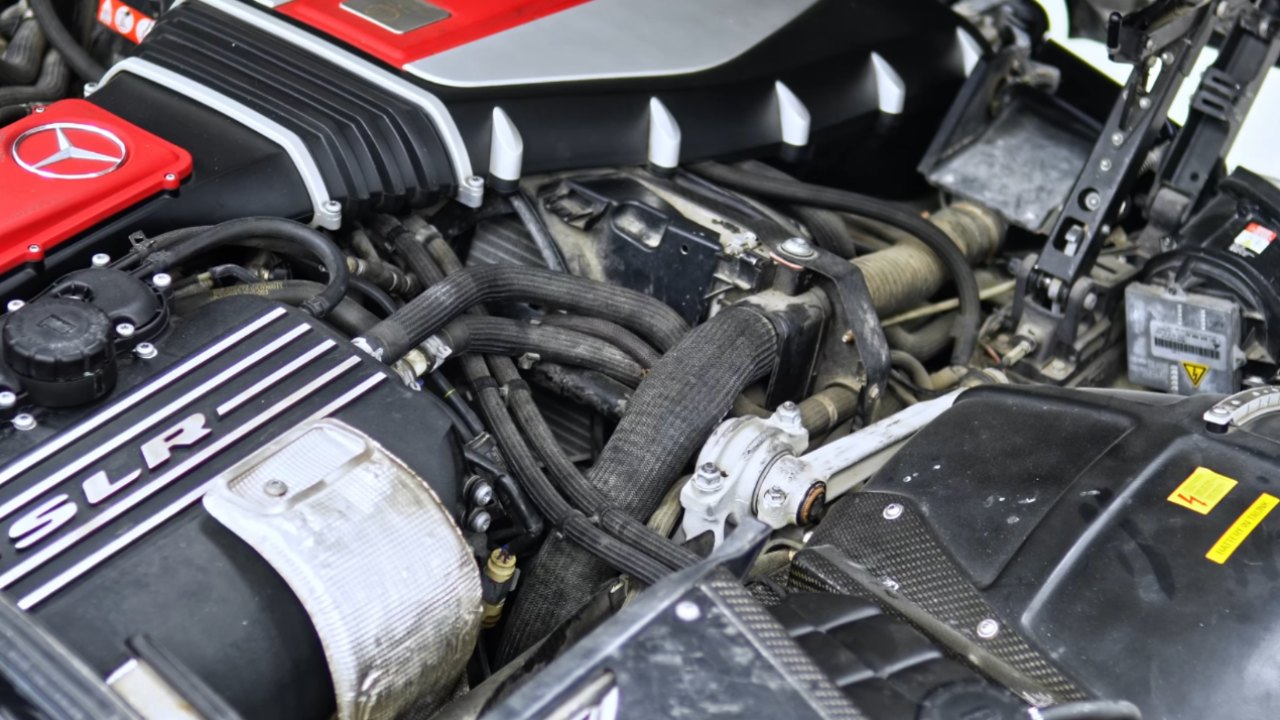 Before
After
Before
After
At around minus 78.5°C, the pellets make grease, grime and road film brittle, so it cracks and loses its grip.
Compressed air carries the pellets in and knocks the brittle layer loose, without the grinding of sand or grit.
The dry ice turns straight to gas and expands, lifting the dirt away. Nothing is left except the dirt itself.
Dry ice vs the alternatives.
How dry ice cleaning compares with pressure washing and steam cleaning on the parts of a car that matter most in Dubai.
| Dry ice | Pressure wash | Steam | |
|---|---|---|---|
| Water used | None | A lot | A little |
| Chemicals | None | Usually degreaser | Sometimes |
| Safe near electrics | Yes, dry and non-conductive | Risky | With care |
| Residue left | None | Water and chemical | Moisture |
| Drying time | None | Hours | Short |
| Best for | Engine bays, underbodies, arches, brakes | Bodywork and wheels | Fabric, carpets, cabin |
The full comparison, with real jobs: dry ice vs steam cleaning
What we clean.
Dry ice cleaning earns its keep on the parts a wash can’t reach. Pick one area or have the whole car done.
Cars we have dry ice cleaned
Real cars, real jobs.
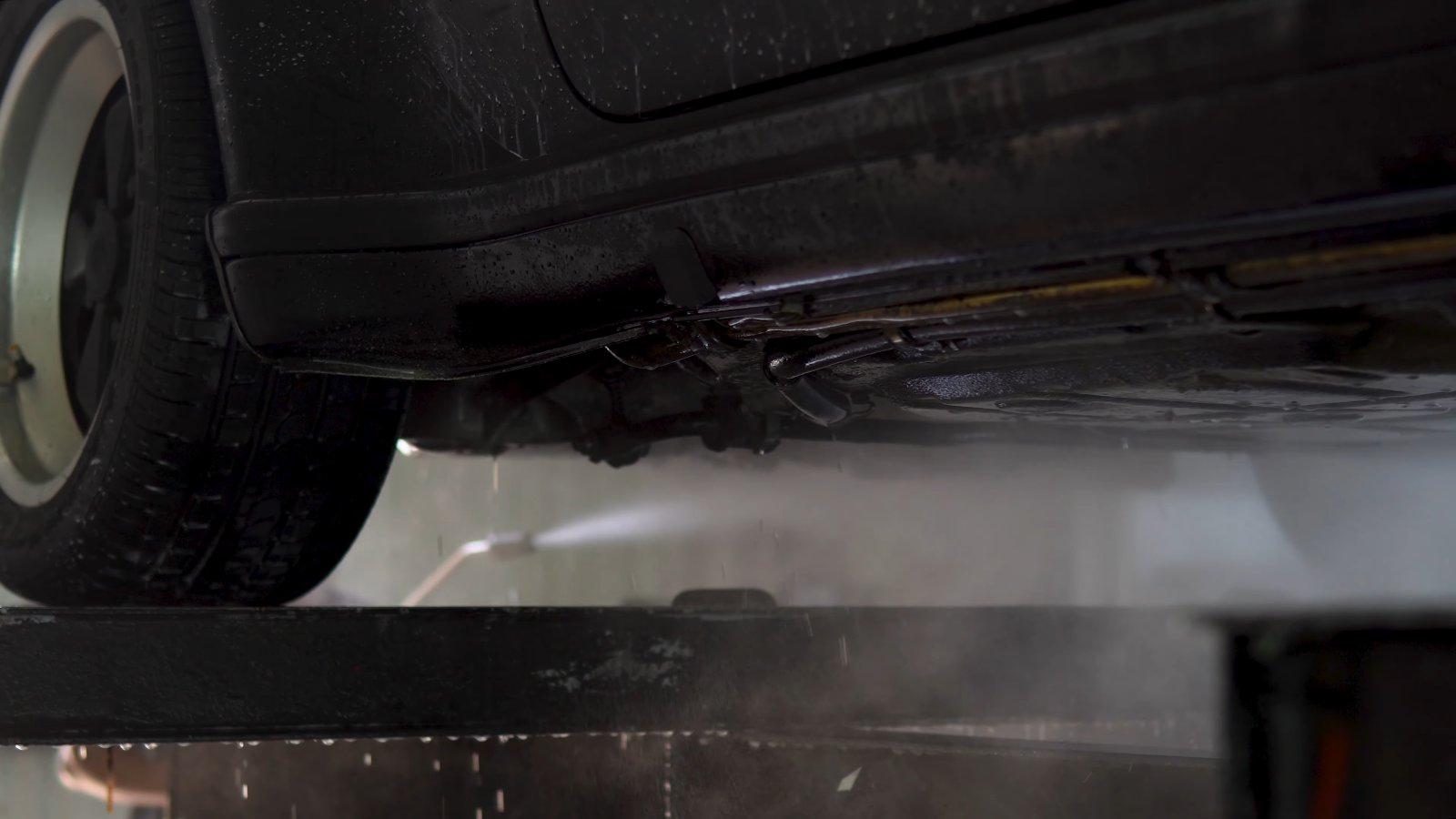
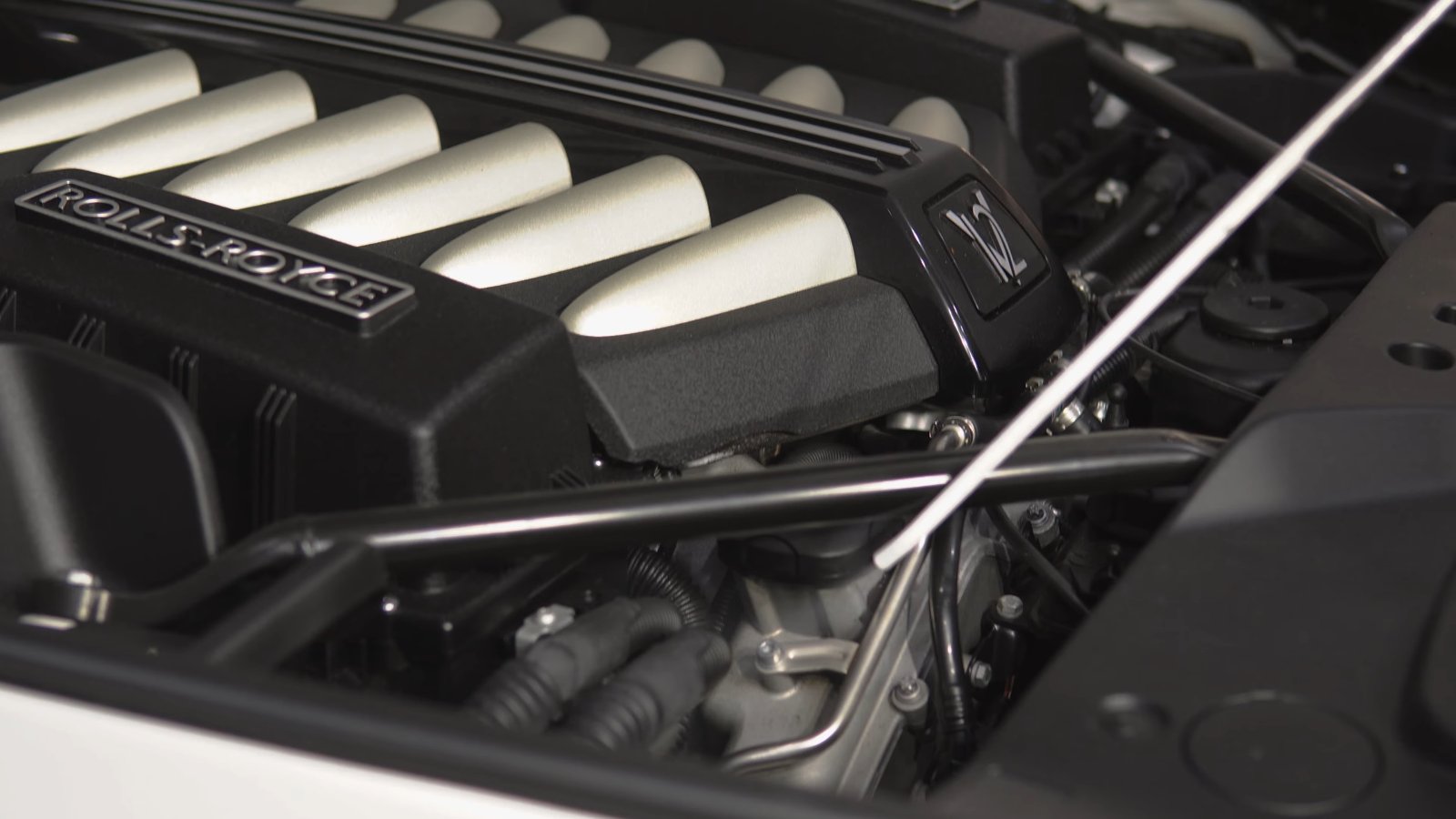
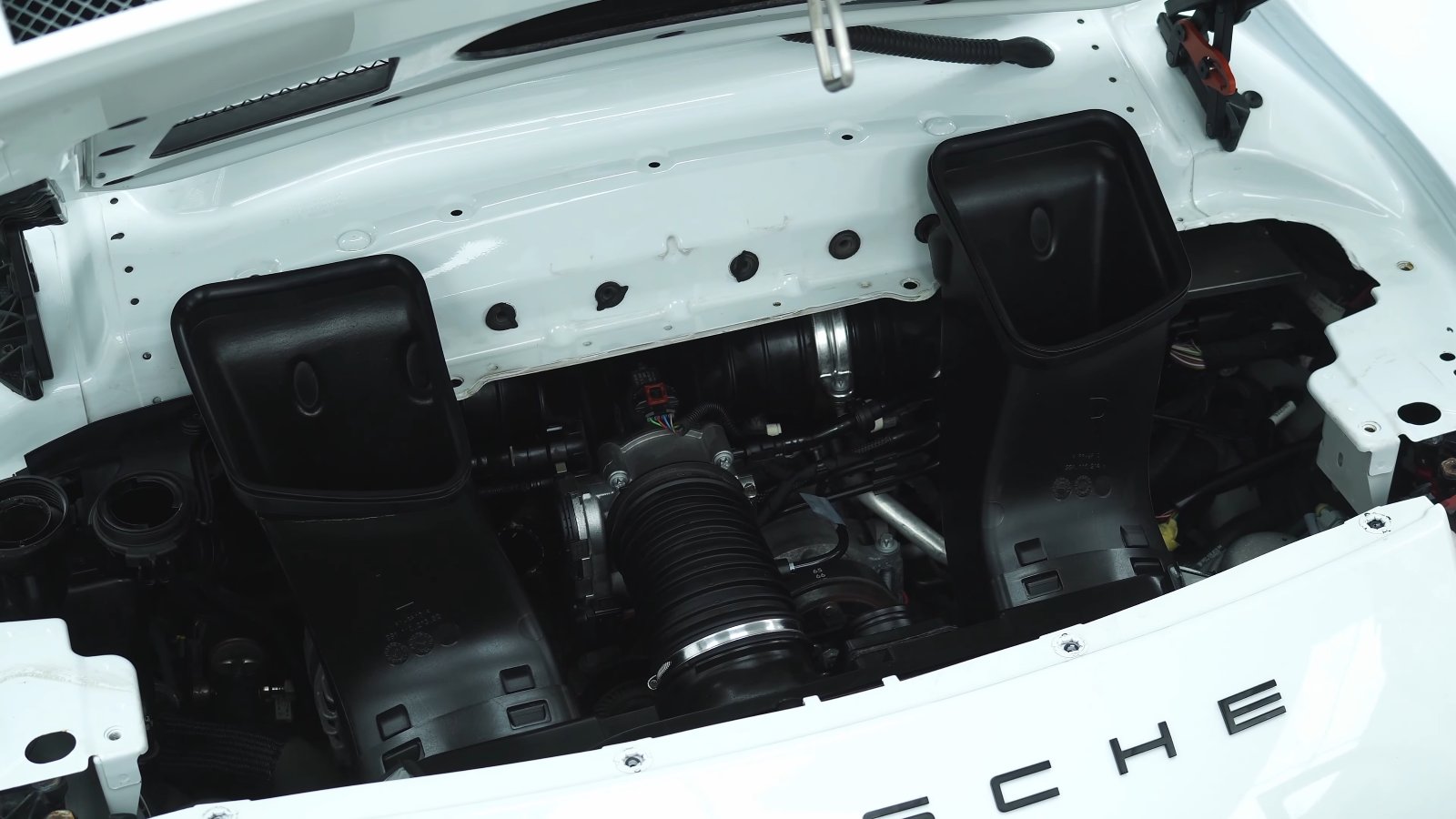
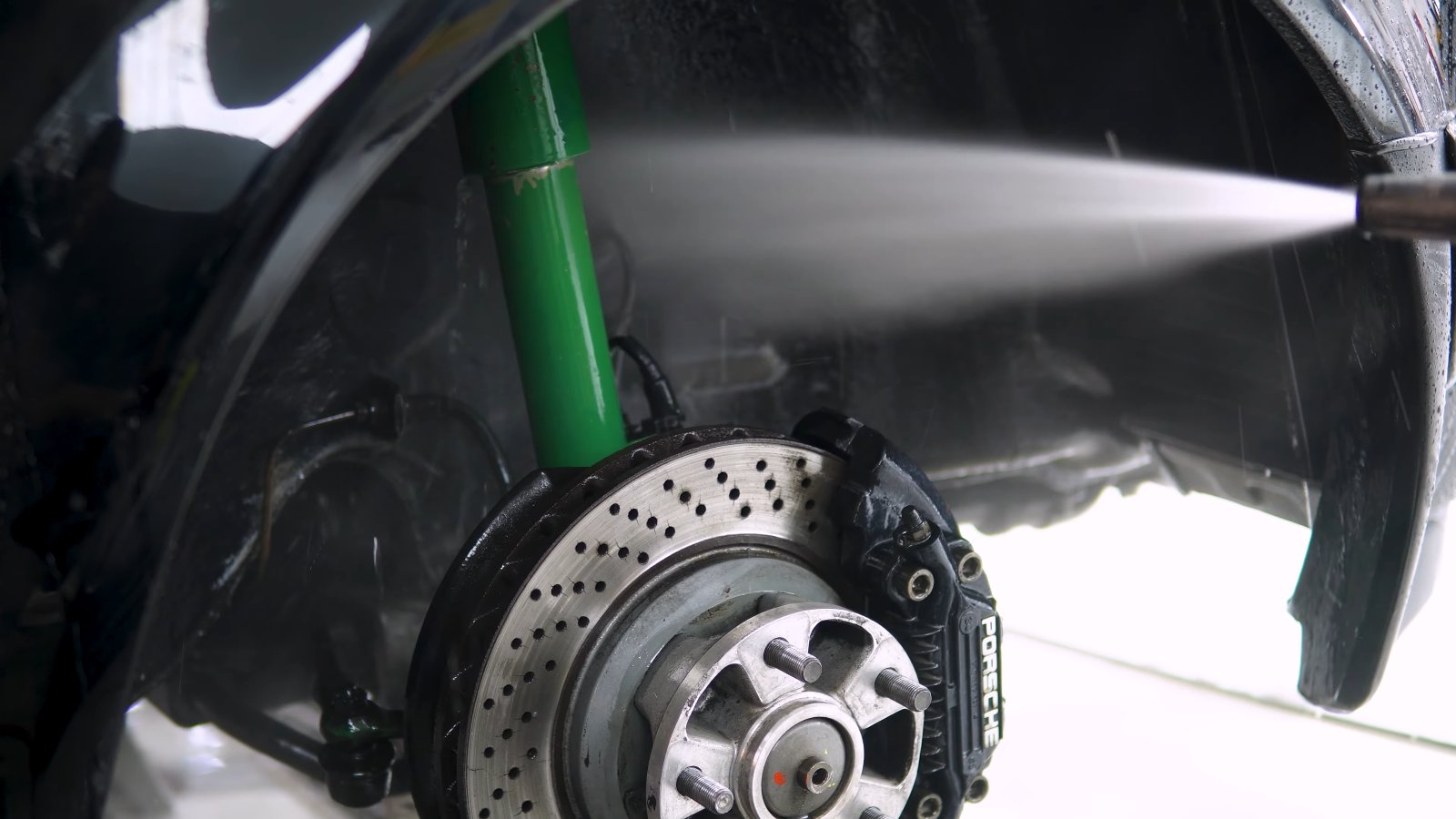
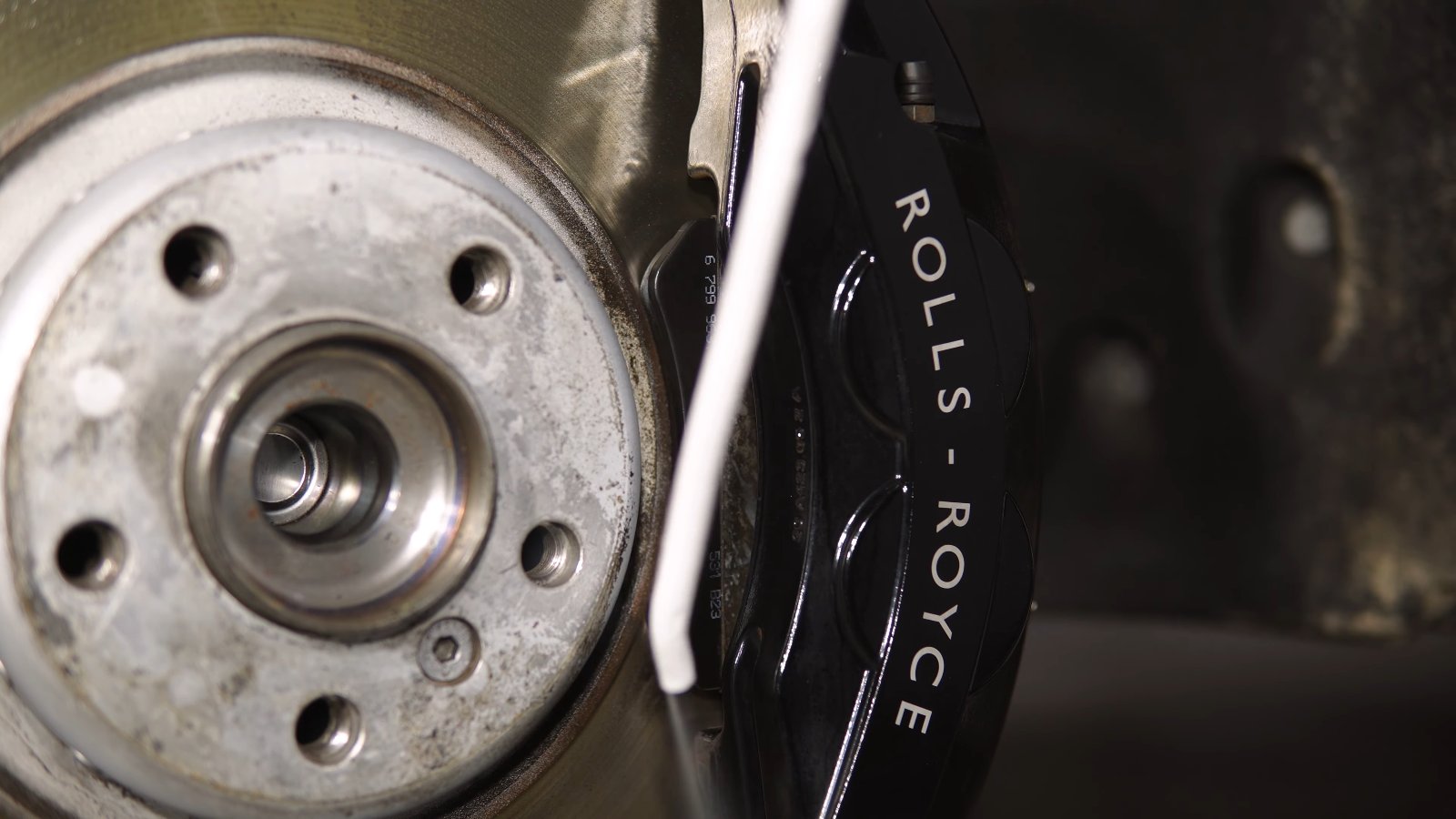
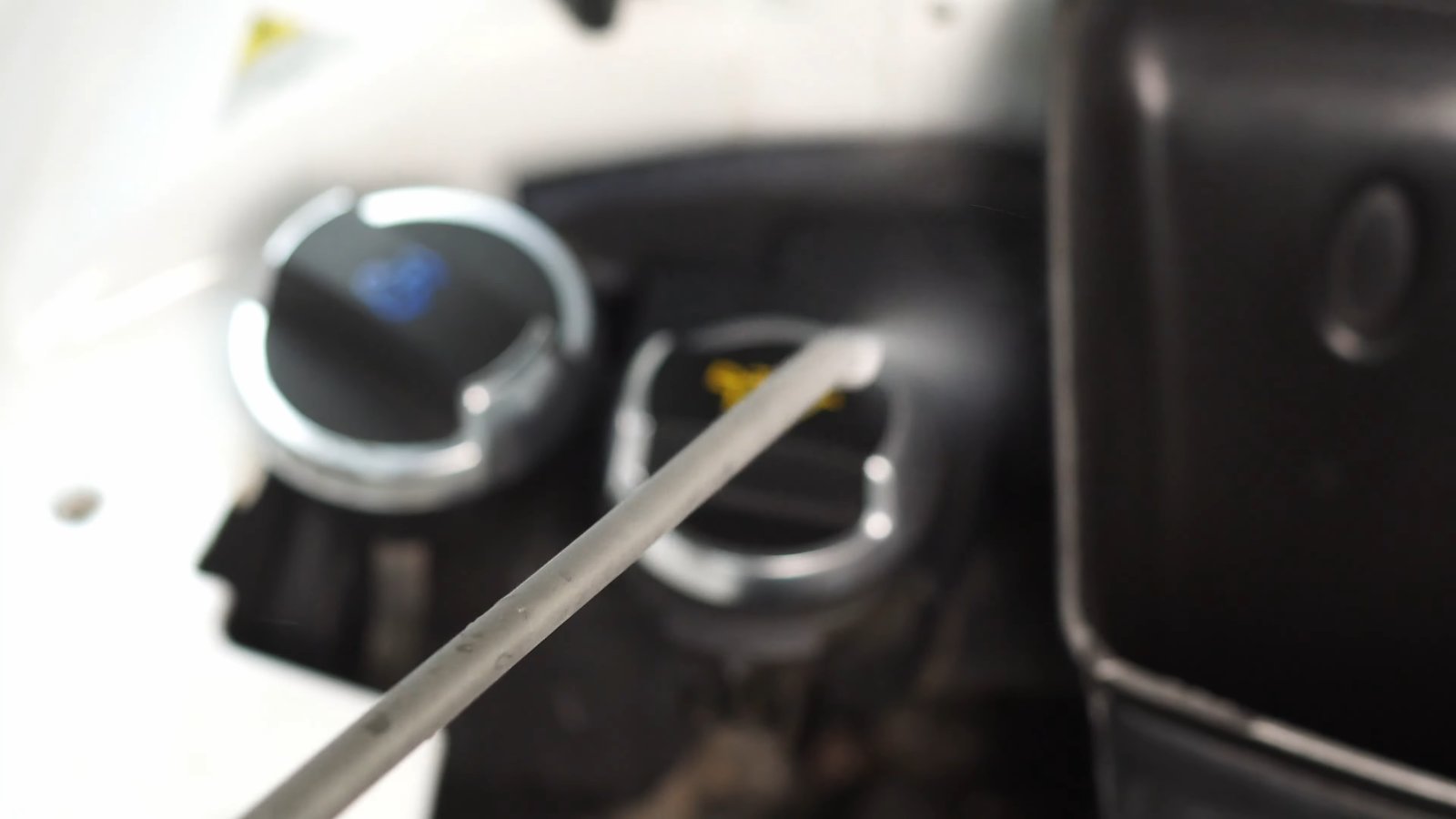
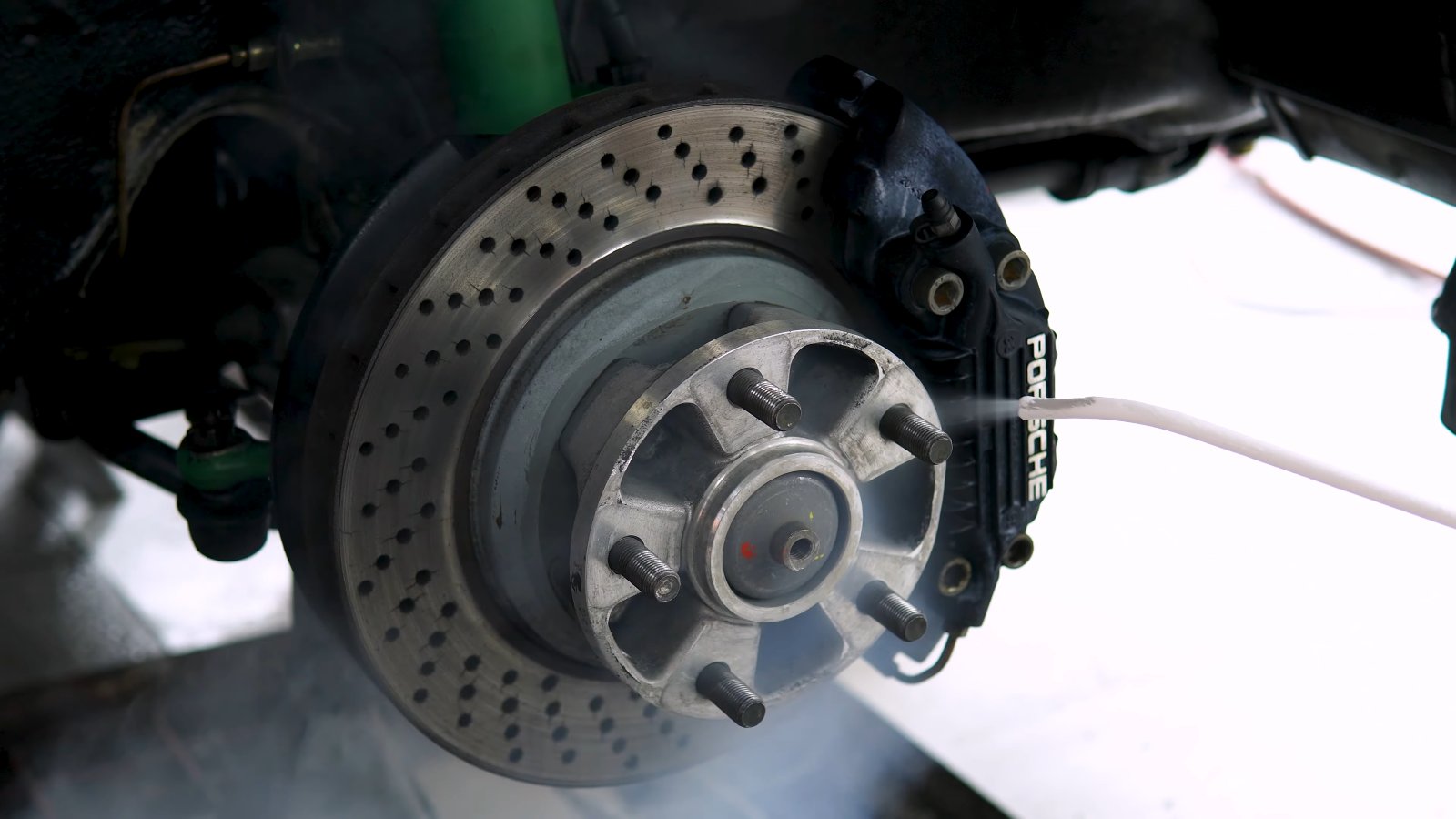
Dry ice work from our Al Quoz studio floor. Tap a car for the full story, with video.

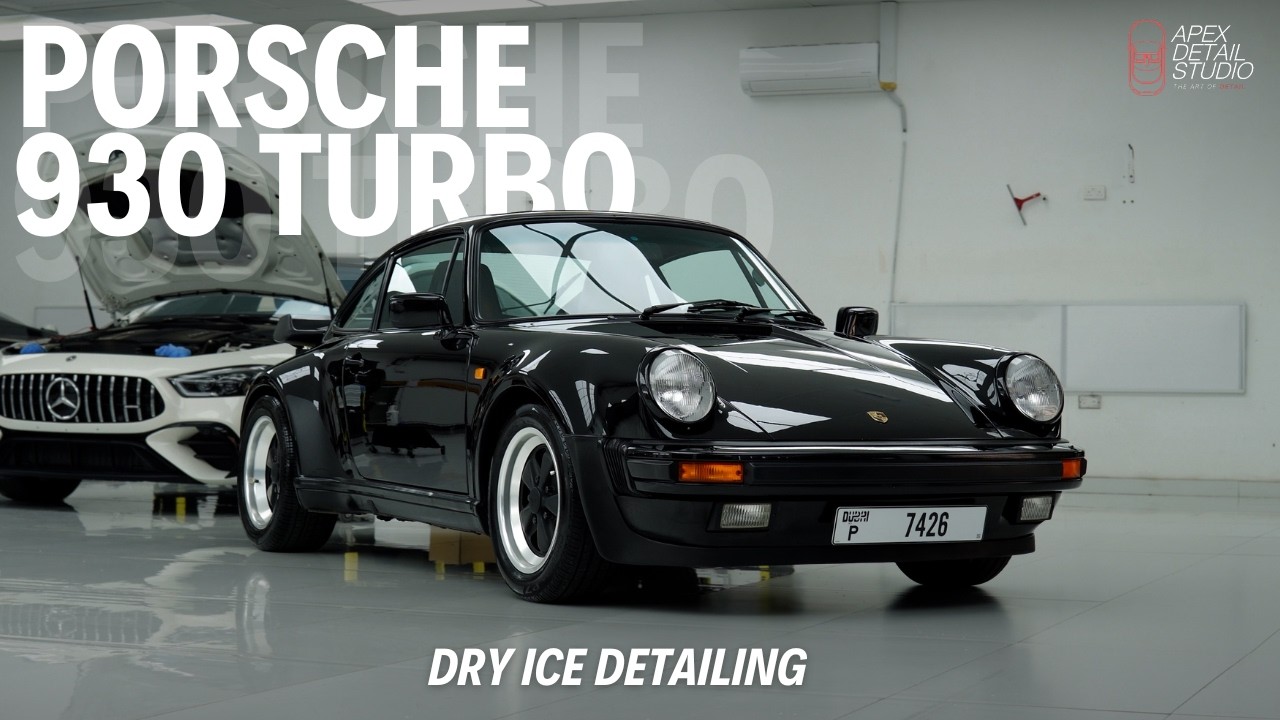
Watch the work
Before you book.
Straight answers to what owners ask us about dry ice cleaning in Dubai.
Underbody, wheel arch and full-car jobs are quoted per car, by size, condition and the areas you want cleaned.
What is dry ice cleaning for cars?
Dry ice cleaning, also called dry ice blasting or dry ice detailing, fires small pellets of solid carbon dioxide at a surface with compressed air. At around minus 78.5°C the pellets make grime brittle, knock it loose and then turn straight to gas, so nothing is left behind except the dirt itself. There is no water and no chemical.
Where can I get dry ice cleaning for my car in Dubai?
At Apex Detail Studio, 6A Street, Al Quoz Industrial 3, Dubai. We are open Saturday to Thursday, 10am to 7pm, and closed on Friday. WhatsApp +971 58 549 2739 with your car and the areas you want cleaned.
How much does dry ice cleaning cost in Dubai?
Dry ice engine bay cleaning at Apex starts from AED 750 plus VAT. Underbody, wheel arch and full-car jobs are quoted per car, because the price depends on the size of the car, its condition and the areas you want cleaned. Send your car details on WhatsApp to +971 58 549 2739 and the team will reply with a figure.
What parts of a car can be cleaned with dry ice?
Engine bays, underbodies and floor pans, sills, wheel arches and arch liners, suspension arms and struts, brake calipers, discs and hubs, and some hard interior surfaces. It is used where water, degreasers and brushes cannot reach or should not go.
Can you clean an engine bay without water?
Yes. Dry ice is dry and non-conductive, so it cleans around wiring looms, sensors, connectors and aluminium castings without soaking anything. We dress the plastics and rubber afterwards. More in our engine bay cleaning guide.
Is dry ice safe for paint, PPF and ceramic coatings?
On sound factory paint at the correct pressure it is non-abrasive. On paint protection film and ceramic coatings we lower the pressure, keep our distance and stay away from film edges. For general bodywork a proper hand wash is still the right tool.
Is dry ice cleaning safe for classic cars, EVs and hybrids?
Yes. With no moisture there is nothing to start corrosion on a classic and nothing to reach sensitive electronics on an EV or hybrid. It is non-abrasive, so it is safe on rubber, seals and trim. More in our classic car dry ice restoration.
Is dry ice cleaning better than steam cleaning or pressure washing?
For engine bays, underbodies and anything near electrics, yes, because it leaves no moisture and no residue. Steam is better for fabric seats, carpets and sanitising a cabin. Pressure washing pushes water into joints, bushings and connectors and needs drying time. More in our dry ice vs steam cleaning.
Does dry ice cleaning leave any residue?
No. The dry ice turns into gas on contact, so only the loosened dirt is left to remove. There is no water and no chemical residue, and nothing needs to dry.
How long does dry ice cleaning take?
Most engine bays take a few hours including preparation, masking and dressing. A full underbody clean usually takes a day or less, depending on the car and its condition. We confirm timing when we quote.
Does dry ice cleaning remove scratches and swirl marks?
No. Dry ice is a deep cleaning process, not paint correction. Scratches and swirls need machine polishing, which we also do at the studio.
Is dry ice cleaning eco-friendly?
It uses no water and no soaps, degreasers or solvents, so there is no contaminated runoff. The CO2 used for the pellets is recovered from industrial sources. More in our 5 benefits of dry ice cleaning.
How often should a car be dry ice cleaned in Dubai?
For most cars driven on Dubai roads, every three to six months keeps sand, oil and road film from building up in the engine bay and underbody.
Should I dry ice clean the underbody before PPF or a coating?
It is a good time to do it. We often clean the underbody, arches and suspension with dry ice before paint protection film or a protective coating, so the surfaces underneath start clean.
Complete the build.
A clean car is the best time to protect it. Here is what owners add while the car is already with us.
Know before you clean.
The full stories behind the method, with real cars from our studio.
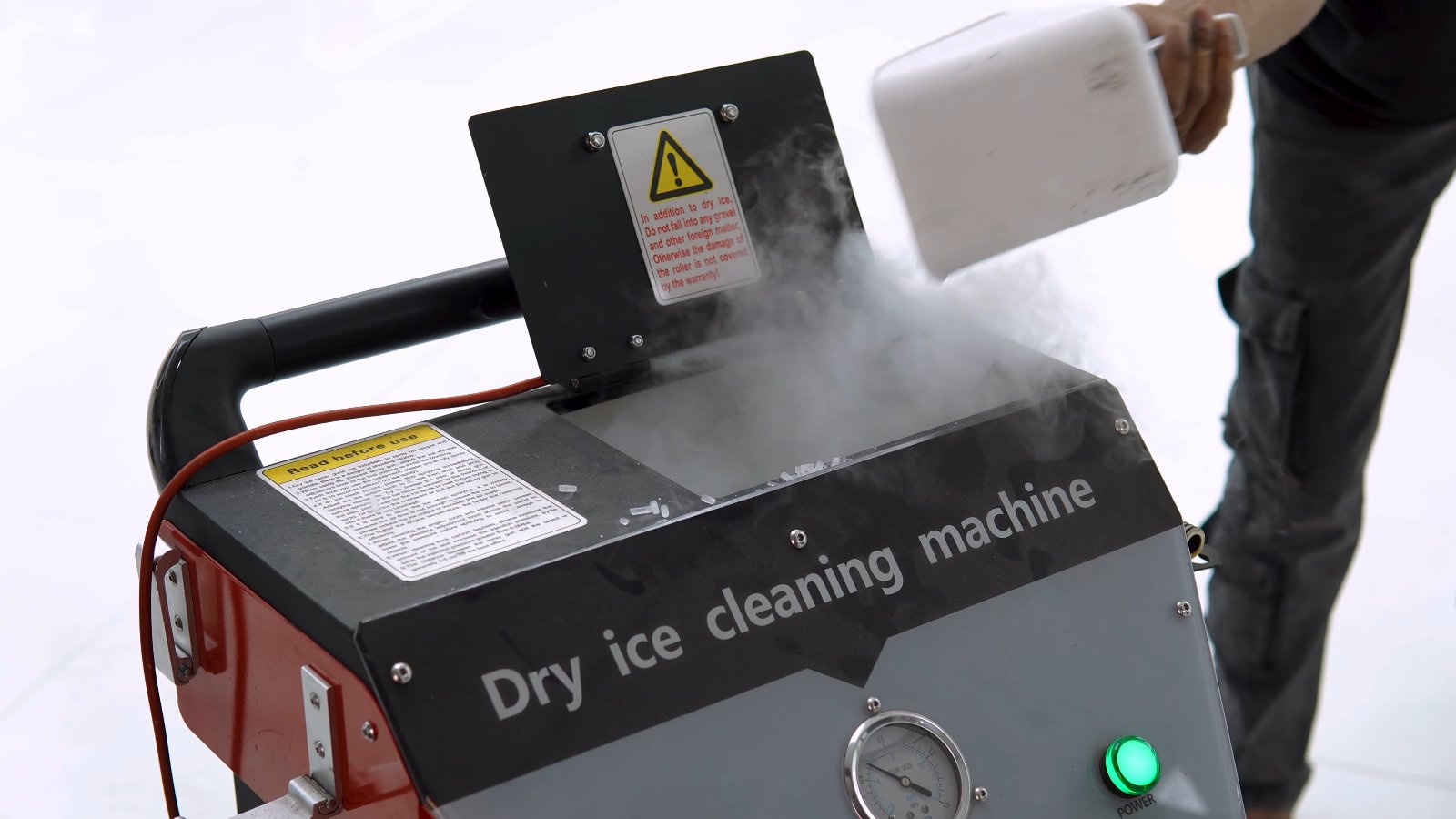 Why dry iceThe benefits of dry ice cleaningWhat dry ice does better than a wash, and where it makes the biggest difference on a Dubai car.Read the guide
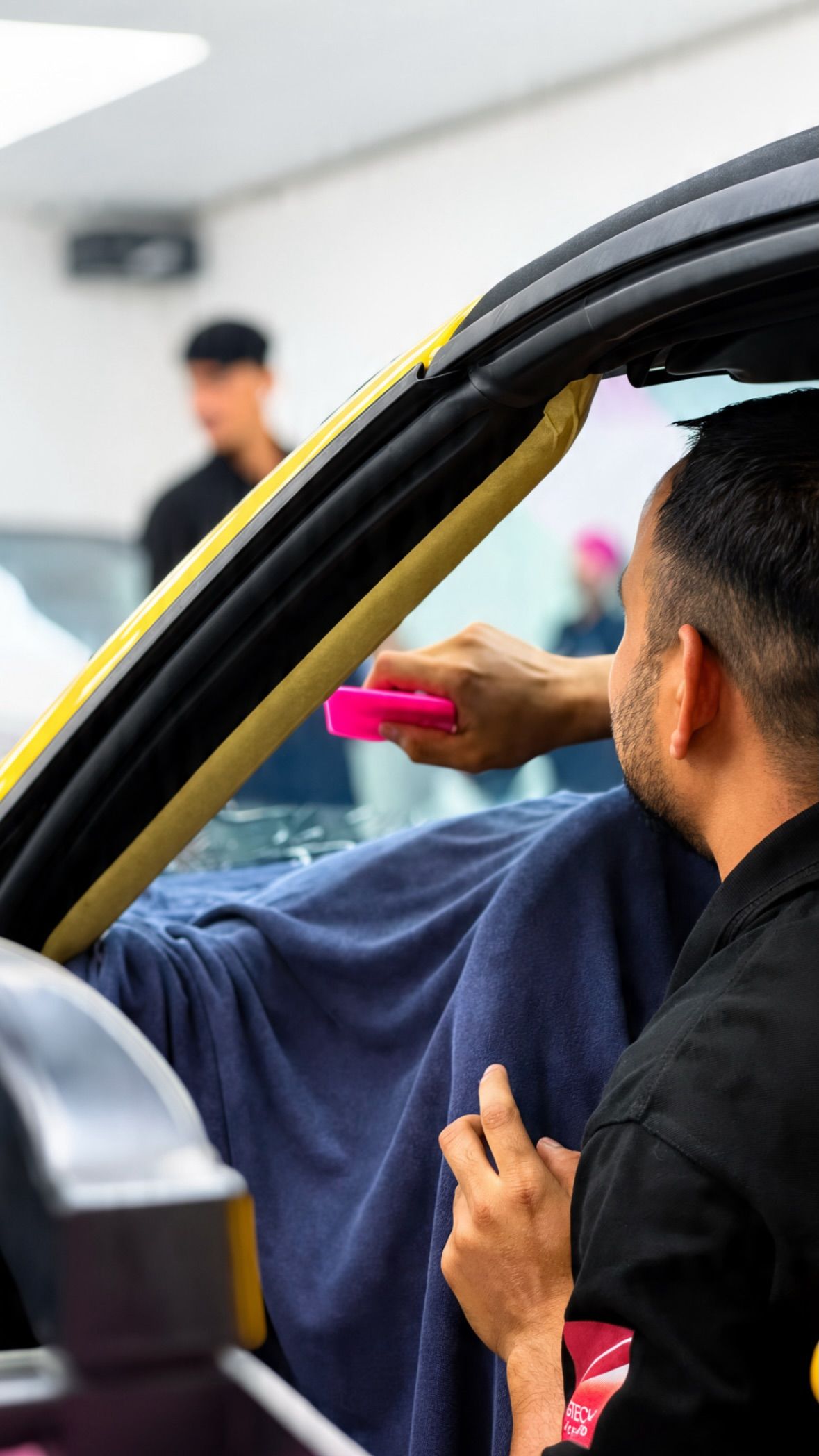 Choosing a methodDry ice or steam?Dry ice for engine bays and underbodies, steam for fabric. Where each one wins.Read the guide
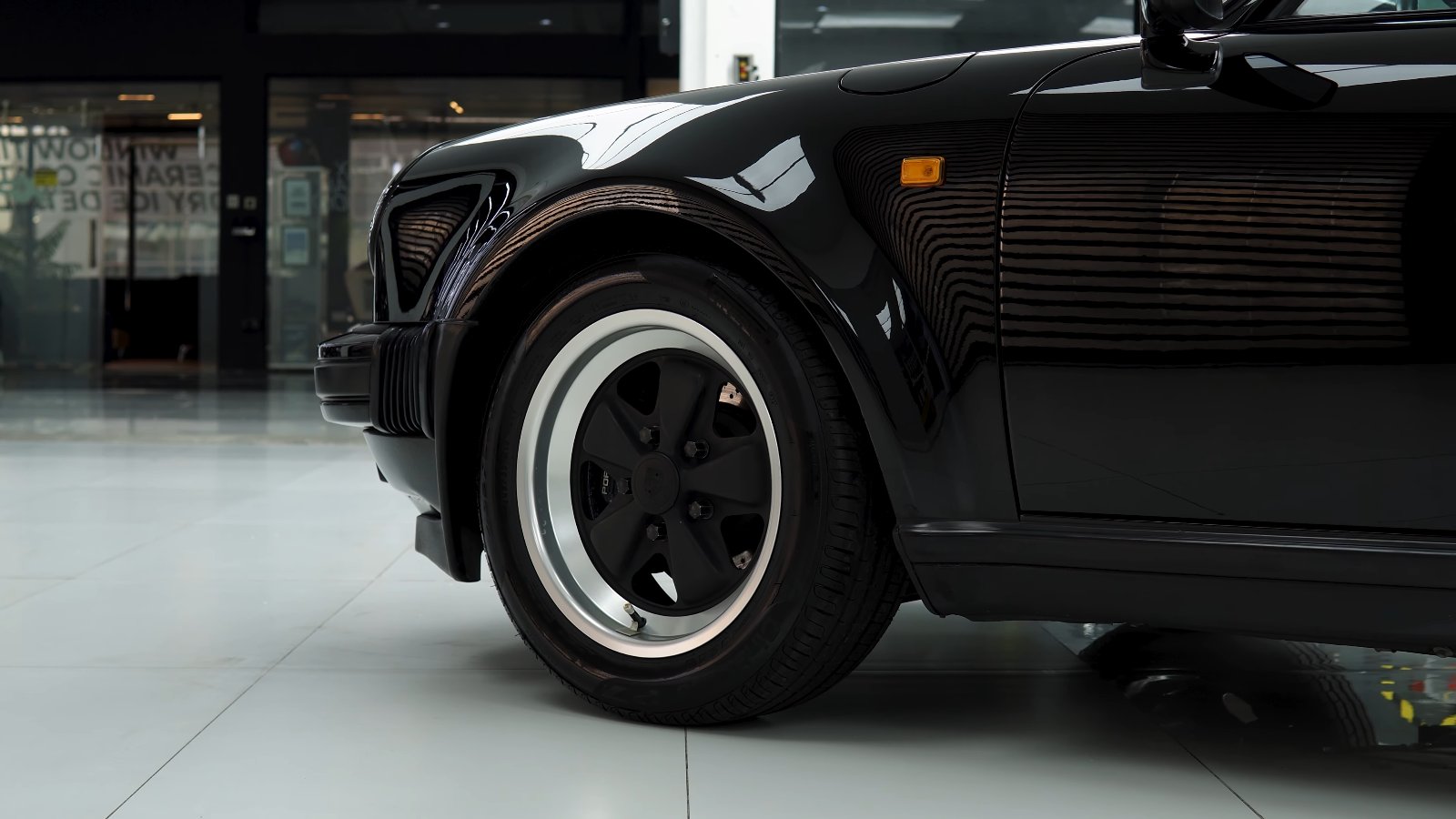 Case studyPorsche 930 Turbo underbodyUnderbody, arches, suspension and brakes on an air-cooled icon, step by step.See the job

Find us in Al Quoz.
Look for the Apex Detail Studio sign on 6A Street. A short drive from Downtown Dubai, Business Bay, Jumeirah, Dubai Marina, JLT and Dubai Hills.