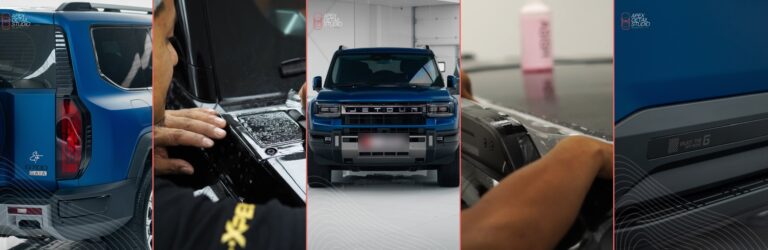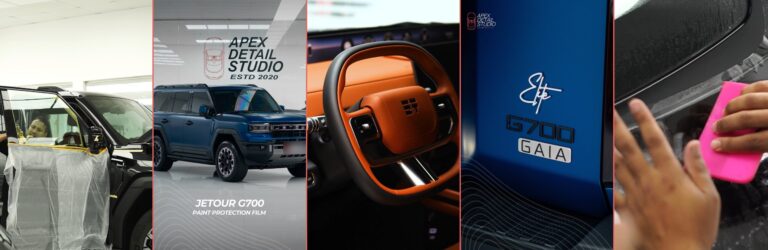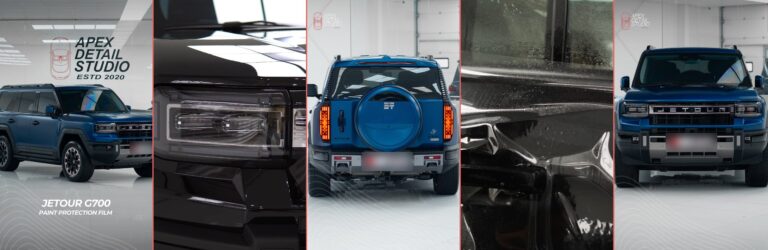
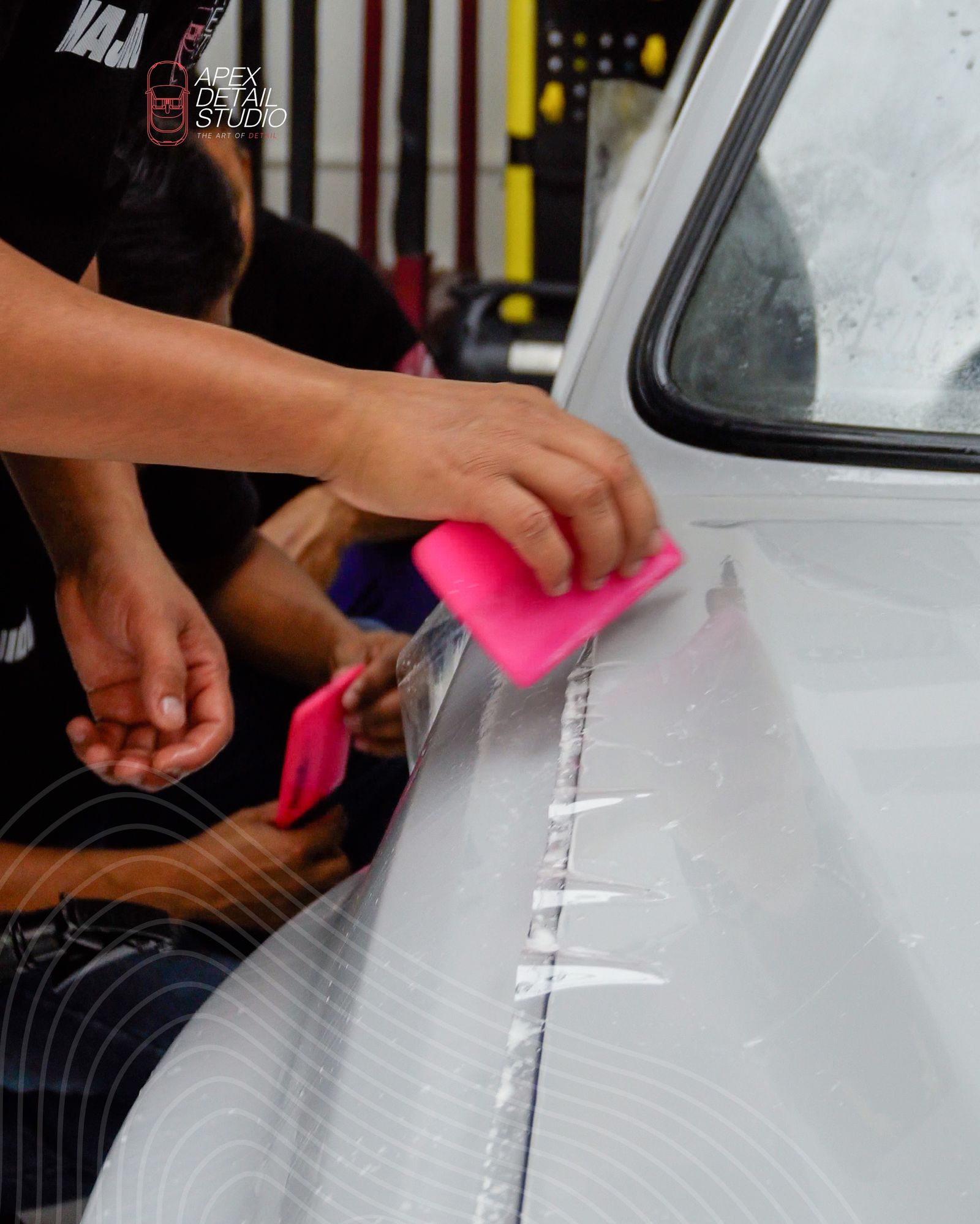
The Apex Detail Studio PPF process runs in seven stages: inspection, wash and decontamination, paint assessment and correction, digital pattern preparation, plotter cutting, installation with edges wrapped where safe, and a panel-by-panel final inspection under studio lighting. A standard full-car job is generally completed in two to three days at our Al Quoz studio.
Jump to section · 13 parts
- Why does the installation process matter so much in Dubai?
- What are the stages of the Apex Detail Studio PPF process?
- What happens during the PPF inspection?
- How is the car prepared before PPF goes on?
- Why does Apex use precut, plotter-cut PPF patterns?
- How is PPF actually installed on the car?
- How long does the Apex PPF installation process take?
- What does the final PPF inspection check?
- Which PPF films does Apex Detail Studio install, and what do they cost?
- How Apex Detail Studio does it
- What should I ask any PPF installer before booking?
- What our PPF customers say
- Frequently asked questions
Key facts
- Full-body PPF from AED 12,000 for sedans and AED 13,500 for SUVs and trucks (colour PPF from AED 15,000), depending on options, before 5% VAT.
- Time in the studio: a standard full-car installation generally takes two to three days.
- Patterns are vehicle-specific, adjusted in software and plotter-cut, so blade work on paint stays minimal.
- Accredited PPF and ceramic coating installer, with a team of 41 in a 20,000 sq ft facility in Al Quoz.
- Best for: owners who want to know exactly what happens to their car before they hand over the keys.
Want an exact price for your car? WhatsApp us your model and the team will reply with a quote.
Paint protection film (PPF) is a clear, self-healing urethane film bonded to a car’s painted surfaces to take stone chips, light scratches and contamination before they reach the clear coat. The film matters, but the installation decides whether it still looks invisible after a Dubai summer.
Two cars can wear the same roll of film and look completely different a year later. One has tight, wrapped edges and no visible seams. The other has lifting corners on the bonnet, dust trapped under the door film and a knife line in the clear coat. The difference is almost always process, not product.
This guide opens up our workshop. It explains each stage of the Apex Detail Studio PPF process, why it exists, and what you should ask any installer before you book.
Why does the installation process matter so much in Dubai?
Because Dubai punishes weak installations faster than milder climates do. Heat, sand, UV and frequent washing all attack the film’s edges and adhesive, and any shortcut taken on day one shows within months.
Summer ambient temperatures reach around 50°C, and a dark bonnet in direct sun gets far hotter. Film that was overstretched during installation tends to pull back as it heats and cools. Fine sand trapped under the film looks like grit specks forever, because it cannot be removed without lifting the panel.
Then there is the driving. The E11 between Dubai and Abu Dhabi, Sheikh Zayed Road and the E311 all carry gravel trucks and construction traffic. Stone chips hit the front bumper, bonnet leading edge and mirrors constantly. Cars here are also washed two or three times a week, and every pressure washer nozzle tests the edges.
A good process answers all of that before the first piece of film touches the car.
What are the stages of the Apex Detail Studio PPF process?
There are seven stages, and none is optional. The table below shows what happens at each one, why it matters and what can go wrong if it is skipped.
| Stage | What happens | Why it matters | Risk if skipped |
|---|---|---|---|
| 1. Inspection | Paint, repaints, existing damage, sensors and body modifications are documented | Sets the real scope and the right film | Film over a weak repaint can lift paint on removal |
| 2. Wash and decontamination | Foam wash, iron and tar removal, clay where needed | Nothing should be sealed under the film | Visible specks and poor adhesion |
| 3. Paint assessment and correction | Swirls and light defects corrected where needed | Clear film magnifies what is beneath it | Swirls locked in under gloss film |
| 4. Digital pattern preparation | Vehicle-specific pattern selected and adjusted in software | Correct fit, edge allowance and wrap areas | Short edges, gaps and more hand cutting |
| 5. Plotter cutting | Film cut on a plotter, off the car | Minimal blade contact with paint | Knife marks in the clear coat |
| 6. Installation | Panels laid, positioned, squeegeed and edges wrapped where safe | Clean, consistent coverage | Overstretch, lifting and silvering |
| 7. Final inspection | Every panel, edge and corner checked under studio lighting | Nothing leaves until it passes | Defects discovered at the first wash |
Get a PPF estimate for your car
Send your model and a few photos on WhatsApp and the team will reply with a quote.
The rest of this article walks through each stage in more detail, so you know what a proper job looks like on your own car.
What happens during the PPF inspection?
The inspection decides the plan. We document the paint condition, previous repairs, existing film, body modifications and every sensor or camera before confirming the final recommendation.
Repaints are the main concern. Paint that was refinished badly, or that has not fully cured, can lift when film is removed in the future. If we find a repainted bumper on a used Range Rover Sport, we tell you before the job starts, not after.
We also look at how the car is used. A Porsche 911 GT3 that does track days needs a different conversation from a Tesla Model Y that does the school run in Mirdif. Coverage, film choice and finish all follow from that.
- Paint condition: swirls, scratches, chips, etching from bird droppings.
- Paint history: repaints, smart repairs, mismatched panels.
- Existing film or wraps: old PPF that needs removal first.
- Electronics: parking sensors, radar, front cameras and lidar areas.
- Bodywork: aftermarket kits, carbon parts and aero pieces.
How is the car prepared before PPF goes on?
Preparation removes everything that could be trapped beneath the film: dust, iron, tar, wax, old sealants and polishing oils. Then the paint is assessed and corrected where needed.
The wash starts with foam and a careful rinse, followed by chemical decontamination. Iron fallout from brake dust and tar from fresh road surfaces are common on Dubai cars. Clay or a decontamination mitt follows where the paint still feels rough.
Paint correction is not automatic, and it is not a hidden upsell. A brand-new car straight from the dealer often needs little or no correction. A three-year-old car that has been through automatic petrol station washes usually does. Clear gloss film shows swirls more clearly, not less, so we correct them before they are locked in.
Before film goes on, panels are wiped down so no polishing residue or oil remains. Any residue left here weakens adhesion at the edges, which is exactly where Dubai heat attacks first.
Why does Apex use precut, plotter-cut PPF patterns?
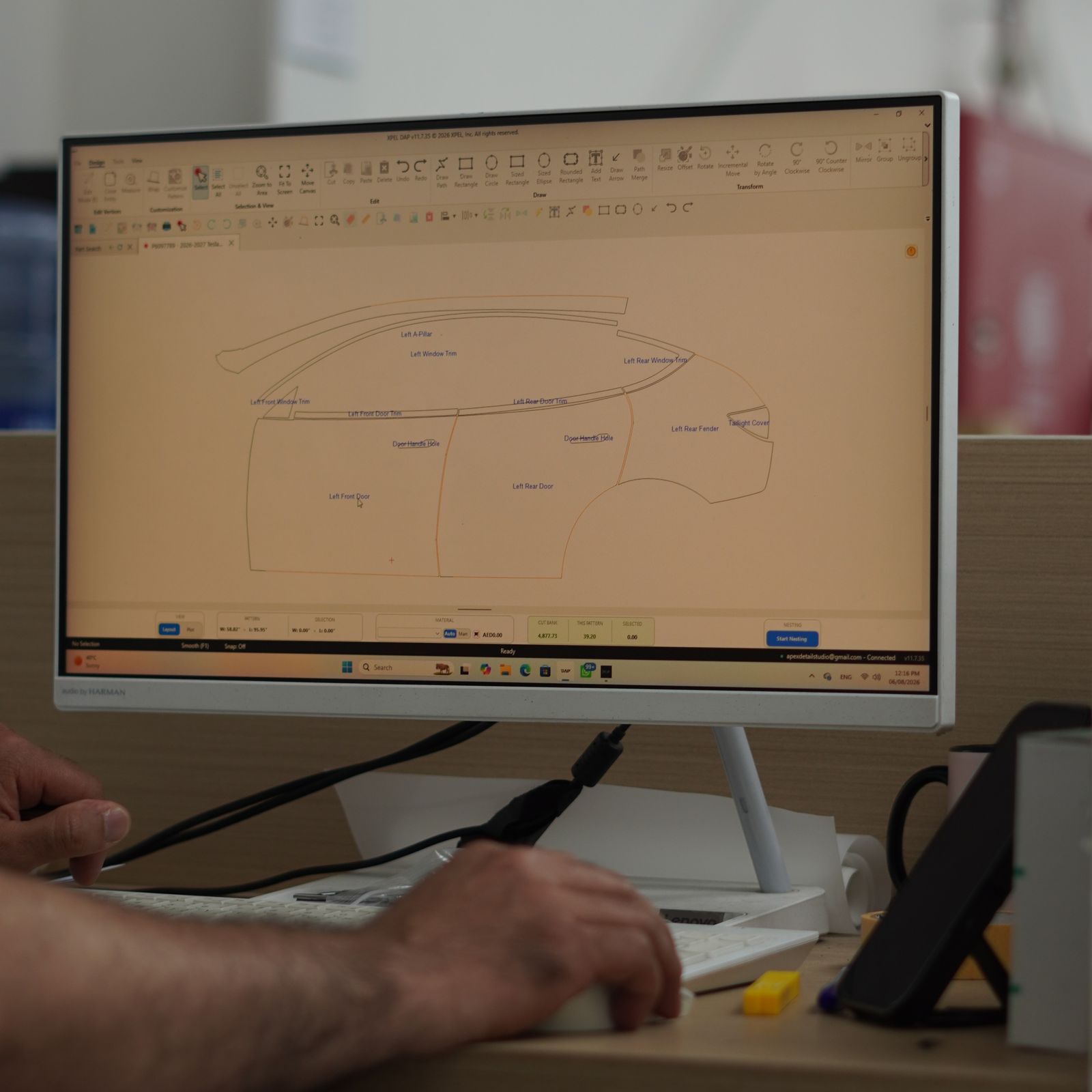
Precut patterns mean the film is cut on a plotter, away from the car. That keeps blades off your paint and gives consistent, repeatable coverage on every panel.
Each pattern is vehicle-specific. Before cutting, our installers adjust it in software for that exact car: extending edges where they can be wrapped safely, adding relief around badges and sensors, and joining or splitting pieces to suit the panel shape. The plotter then cuts it precisely.
Bulk installation, where film is laid in large sheets and trimmed on the car, has its place for some custom work. But on most cars it means a blade running along your paint dozens of times. One slip leaves a cut in the clear coat that sits permanently under the film. For a new Mercedes-AMG G 63 or a Ferrari 296 GTB, that is not a risk worth taking.
Software adjustment is also where wrapped edges are planned. We decide in advance which edges can be tucked around panel ends and which should stop short for safety, rather than improvising on the car.
How is PPF actually installed on the car?
Each panel is wetted, the film positioned, then squeegeed from the centre outwards to remove solution and air. Edges are wrapped where safe, and sensors and cameras are handled carefully so driver aids keep working.
Positioning and tension
The skill is in controlling tension. Film can stretch to follow curves, but overstretched film tends to shrink back over time, and in Dubai heat that shows as lifting at edges and corners. Experienced installers relieve tension on deep curves, such as the front bumper of a Lamborghini Urus or the rear haunches of a Porsche 911, rather than forcing the film.
Edges and wraps
Wrapped edges are the single biggest visual difference between average and excellent PPF. Where it is safe, the film wraps around the panel edge so no line is visible from normal viewing angles. Where wrapping would risk lifting or interfere with gaps, the film stops a precise distance short.
Sensors, cameras and badges
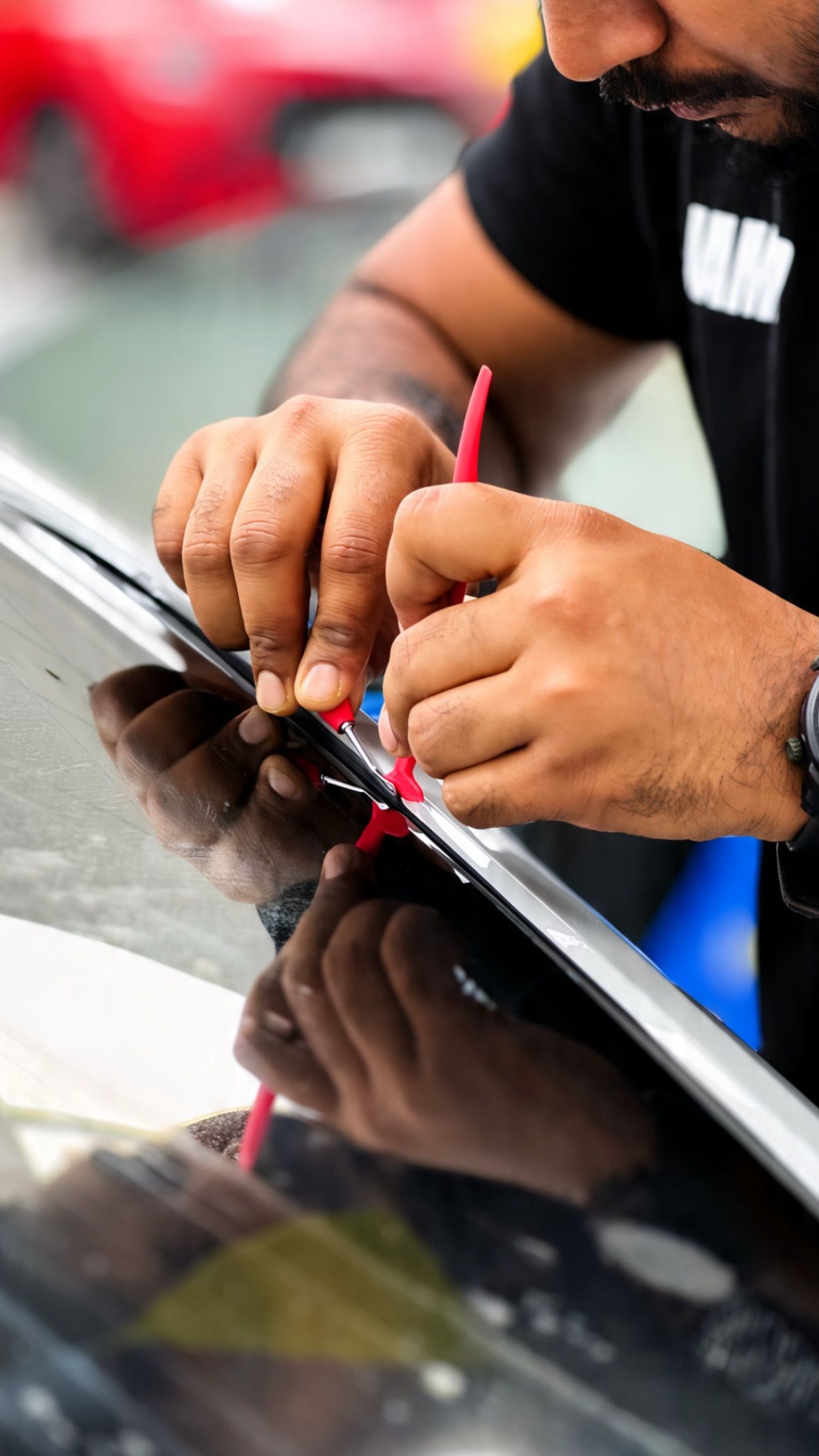
Modern cars carry radar behind bumpers and badges, parking sensors, cameras and, on some models, lidar. These are treated carefully: film is relieved around them or positioned to the manufacturer’s guidance, so adaptive cruise and parking aids keep working normally.
Some jobs benefit from removing parts such as badges, lights or trim to wrap edges more cleanly. We only do that where it is suitable for the car and agreed with you in advance.
How long does the Apex PPF installation process take?
A standard full-car PPF installation is generally completed in two to three days. Paint correction, complex bodywork, extra coverage or old film removal can extend that.
| Job | Typical time in the studio | What can extend it |
|---|---|---|
| Full-body PPF, new car in good condition | Generally two to three days | Complex aero, wrapped extras |
| Full-body PPF, used car | Generally two to three days, plus correction time | Swirls, scratches, repaints |
| Full-body PPF with old film removal | Confirmed after inspection | Adhesive residue, paint condition |
| Front-end package | Confirmed on the quote | Correction and coverage choices |
Be wary of any full-body job promised in a single day. That time has to come from somewhere, and it usually comes from preparation or edge work. For a more detailed breakdown of each stage, see our guide on how long paint protection film lasts in Dubai, which explains how installation quality affects lifespan.
What does the final PPF inspection check?
The final inspection checks every panel, edge and corner under studio lighting before the car is released. Nothing leaves until it passes.
We look for lifting edges, trapped dust, bubbles that will not clear, stretch marks, alignment between adjacent pieces and any area where the film finish looks inconsistent. Small moisture pockets can be normal for a few days as the film settles, and we explain which signs are expected and which are not.
Catching a problem in the studio means you never see it on your driveway. That is the whole point of the final check.
You leave with aftercare guidance: when you can wash the car, how to treat the edges, and which products to avoid. Our article on why PPF can yellow, peel or lift explains the causes and how good aftercare prevents them.
Which PPF films does Apex Detail Studio install, and what do they cost?
We install STEK paint protection film as the entry full-body tier and our premium film as the top tier, using the same process for both. Prices below are starting points for a standard car in good condition, before 5% VAT.
| Package | From AED (before 5% VAT) |
|---|---|
| Full PPF, sedan | AED 12,000 |
| Full PPF, SUV or truck | AED 13,500 |
| Colour PPF | AED 15,000 |
| Interior protection film | from AED 2,000 |
Premium gloss PPF and satin PPF carry a 10-year manufacturer warranty against yellowing, cracking, blistering and delamination, with rock damage excluded and registration required. You can read the film details on the manufacturer’s paint protection film page. For the entry-tier film, the manufacturer warranty applies per STEK’s terms and is confirmed on your quote.
Front-end and partial packages are priced on inspection, so send your model on WhatsApp. If you are deciding between tiers, our honest breakdown of whether premium PPF is worth the price and our 2026 PPF cost guide for Dubai go deeper.
How Apex Detail Studio does it
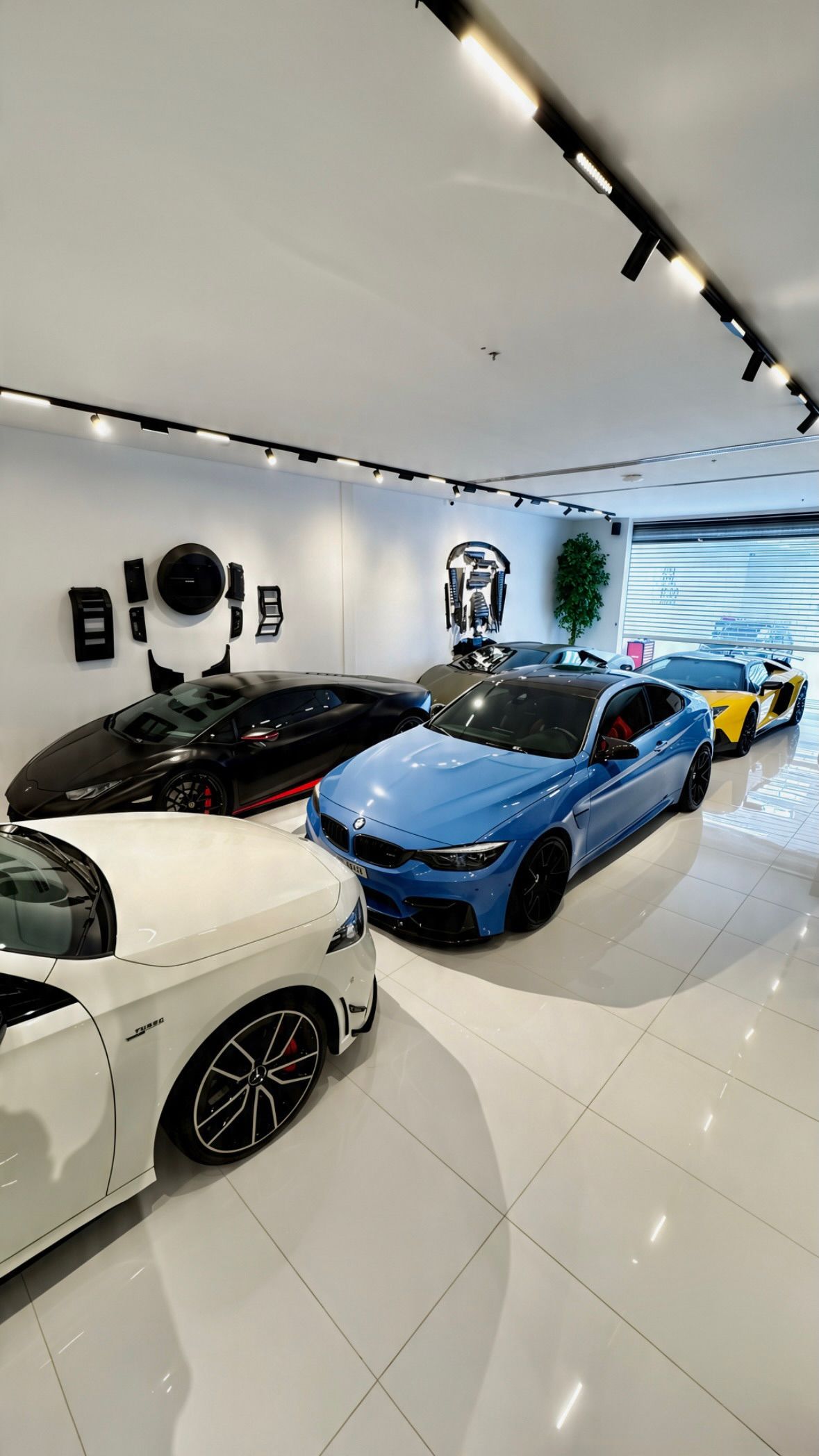
The process above runs inside a 20,000 sq ft studio on 6A Street in Al Quoz Industrial 3. A team of 41 splits preparation, installation and inspection, so each stage has someone accountable for it.
- Inspect before recommending. The final recommendation comes after the car is seen, not before.
- Prepare properly. Wash, decontamination and paint correction where needed.
- Cut digitally. Vehicle-specific patterns adjusted in software and plotter-cut.
- Install with control. Film laid panel by panel, with edges wrapped where safe.
- Protect electronics. Sensors and cameras treated carefully.
- Check everything. Every panel, edge and corner inspected before release.
We are manufacturer accredited for both PPF and ceramic coating. That matters because manufacturer warranties depend on proper installation and registration. If you want gloss and easier washing on top of the film, our guide to ceramic coating over PPF explains when it is worth adding.
For coverage options and the full service overview, see our page on paint protection film in Dubai.
What should I ask any PPF installer before booking?
Ask how they cut, how they prepare and what they check before release. The answers tell you more than the price does.
- Which exact film brand and line is on my quote?
- Is the film plotter-cut, or trimmed on the car?
- Will you inspect for repaints before starting?
- Is paint correction included, and if not, why not?
- Which edges will be wrapped, and which will stop short?
- How are sensors and cameras handled?
- Is the warranty registered with the manufacturer in my name?
- Can I see the workshop before I book?
A confident installer answers all of these without hesitation. You are welcome to visit our Al Quoz studio, see cars mid-installation and ask the team directly.
What our PPF customers say
Frequently asked questions
Can I visit the Apex Detail Studio workshop before booking PPF?
Yes. You can visit our Al Quoz studio, Saturday to Thursday from 10am to 7pm, to see the facility, look at cars being prepared and talk through the process with the team. Seeing the workspace, the lighting and how panels are finished is one of the best ways to judge any PPF installer before you commit.
Why does Apex Detail Studio use precut PPF patterns?
Precut patterns are cut on a plotter away from the car, so blades rarely touch your paint. Each vehicle-specific pattern is adjusted in software first, extending edges where they can be wrapped and relieving areas around sensors and badges. The result is consistent coverage, cleaner edges and much less risk of knife marks in the clear coat.
Does Apex Detail Studio remove parts during PPF installation?
Only where it is suitable for the vehicle and agreed with you beforehand. Removing badges, lights or trim can allow cleaner wrapped edges on some panels, but it is not needed on every car. The inspection decides what makes sense, and nothing is removed without being discussed and included in the confirmed scope.
How long does full-car PPF take at Apex Detail Studio?
A standard full-car PPF installation is generally completed in two to three days, subject to the car’s condition and scope. Paint correction, complex bodywork, extra coverage or removing old film can add time. The estimate you receive after inspection gives a realistic timeline for your specific car.
Which PPF brands does Apex Detail Studio install?
Full-body PPF at Apex starts from AED 12,000 for sedans and AED 13,500 for SUVs and trucks (colour PPF from AED 15,000), depending on options, before 5% VAT. A thicker premium gloss PPF and a satin finish are available as upgrades. Every film goes through the same preparation and installation process.
Is paint correction always part of the PPF process?
No. Correction is done where needed, not by default. A new car with clean paint may need little or none, while a used car with swirls or scratches usually does. Clear film magnifies what is underneath, so defects are corrected before installation rather than sealed in. Any correction is explained and quoted before work starts.