To protect fresh car paint after a repair, hand wash it gently, keep pressure washers and brush washes away, park in shade, remove bird droppings and sand quickly, and do not polish, wax, coat or film the panel until the workshop confirms the paint has cured. PPF or ceramic coating then gives long-term protection.
Jump to section · 9 parts
- What should I avoid right after a car paint repair?
- How soon can I wash my car after it has been repainted?
- Fresh paint aftercare timeline: what is safe and when?
- How do Dubai heat, sand and bird droppings affect new paint?
- When can I polish or wax a newly painted panel?
- Can I put PPF or ceramic coating on fresh paint?
- How Apex Detail Studio does it
- What our PPF customers say
- Frequently asked questions
Key facts
- Dry to the touch is not the same as fully cured. New paint keeps hardening after collection.
- First weeks: gentle hand washing only, no automatic washes, no polishing or wax.
- Biggest Dubai risks: bird droppings and sand baking onto soft clear in the sun.
- PPF or Gtechniq ceramic coating goes on only once the refinish system is ready for it.
- Full PPF starts from AED 12,000 for sedans and AED 13,500 for SUVs and trucks, and colour PPF from AED 15,000, depending on options, before 5% VAT.
Want an exact price for your car? WhatsApp us your model and the team will reply with a quote.
Paint curing is the chemical process in which a freshly applied coating releases solvents and hardens to its final strength, gloss and chemical resistance. A panel can look perfect and feel hard on collection day while that process is still finishing underneath.
That gap is where most repair problems start in Dubai. Your car leaves the workshop and goes straight into 45°C sun on an open car park in Business Bay. A pigeon visits. Fine sand blows across the bonnet by evening. The next morning a petrol station attendant goes at it with a dusty mitt. Each of those is minor on cured paint. On fresh clear, they can etch, mark or haze the finish you just paid for.
Here is how to look after repaired panels in the first weeks, and how to protect them properly once they are ready.
What should I avoid right after a car paint repair?
Avoid anything abrasive, aggressive or sealing for the first weeks. The goal is to let the paint finish curing without trapping solvents or marring the surface.
- Automatic brush washes. Rotating brushes drag grit across soft clear and leave swirls.
- Close-range pressure washing. A jet at the edge of a freshly painted bumper can lift or mark it.
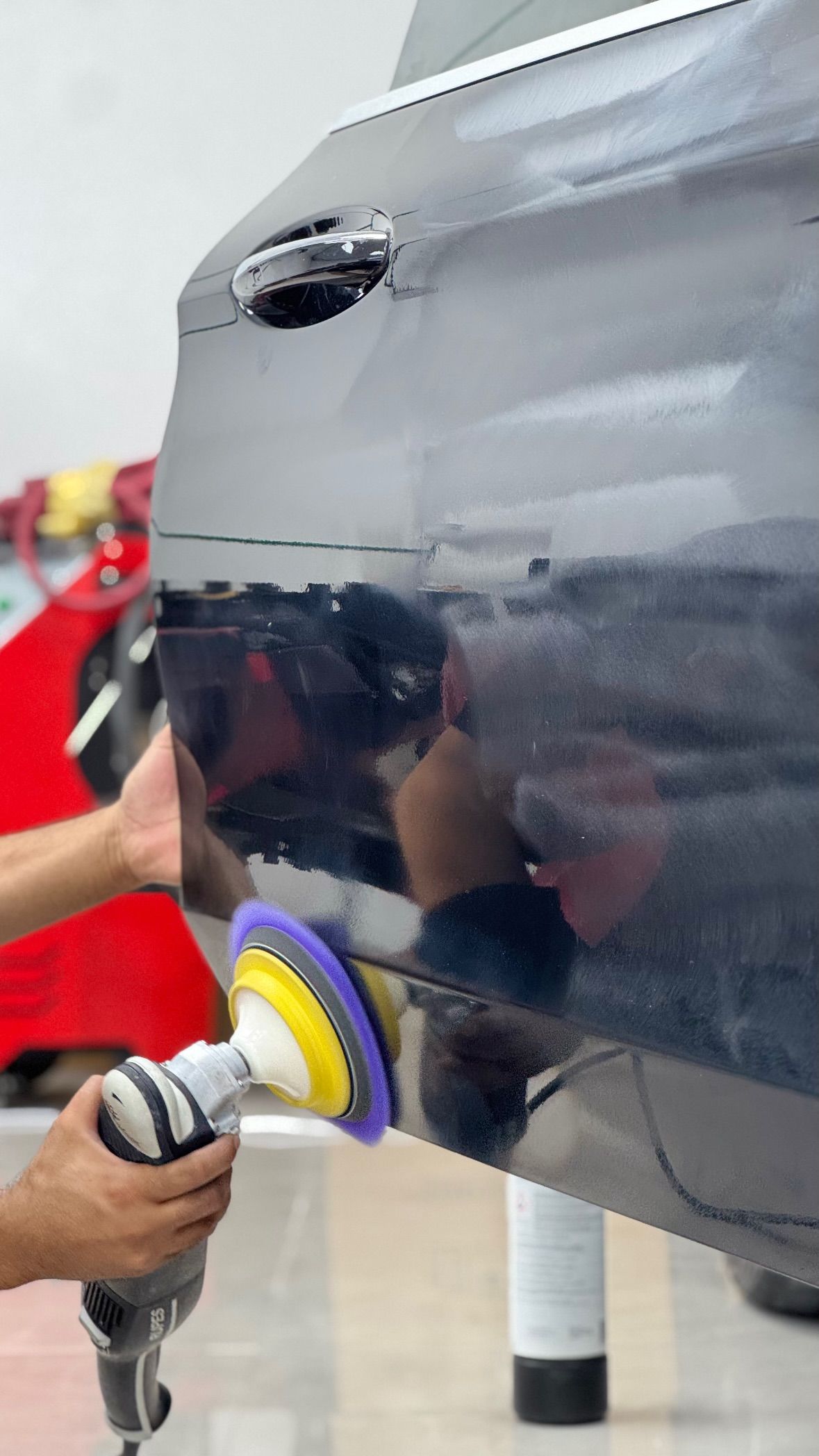
- Polishing, compounding and wax. Leave correction to the workshop, and seal only when told it is safe.
- Strong chemicals. Tar removers, iron fallout sprays and solvent cleaners can attack uncured paint.
- Car covers on hot days. A cover trapping heat and dust against fresh paint can leave imprints.
- Stickers, tape and magnetic signs. Adhesives can mark or lift new paint.
How soon can I wash my car after it has been repainted?
You can usually rinse and hand wash it gently from the first days, following your workshop’s instructions. What matters is the method, not just the date.
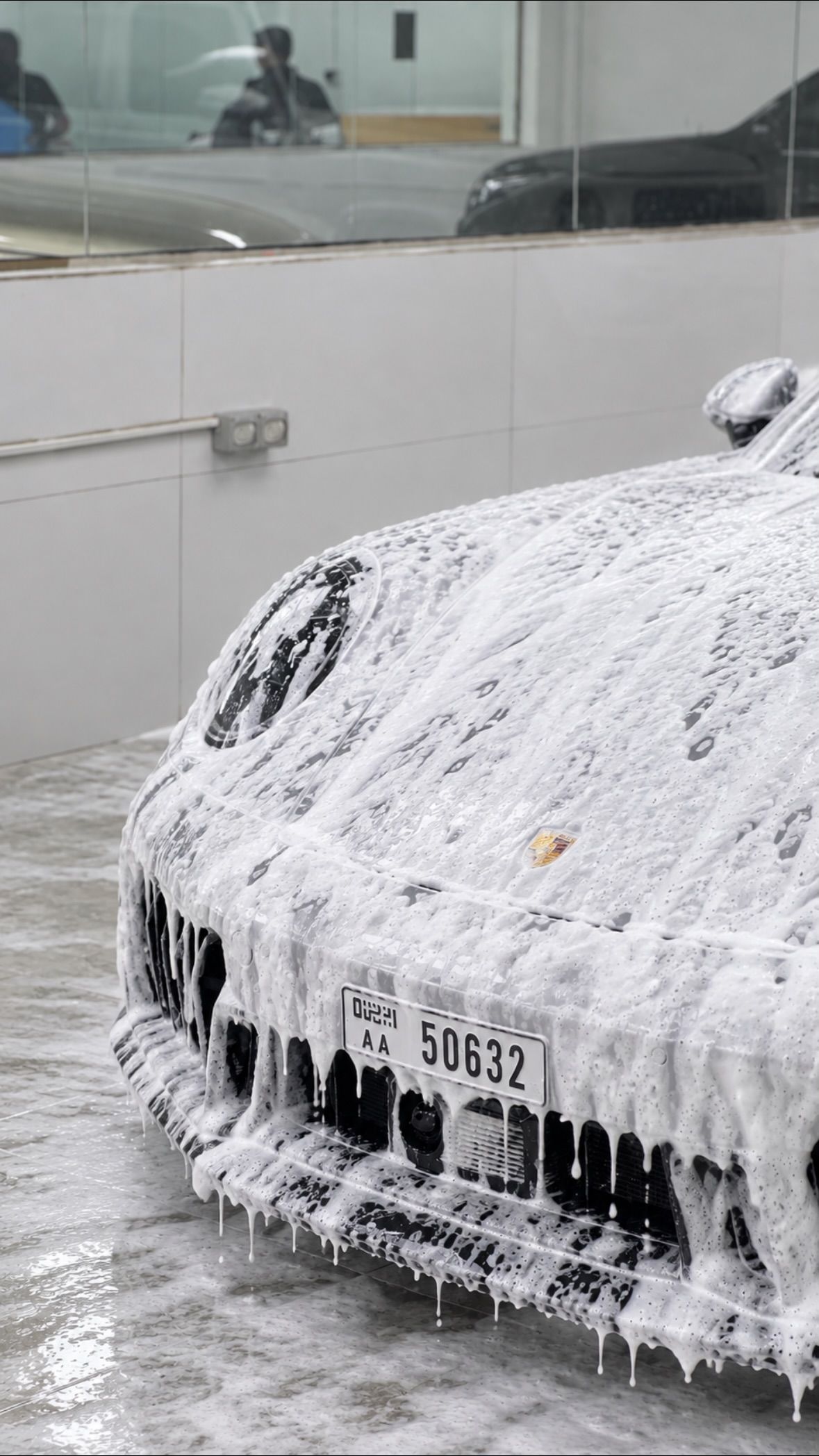
- Rinse thoroughly with low-pressure water to float off sand before anything touches the paint.
- Use a pH-neutral shampoo and a clean microfibre mitt, with a separate bucket for rinsing.
- Wash in straight lines, not circles, and never in direct midday sun.
- Dry with a clean, soft drying towel or filtered air. Do not wipe the panel dry with a chamois.
Dust is the real enemy here. In a city where cars are often washed two or three times a week, every dry wipe on dusty paint is a light sanding session.
Fresh paint aftercare timeline: what is safe and when?
Use this as a practical guide, then follow the specific instructions from the workshop that painted the car. Curing depends on the paint system, how it was cured and the conditions afterwards.
| Period after collection | Safe to do | Avoid |
|---|---|---|
| First 48 hours | Drive normally, rinse off bird droppings with water | Washing with chemicals, pressure jets near the repair, covers |
| First week | Gentle hand wash, pH-neutral shampoo, soft drying | Automatic washes, polishing, tar or iron removers |
| Weeks two to four | Normal careful hand washing, quick detailer if the workshop allows it | Wax, sealants, compounding, adhesive tape |
| Once the workshop confirms cure | Polishing if needed, PPF, ceramic coating | Skipping an inspection of the repaired area before protection |
Many refinish systems are force-cured in a heated booth, so they reach handling hardness quickly. Full chemical resistance takes longer. If you are unsure which stage you are at, ask the workshop rather than guessing.
Get a paint protection estimate for your car
Send your model and a few photos on WhatsApp and the team will reply with a quote.
How do Dubai heat, sand and bird droppings affect new paint?
They speed up damage on paint that has not fully hardened. Heat makes contaminants bond faster, and soft clear marks more easily.
Bird droppings are acidic and, on a black panel in July sun, they can etch clear coat within hours. Fallen sap and insect residue behave similarly on the E311 at night. Fine sand settles daily and turns every careless touch into a scratch. Shade parking, a gentle rinse when contamination lands and no dry wiping make a measurable difference in the first month.
When can I polish or wax a newly painted panel?
Only when the refinish system’s guidance and the workshop say the paint is ready. Polishing early can mark the surface, and wax or sealant can slow solvent release.
If you see haze, sanding marks or a dull patch, take the car back to the workshop for assessment instead of reaching for a polish yourself. Satin and matte repairs are a special case: they must never be polished at all. Our guide to matte and satin car paint repair explains why.
Can I put PPF or ceramic coating on fresh paint?
Yes, but not straight away. Both should go on only after the paint has cured enough under the refinish system’s guidance and the repaired area has been inspected.
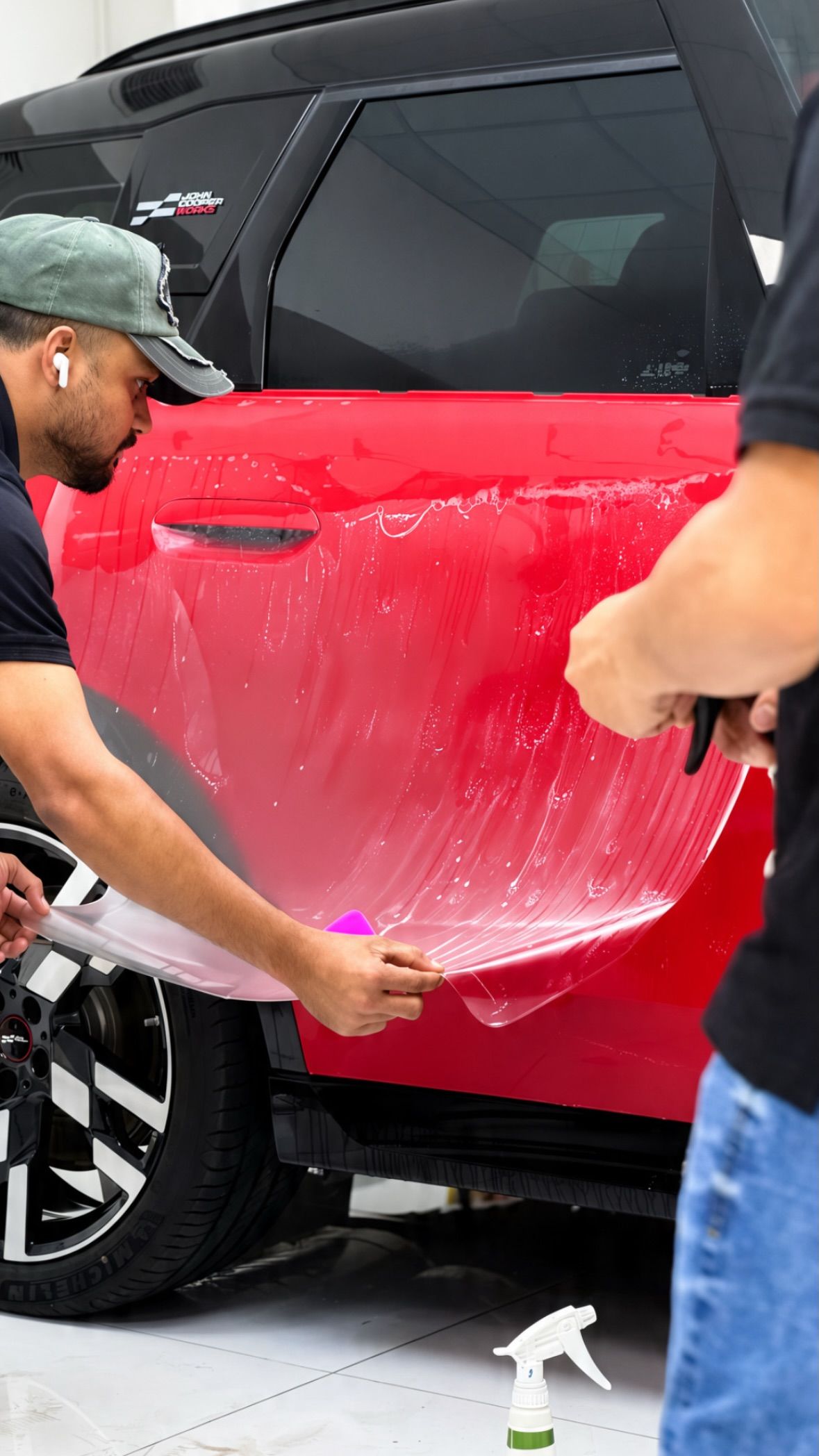
Paint protection film is a clear, self-healing urethane layer that takes stone chips and scratches instead of the paint. It is the strongest way to keep a repaired bonnet or bumper looking new on Dubai highways. Ceramic coating adds gloss, UV resistance and easier washing, but it does not stop chips.
Installing film too early is the main risk. Solvents still leaving the paint can affect adhesion, and if the film is removed later, soft paint may lift with it. Once film is on, the manufacturer’s own product care guidance asks owners to wait 48 hours before washing premium gloss PPF and satin PPF, and to keep high-pressure water away from film edges.
How Apex Detail Studio does it
Apex Detail Studio handles PPG refinishing and protection under one roof in our 20,000 sq ft Al Quoz studio. That lets us plan the repair, the curing window and the protection as one sequence instead of guessing between two businesses.
- Inspect the repair. We check the repaired panels for texture, colour, edges and any signs that curing is incomplete.
- Confirm readiness. Protection is booked only when the paint system is ready for it.
- Wash and decontaminate. Gentle, paint-safe products remove sand and fallout without stressing the new finish.
- Refine where needed. Light correction only if the cured paint needs it.
- Protect. STEK or our premium film PPF with plotter-cut, vehicle-specific patterns and edges wrapped where safe, or Gtechniq ceramic coating. We are accredited by our film manufacturer and by Gtechniq.
- Final check. Every panel, edge and corner is inspected before release.
Published protection prices sit on our Apex Detail Studio service pricing page. If your car is still in the repair stage, read how long car paint repair takes and our guide to car paint repair in Dubai to plan the whole timeline.
Need paint work done? See prices, our PPG process and real jobs on our car painting in Dubai page.
What our PPF customers say
Frequently asked questions
Can I wash my car after a paint repair?
Yes, gently. Follow your workshop’s timing, then rinse off sand with low-pressure water, hand wash with a pH-neutral shampoo and a clean microfibre mitt, and dry with a soft towel or filtered air. Skip automatic brush washes and keep pressure jets away from the repaired edges.
How long should I wait to wax new car paint?
Wait until the workshop confirms the paint has cured under its refinish system’s guidance. Wax and sealants can slow solvent release from fresh paint. Many owners are told to wait several weeks, but force-cured systems differ, so ask the workshop that painted the car rather than relying on a general rule.
Can PPF damage fresh paint?
Film applied too early can. Solvents still leaving the paint may affect adhesion, and removing film later can lift paint that never bonded properly. Once the paint has cured and been inspected, quality PPF protects a repair very well. Apex Detail Studio confirms readiness before installing any film.
Is ceramic coating safe on a newly painted car?
Yes, once the paint is ready. A coating seals the surface, so it should go on only after the refinish system’s curing guidance allows it. Applied at the right time, a Gtechniq ceramic coating adds gloss, UV resistance and easier washing, though it will not stop stone chips.
What should I do if my new paint looks hazy or marked?
Take the car back to the workshop for assessment. Haze, sanding marks or dull patches can come from incomplete curing, contamination or finishing. Polishing it yourself can make the problem worse, and on satin or matte paint it can ruin the finish completely.
Can Apex Detail Studio repair and protect the same car?
Yes. Apex Detail Studio carries out PPG refinishing and then schedules PPF or Gtechniq ceramic coating once the new paint is ready. Keeping both in one Al Quoz studio means the sequence, curing window and final inspection are managed by one team.