Professional car paint colour matching starts with the factory paint code, but the code is only the first step. Painters then choose the closest production variant, compare it against a cleaned and polished area of the car, measure the colour digitally where useful, and spray a test card before touching the panel. Metallic, pearl and white colours often also need blending into the next panel. At Apex Detail Studio in Dubai, we do this with a professional PPG refinish system and check the result in daylight and under studio lighting.
Jump to section · 9 parts
- Why can the same paint code have different shades?
- What is checked before measuring colour?
- How is the OEM paint code used?
- What does digital colour measurement do?
- Why are spray-out cards important?
- What is paint blending?
- How does Apex Detail Studio match paint colour?
- What our PPF customers say
- Frequently asked questions
Key facts
- Starting point: the OEM paint code, usually on a label in the door jamb, boot or engine bay.
- Variants: one paint code can have several factory shades, so the code alone rarely guarantees a match.
- Tools: PPG colour formulas, variant information and digital colour measurement help narrow the choice.
- Proof: a spray-out card is painted and compared on the car before the repair panel is sprayed.
- Blending: metallic, pearl and tri-coat colours often need a controlled fade into the next panel.
Worried about a colour mismatch? WhatsApp us your model and the team will reply with a first view on your repair.
Most people can spot a bad colour match from across a car park. A front bumper that looks slightly greener than the wings, a door that turns a different shade of silver in the afternoon sun, or a white pearl bonnet that looks flat next to the rest of the car.
In Dubai the job is harder than the paint code suggests. Strong sun ages factory paint over time, many cars have had earlier repairs, and modern colours shift with viewing angle. This guide explains, step by step, how a professional paint repair workshop matches colour, and why the paint code is the start of the process rather than the answer.
Why can the same paint code have different shades?
The same paint code can produce slightly different shades because manufacturers make each colour at several plants, with several suppliers, over several years. Small differences in pigment batches and factory spray settings create production variants that all carry the same code.
The car itself also changes. Paint exposed to years of UAE sun can fade or shift slightly, and a panel repaired by another shop may not match the factory colour at all. That is why a painter has to match the car in front of them, not the label in the door.
| Factor | Why it changes the colour | How it is handled |
|---|---|---|
| Factory variant | Different plants and batches produce lighter, darker or warmer versions of one code | Check variant chips and formulas against the car |
| Sun exposure | UV and heat can fade or shift older paint, especially on the roof and bonnet | Measure and compare on a polished area next to the repair |
| Previous repairs | A neighbouring panel may already be refinished in a different shade | Inspect paint depth and compare every adjacent panel |
| Effect pigments | Metallic and pearl flakes look different from each angle | Spray-out cards checked at several angles, plus blending |
Get a paint repair estimate for your car
Send your model and a few photos on WhatsApp and the team will reply with a quote.
What is checked before measuring colour?
Before any colour is measured, the area next to the repair is washed, decontaminated and lightly polished. Dirt, traffic film and oxidation make paint look duller and darker, so measuring through them gives the wrong reading.
The technician also checks for earlier refinishing, clearcoat damage and sun fade. If the neighbouring paint is in poor condition, our guide to sun-faded paint explains what can and cannot be restored before the match is planned.
How is the OEM paint code used?
The OEM paint code tells the painter which colour family and formula to start from. It is found on a label or plate, often in the driver’s door jamb, under the bonnet or in the boot, and it is also linked to the car’s build data.
PPG’s own procedure for identifying a colour formula follows the same logic: start from the code, then confirm the right variant against the vehicle. The code narrows the options; it does not choose the final one.
What does digital colour measurement do?
Digital colour measurement uses a handheld device, usually called a spectrophotometer, to read the colour of the panel and suggest the closest formula or variant.
PPG’s VisualizID tools are an example of this kind of digital colour retrieval. Measurement speeds up the search and reduces guesswork, but it does not replace a trained eye. The final decision is still made by comparing a real sprayed sample against the car.
Why are spray-out cards important?
A spray-out card proves the match before the car is painted. The painter sprays the chosen formula onto a test card using the same primer colour, number of coats and technique planned for the repair, then holds it against the car.
The card is checked face-on and at a steep angle, in daylight and under studio lights. If it is too light, too dark or the flake looks wrong, the formula or technique is adjusted and another card is sprayed.
What is paint blending?
Blending is a controlled fade of the new colour into the neighbouring original paint, so there is no hard line where old paint meets new. Instead of stopping the colour at the panel gap, the painter extends it gradually into the next panel and then clears over the whole area.
Blending is common on silver, grey, white pearl and dark metallic colours, where even a near-perfect formula can look different at a panel edge. It does not mean painting the whole car. Our guide to panel repaints versus full resprays explains how blending affects the scope of a job.
How does Apex Detail Studio match paint colour?
Every colour match at our Al Quoz studio uses a professional PPG refinish system and the same sequence.
- Inspect. We check the damaged panel and its neighbours for sun fade, previous repairs and clearcoat condition.
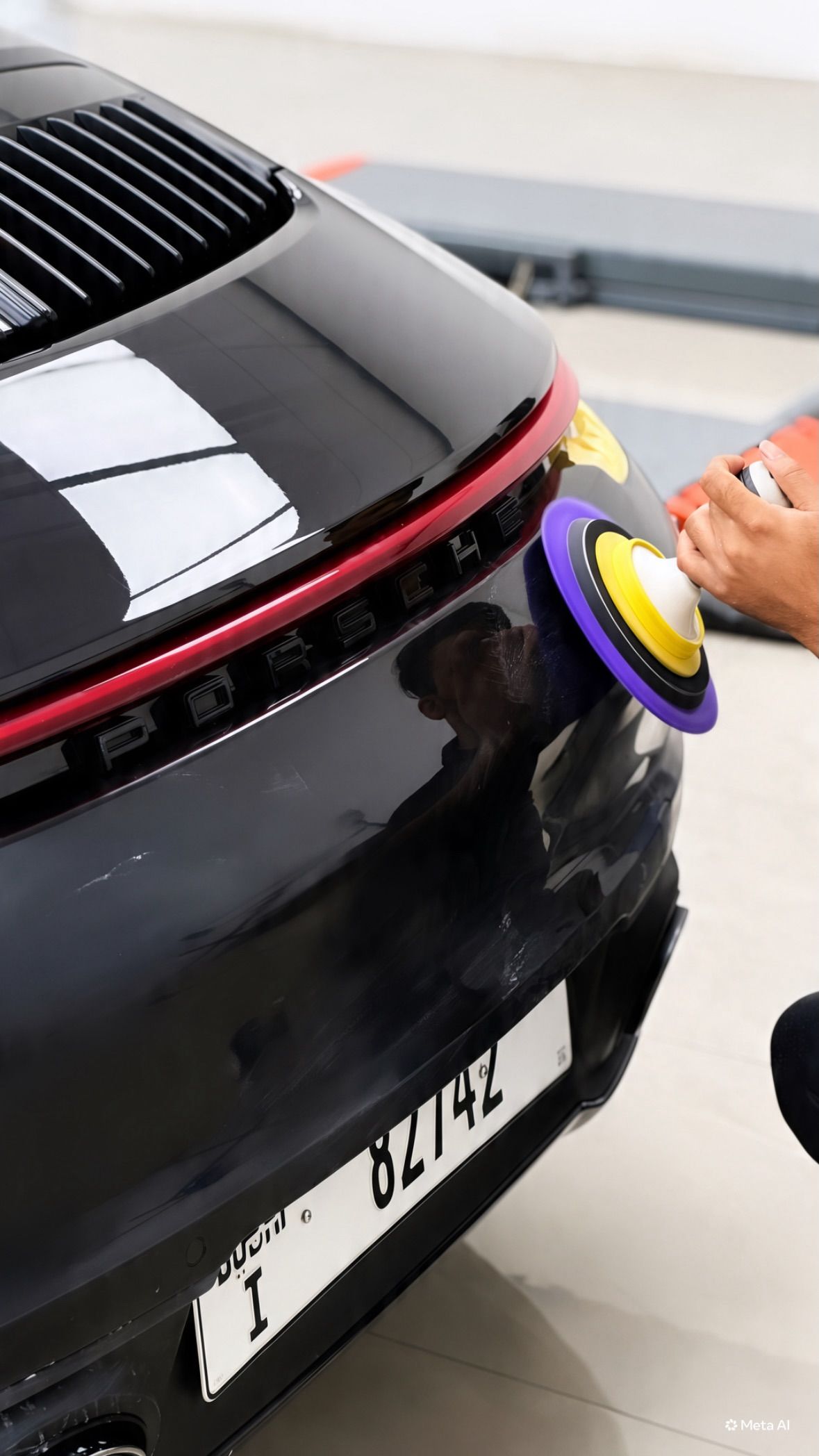
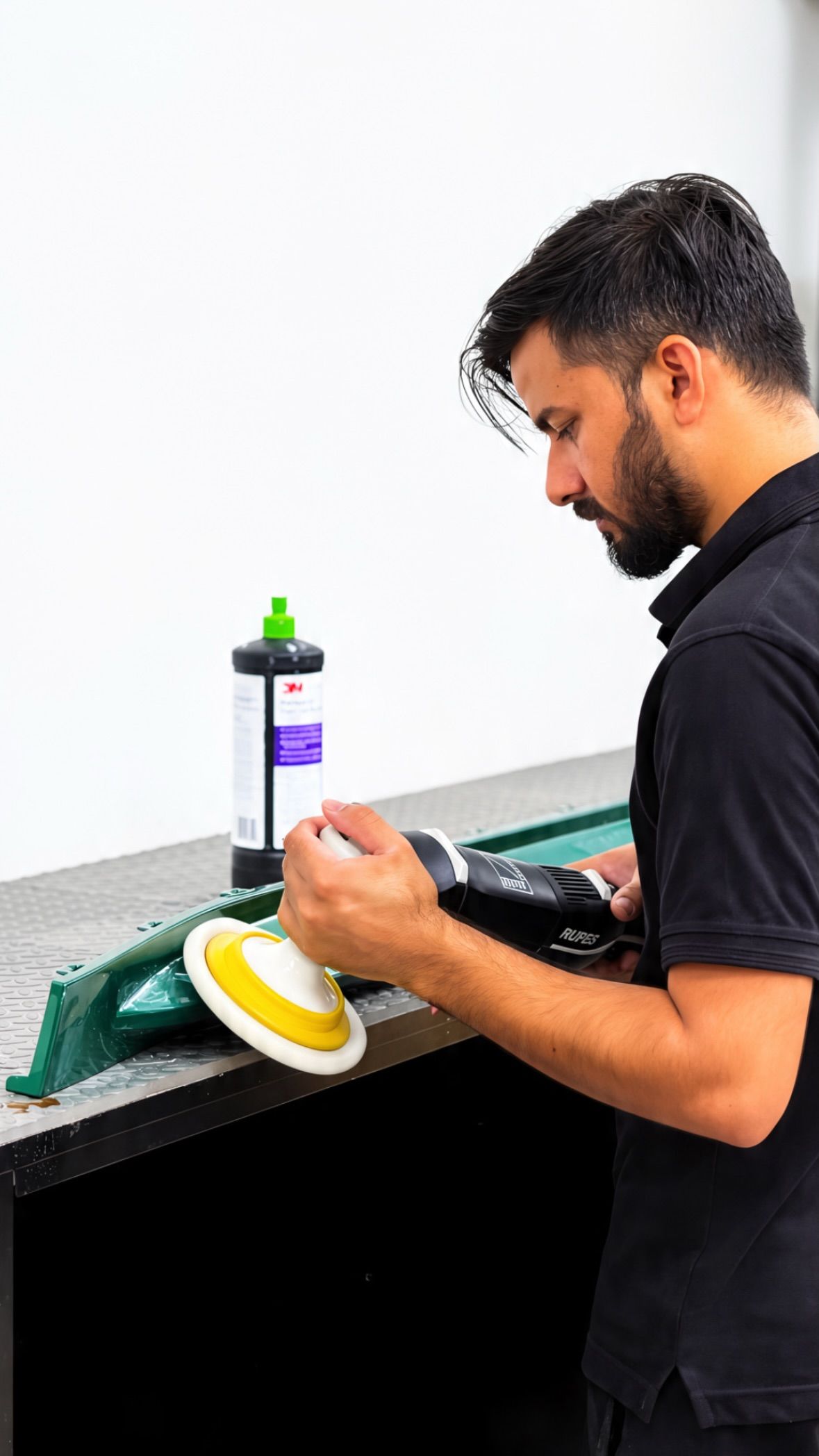
- Prepare. The paint beside the repair is cleaned and polished.
- Identify the formula. We read the paint code and review the available PPG variants.
- Measure and compare. Digital measurement and variant chips are checked against the car.
- Spray-out. A test card is sprayed and checked at several angles before the panel is painted.
- Plan blending. We decide where to blend so the repair cannot be picked out at panel gaps.
- Final inspection. The finished repair is checked in daylight and under studio lighting before handover.
Plastic bumpers and matte finishes need extra care; see our bumper repair guide.
Need paint work done? See prices, our PPG process and real jobs on our car painting in Dubai page.
What our PPF customers say
Frequently asked questions
Is the paint code enough for an exact colour match?
Not always. One paint code can have several factory variants, and the paint on the car may have faded or been repaired before. The code is the starting point, then the painter confirms the right variant against the car with test sprays.
What is a spectrophotometer?
It is a handheld device that measures the colour of a painted surface, often from several angles, and suggests the closest formula. It speeds up colour selection, but the result is still confirmed with a sprayed test card.
Why are metallic and pearl colours harder to match?
The metallic flakes and pearl pigments reflect light differently depending on how they settle in the paint. Spray technique and film thickness change that, so the colour can look right face-on and wrong at an angle. Blending into the next panel is usually the answer.
Does blending mean painting the whole car?
No. Blending extends the new colour a short way into the neighbouring panel so there is no visible line at the panel gap. Only the repair panel and the blend area are painted.
Can faded or older paint still be matched?
Usually, yes. The painter polishes the area next to the repair to see its true colour and adjusts the formula to suit. Very badly faded paint may need restoring or refinishing over a larger area first.
Which paint system does Apex Detail Studio use?
Apex Detail Studio refinishes cars with a professional PPG automotive refinish system, including its colour formulas and digital colour tools. Send photos and your car details on WhatsApp for a first view, and we confirm the scope after inspection.