A panel repaint is usually the right choice when the damage is limited to one or two panels and the rest of the paint is healthy. Several panels are painted when damage spreads across neighbours or a colour needs blending. A full respray makes sense when the paint is failing across most of the car, when many panels have mismatched old repairs, or when you want a complete colour change. The decision should follow an inspection of the whole car, because sound factory paint is worth keeping.
Jump to section · 9 parts
- When is a panel repaint enough?
- When should several panels be painted?
- When does a full respray make sense?
- How does cost differ between a panel repaint and a full respray?
- Will a panel repaint look different from the rest of the car?
- Does a full respray reduce vehicle value?
- How does Apex Detail Studio decide the right scope?
- What our PPF customers say
- Frequently asked questions
Key facts
- Panel repaint: for localised damage on one panel, often with blending into neighbours.
- Multi-panel repair: for damage or fade that crosses panel gaps, such as a door and rear quarter.
- Full respray: for widespread clearcoat failure, many mismatched repairs, or a colour change.
- Originality: factory paint that is still sound is usually worth keeping, especially on valuable cars.
- Pricing: paint work at Apex is quoted after inspection, because scope varies so much from car to car.
Not sure how much paint your car needs? WhatsApp us your model and the team will reply with a first view on the scope.
Owners often arrive at a body shop with one of two ideas. Either they want the smallest, cheapest fix for a scraped door, or they assume that if one panel is being painted, the whole car may as well be done. Neither is automatically right.
In Dubai, the answer often depends on what the sun has already done to the rest of the car. A five-year-old car parked outdoors may have a bonnet and roof that have aged differently from the doors. This guide explains when a panel repaint is enough, when it is not, and how to make the decision without being sold more than you need.
When is a panel repaint enough?
A panel repaint is enough when the damage is limited to one panel and the paint on the surrounding panels is healthy. Typical examples are a scraped bumper corner, a keyed door, a dented wing or a bonnet badly hit by stone chips.
The panel is repaired, prepared and refinished, and the colour is matched to the car with test sprays. On many colours the new paint is also blended a short way into the neighbouring panel so the eye cannot find a line at the gap. Our colour matching guide explains how that works.
For smaller damage, a full panel may not even be needed. Our scratch repair guide explains when polishing, touch-up or a local repair is the better option.
Get a paint scope and estimate for your car
Send your model and a few photos on WhatsApp and the team will reply with a quote.
When should several panels be painted?
Several panels should be painted when the damage or deterioration crosses panel gaps, or when the colour cannot be matched cleanly on one panel alone. A side scrape that runs from the front door into the rear door and quarter panel is a common example.
- Damage that continues across two or more adjacent panels.
- Metallic, pearl or tri-coat colours that need blending on both sides of the repair.
- Neighbouring panels with old repairs that no longer match.
- Sun fade that makes a single new panel stand out against its neighbours.
When does a full respray make sense?
A full respray makes sense when most of the car’s paint has a problem, not just one area. The most common reasons are clearcoat failure across the roof, bonnet and boot, many panels with poor previous repairs, a classic car restoration, or a deliberate colour change.
Clearcoat that is peeling or crazing over large areas cannot be fixed panel by panel without leaving a patchwork. Our guide to clearcoat failure covers the warning signs. A colour change is a bigger project again, because door shuts, openings and documentation have to be considered, which is covered in our article on full colour change resprays.
How does cost differ between a panel repaint and a full respray?
A full respray costs far more than a panel repaint because the labour multiplies: more dismantling, more preparation, more masking, more paint and much longer curing and reassembly.
We do not publish fixed paint prices, because two jobs with the same name can be very different. Pricing depends on the car, the colour, the condition of the existing paint and how much needs to be removed and refitted.
| Factor | Panel repaint | Full respray |
|---|---|---|
| Typical reason | Localised damage on one or two panels | Widespread paint failure, many repairs or colour change |
| Dismantling | Parts on and around the panel | Lights, trim, handles and seals across the whole car |
| Preparation | One panel plus blend areas | Every painted surface |
| Colour match | Matched and blended to existing paint | Uniform colour across the car |
| Turnaround | Usually shorter | Usually much longer |
| Effect on originality | Only the repaired panels change | Factory paint is replaced everywhere |
Will a panel repaint look different from the rest of the car?
A properly matched and blended panel repaint should not stand out at normal viewing distance. The risk of a visible difference comes from skipped steps: no spray-out card, no blending on a difficult colour, or new paint sprayed next to a panel that has faded badly.
If the surrounding paint is very tired, the honest answer may be that one new panel will look better than its neighbours. In that case we explain the options, which may include restoring the neighbouring paint or widening the repair.
Does a full respray reduce vehicle value?
A full respray can reduce value on cars where originality matters, such as collectible, classic or high-end models, because paint-depth readings will show that factory paint has been replaced. On an older daily car with failing paint, a quality respray can improve how the car presents.
The effect depends on the car, the quality of the work and how well it is documented. For valuable cars, our guides to luxury and supercar paint repair and classic car paint restoration explain why the smallest correct repair is usually the safest choice.
How does Apex Detail Studio decide the right scope?
We decide scope after inspecting the whole car, not just the damaged area. The aim is to recommend the smallest repair that will look right and last.
- Walk-round inspection. We look at every panel in daylight and under studio lighting.
- Paint depth and history. We check for previous repairs and thin or failing clearcoat.
- Colour assessment. We judge whether the colour can be matched and blended on the damaged panel alone.
- Options. We explain panel, multi-panel and full respray options with the trade-offs of each.
- Written scope. You receive the panels involved, blending, dismantling and expected turnaround before work starts.
- Refinish and check. The work is done with a professional PPG refinish system and inspected before handover.
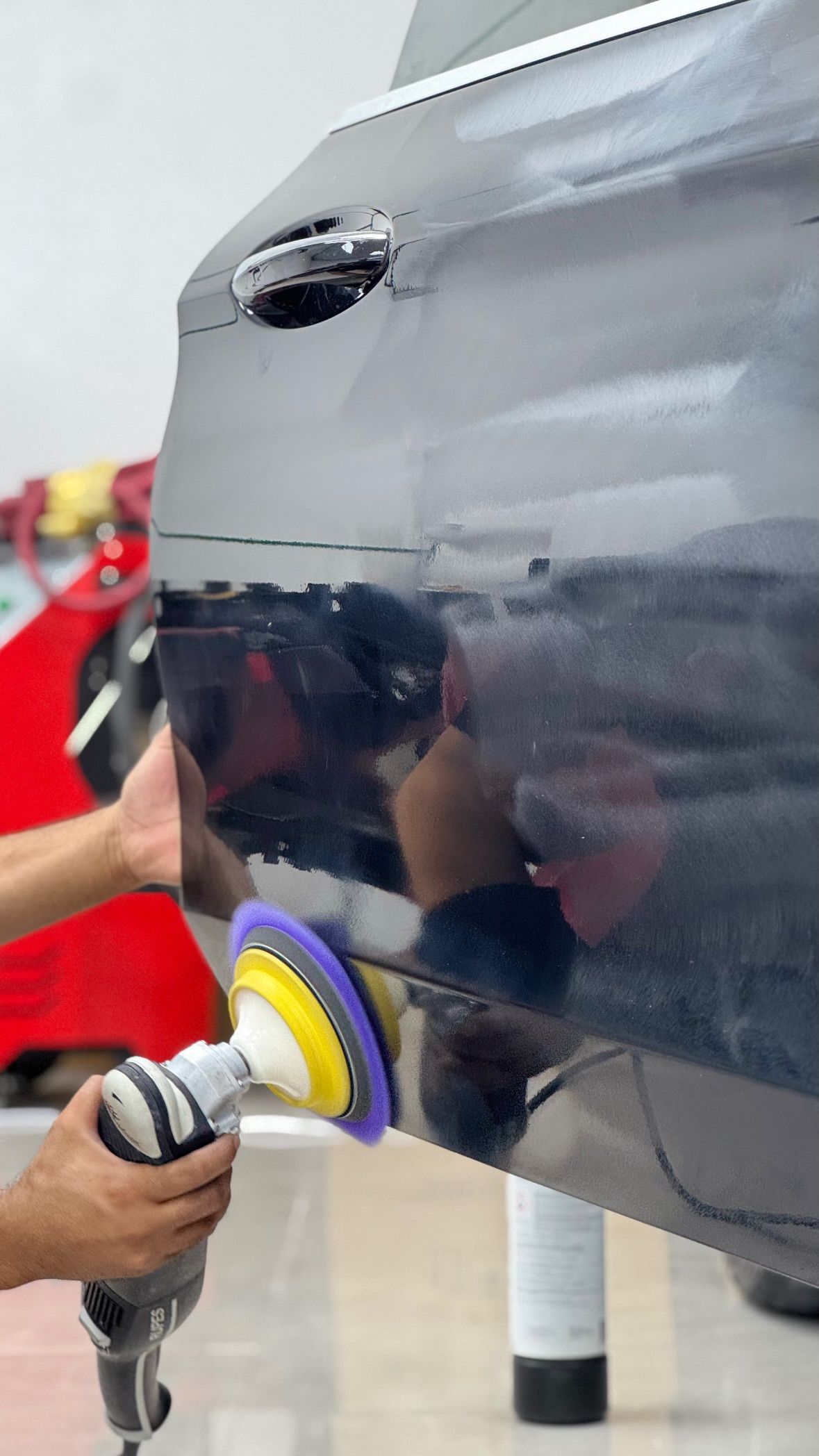
Need paint work done? See prices, our PPG process and real jobs on our car painting in Dubai page.
What our PPF customers say
Frequently asked questions
Is it possible to repaint just one panel?
Yes. When damage is limited to one panel and the colour can be matched, a single panel repaint is often the best repair. Difficult colours may also need a short blend into the neighbouring panels.
Is a full respray always better than a panel repaint?
No. A full respray removes sound factory paint and costs much more. It only makes sense when the paint is failing across most of the car, when many old repairs clash, or when you want a colour change.
Can a car be resprayed in a different colour?
Yes, but a colour change is a larger project. Door shuts, openings and other hidden areas need planning, and owners should confirm any registration or documentation requirements before starting.
How long does a full respray take?
It depends on bodywork, dismantling, preparation, curing and reassembly, so it is much longer than a single panel. We confirm a realistic turnaround after inspecting the car.
Will repainting show up on an inspection report?
It can. Paint-depth gauges used by inspectors and buyers can identify refinished panels. Keeping the repair as small as possible and documenting the work helps on resale.
Can PPF protect a newly painted car?
Yes, once the new paint has fully cured according to the paint system’s guidance. Many owners add paint protection film after a respray so the fresh finish is protected from stone chips straight away.