The right car scratch repair depends on how deep the scratch goes. Light scratches that stay in the clearcoat can usually be polished out or made far less visible. Scratches through the clearcoat into the colour coat need paint, either a careful touch-up for small marks or a local or panel repair for longer ones. Scratches that reach primer, bare metal or plastic should be repaired promptly, because exposed metal can corrode. In Dubai, Apex Detail Studio assesses the depth first and quotes after inspection.
Jump to section · 9 parts
- What layers make up automotive paint?
- When can a scratch be polished?
- When is touch-up paint suitable?
- When does the panel need paint?
- Why should exposed metal be repaired quickly?
- Can a scratch be repaired locally?
- How does Apex Detail Studio repair car scratches?
- Frequently asked questions
- Get your scratch assessed
Key facts
- Clearcoat scratches: often polished out or greatly reduced, if enough clearcoat remains.
- Colour coat scratches: need new paint, from a levelled touch-up to a panel refinish.
- Primer or metal showing: repair promptly, as exposed steel can start to rust.
- Fingernail test: if your nail catches in the scratch, it is probably too deep to polish out fully.
- Prevention: PPF on vulnerable panels takes scratches and chips instead of the paint.
Got a scratch on your car? WhatsApp us your model and the team will reply with a first view on the repair.
Scratches are one of the most common reasons owners visit a body shop in Dubai. Tight mall car parks, shopping trolleys, sand blown across the paint and automatic car washes all leave marks, and dark colours show every one of them in the sun.
The good news is that many scratches look worse than they are. The key question is how many layers of paint the scratch has cut through. This guide explains how to judge that, what each repair option involves, and when a scratch needs more than a polish.
What layers make up automotive paint?
Modern car paint is a stack of thin layers, and the depth of a scratch decides which of them need repairing. From the top down, most cars have a clearcoat, a colour basecoat, a primer and then the body panel itself.
| Layer | What it does | If a scratch reaches it |
|---|---|---|
| Clearcoat | Gives gloss and protects the colour from UV and chemicals | Often polishable, depending on depth and remaining clear |
| Basecoat (colour) | Carries the colour, metallic or pearl effect | Needs new paint: touch-up, local repair or panel refinish |
| Primer | Bonds the paint to the panel and helps resist corrosion | Needs refinishing; the panel is now more exposed |
| Bare metal or plastic | The body panel itself | Repair promptly; steel can rust and plastic needs proper preparation |
The whole paint system is only a fraction of a millimetre thick, which is why aggressive DIY sanding or cutting can do more harm than the original scratch.
Get a scratch repair estimate
Send your model and a few photos on WhatsApp and the team will reply with a quote.
When can a scratch be polished?
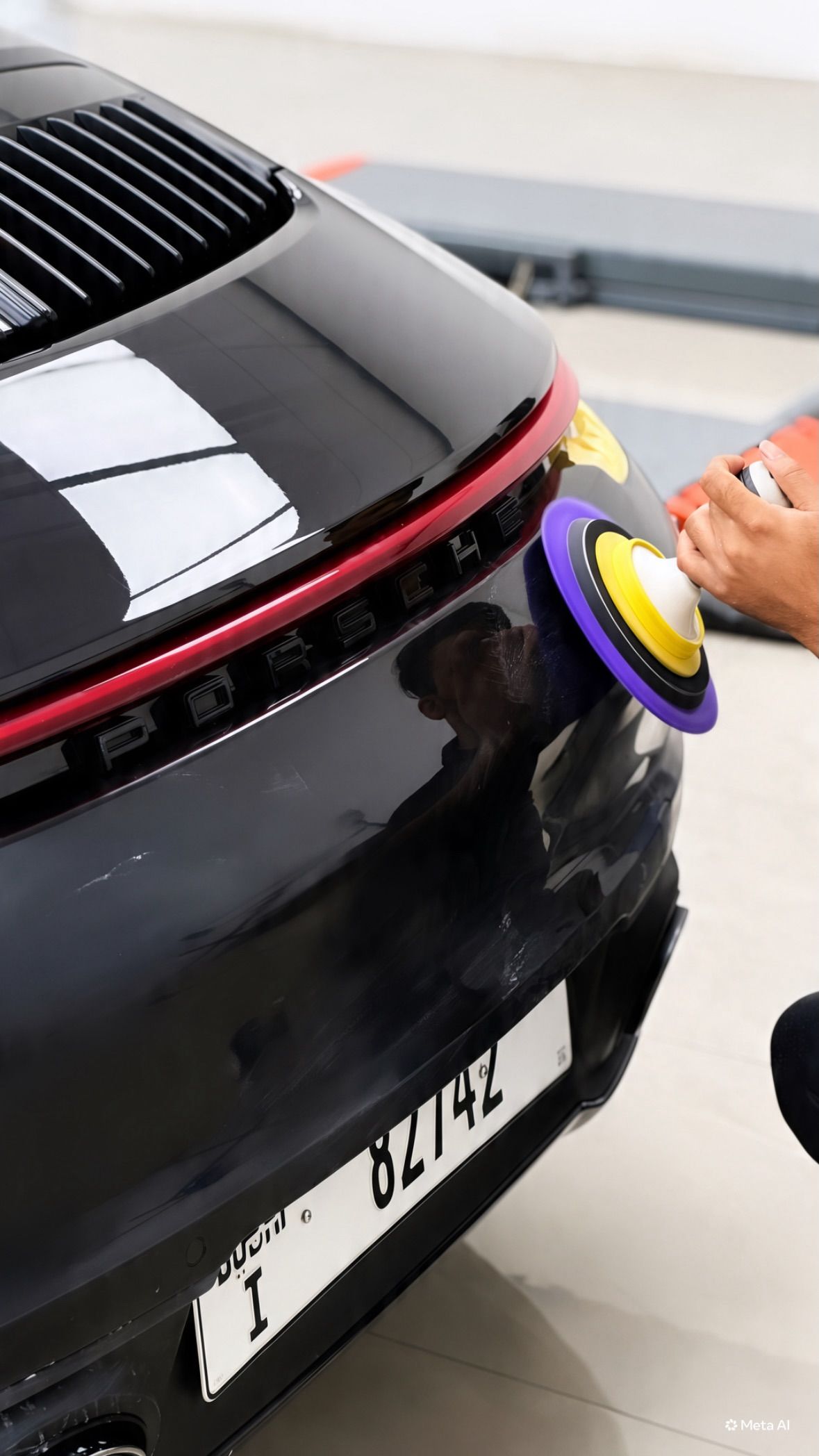
A scratch can be polished when it sits within the clearcoat and there is enough clear left to remove a thin layer safely. Polishing levels the surface around the scratch so light no longer catches its edges.
Swirls, light wash marks, fine key marks that have not broken through and many marks from car parks fall into this group. A paint-depth gauge helps the technician decide how much can be removed safely. Some scratches can be greatly reduced rather than fully removed, and a good detailer will tell you that honestly before starting.
A simple guide is the fingernail test. If your nail slides over the scratch, polishing may well work. If it catches, the scratch is probably into the colour coat.
When is touch-up paint suitable?
Touch-up paint is suitable for small, narrow damage such as stone chips and short deep nicks, where a full refinish would be out of proportion. A professional touch-up fills the damage in thin layers of matched colour and clear, then levels and polishes it flush.
It is not the same as dabbing on paint from a bottle. Even done well, a touch-up is usually less visible rather than invisible, especially on metallic colours. Long scratches rarely look good with touch-up alone. Our stone-chip repair guide goes into more detail.
When does the panel need paint?
A panel needs refinishing when the scratch is long, wide or through the colour coat over an area that touch-up cannot hide. Key scratches along a door, scrapes from a pillar in a car park and scratches with cracked paint around them usually fall here.
- The scratch has exposed primer, metal or plastic over a visible length.
- There are several deep scratches on the same panel.
- The paint around the scratch is cracked, lifting or flaking.
- Previous DIY repairs have left a rough or mismatched patch.
The repair is matched to the existing colour and, on many colours, blended into the neighbouring panel. Our guides to paint colour matching and panel repaints versus resprays explain the next steps.
Why should exposed metal be repaired quickly?
Exposed steel should be repaired quickly because it can begin to corrode, and corrosion can spread under the surrounding paint. A scratch that needed a small repair can then need sanding back and refinishing over a larger area.
Aluminium and plastic panels do not rust in the same way, but bare aluminium can still corrode and plastic left exposed is harder to prepare properly later. Our article on common paint defects shows how small damage grows if it is left.
Can a scratch be repaired locally?
Some scratches can be repaired locally, within a small area of the panel, rather than repainting the whole panel. This works best on bumpers, lower areas and colours that blend well.
The technician prepares and repaints the damaged zone, then blends the new colour and clear into the surrounding original paint. Where the scratch sits in the middle of a large, flat panel, or the colour is a difficult pearl or tri-coat, refinishing the full panel is often the more reliable result. Matte and satin paint has its own rules, covered in our matte paint repair guide.
How does Apex Detail Studio repair car scratches?
Every scratch repair at our Al Quoz studio starts with an honest assessment of depth before we recommend a method.
- Clean and inspect. The area is washed and checked under studio lighting to see the true depth.
- Measure. Paint depth is measured where polishing is being considered.
- Recommend. We explain whether polishing, touch-up, a local repair or a panel refinish is right.
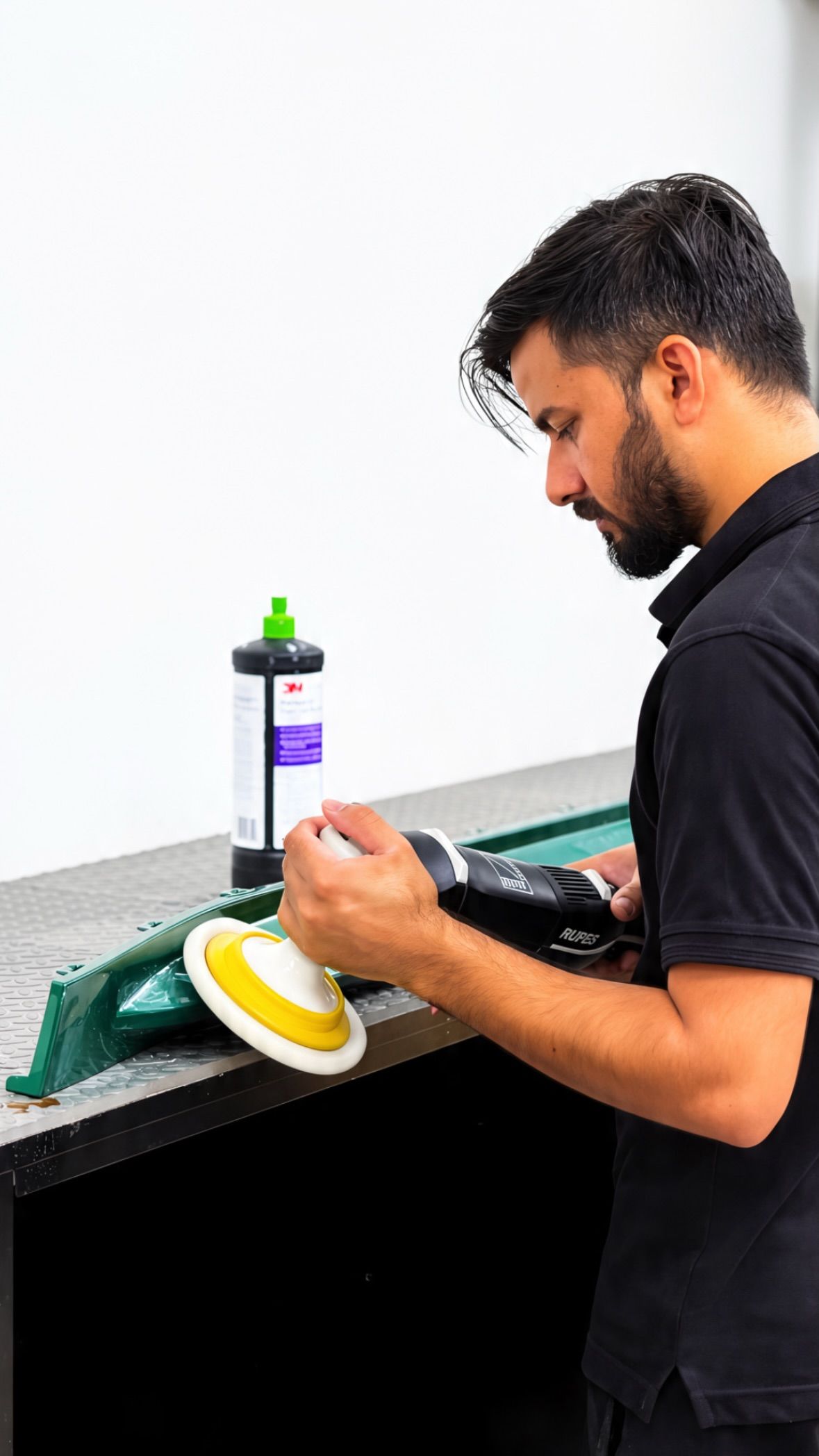
- Repair. Polishing is done in controlled stages, or the area is prepared and refinished with a professional PPG refinish system.
- Finish and check. The repair is checked in daylight and under studio lights before handover.
Once any new paint has cured, paint protection film on doors, bumpers and other vulnerable panels is the most effective way to stop new scratches reaching the paint. Ceramic coating helps with washing and gloss but does not stop scratches.
Need paint work done? See prices, our PPG process and real jobs on our car painting in Dubai page.
Frequently asked questions
Can every scratch be polished out?
No. Polishing only works when the scratch stays within the clearcoat and enough clear remains to remove safely. Deeper scratches need new paint, although polishing can still make them less visible.
How can I tell if a scratch has reached the primer?
A grey, white or dull layer showing at the bottom of the scratch often means primer is exposed, and silver usually means bare metal. Lighting can be deceptive, so a professional inspection is the safest way to be sure.
Is touch-up paint invisible?
Usually not completely. A professional touch-up that is filled, levelled and polished can be hard to see from normal distance, but metallic colours in particular may still show up close. It is best for small chips and nicks.
Can scratches cause rust?
Yes, if they expose bare steel. Corrosion can start in the scratch and spread under the paint around it, so scratches through to metal should be repaired promptly.
Should I use a DIY scratch removal kit?
Be careful. Abrasive compounds and sandpaper can thin or haze the clearcoat and turn a small repair into a panel refinish. It is safer to have the depth assessed first.
Can ceramic coating stop scratches?
No. Ceramic coating adds gloss and makes washing easier, which can reduce wash marks, but it is far too thin to stop real scratches. PPF is the product designed to absorb scratches and chips.
Get your scratch assessed
Send photos on WhatsApp or bring the car to our Al Quoz studio, and we will tell you honestly whether it needs a polish, a touch-up or paint.
WhatsApp ApexCall +971 58 549 2739
Apex Detail Studio, 6A Street, Al Quoz Industrial 3, Dubai · Saturday to Thursday, 10am to 7pm