
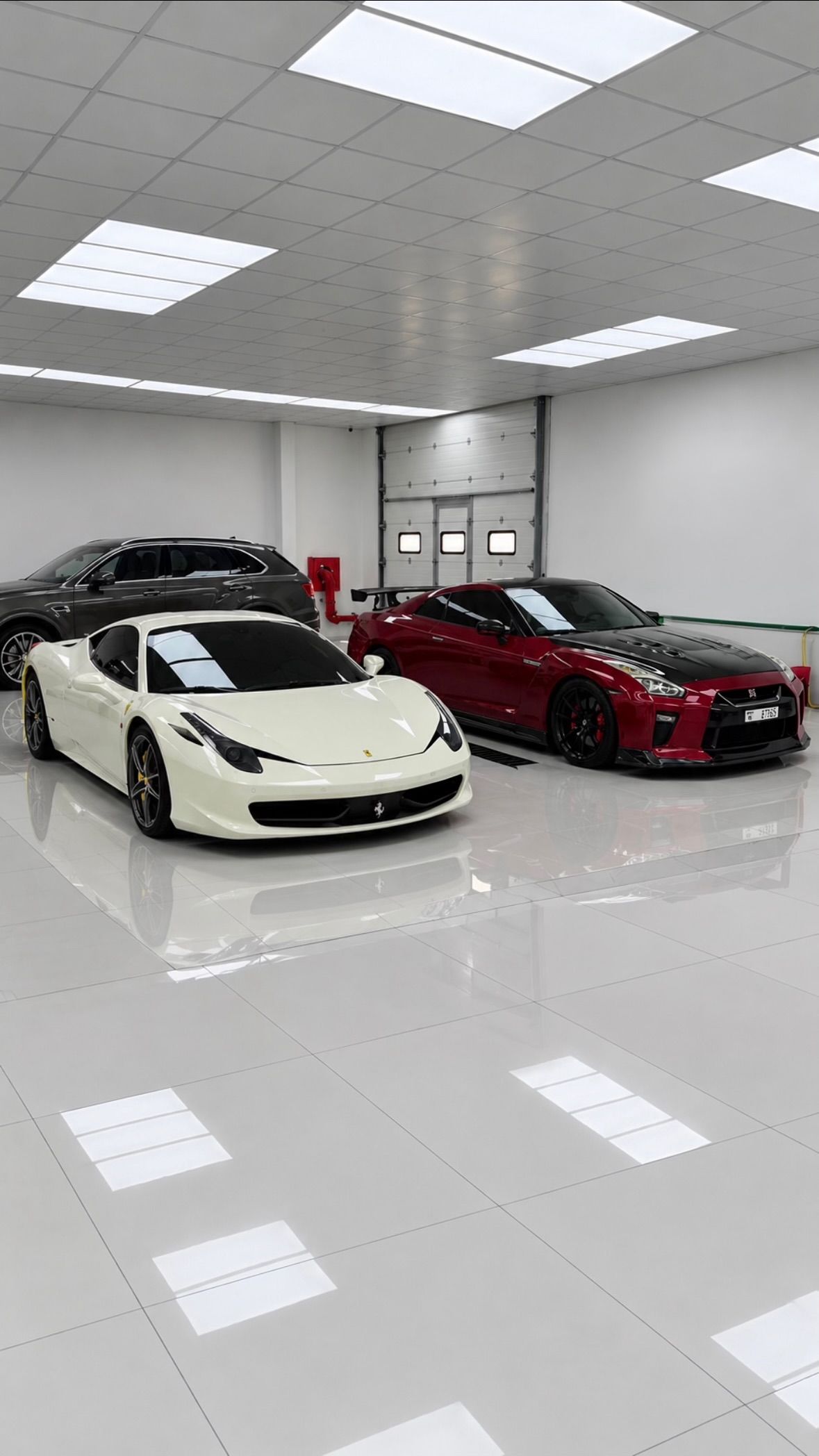
Luxury and supercar paint repair in Dubai should be planned around the specific car, not done as a quick panel respray. Tri-coat and pearl colours, aluminium and carbon panels, sensors and originality all change how the repair is done. A good shop inspects and documents the car first, keeps the repair as small as is technically right, matches colour with test sprays, and checks the finish under proper lighting before release.
Jump to section · 9 parts
- Why is the initial inspection so important?
- How do complex colours affect the repair?
- Why do panel materials matter?
- Should parts always be dismantled?
- How is originality protected?
- How does Apex Detail Studio handle a supercar repair?
- How can the repaired paint be protected afterwards?
- What our PPF customers say
- Frequently asked questions
Key facts
- Inspection first: paint depth, previous repairs, panel materials and electronics are documented before work starts.
- Complex colours: tri-coat, pearl and tinted-clear finishes usually need spray-out tests and careful blending.
- Materials: aluminium, steel, plastic and carbon fibre each need different preparation.
- Originality: on valuable cars, keeping sound factory paint is usually worth more than a fast full-panel respray.
- Paint system: Apex uses a professional PPG refinish system in its Al Quoz studio.
Damage on a high-value car? WhatsApp us your model and the team will reply with a first view on the repair.
A scuffed bumper on a family SUV and a scuffed bumper on a Ferrari 296 GTB are not the same job, even if the damage looks identical. On a supercar, the bumper may be a complex composite part with sensors and aero ducts, painted in a three-layer colour that changes from orange to red as you walk around it.
Owners of these cars also care about things a normal repair ignores: paint-depth readings at resale, how many panels have been touched, and whether the car still feels original. This guide explains how a proper luxury repair is planned, and why speed is usually the wrong goal.
Why is the initial inspection so important?
The inspection decides the whole repair. Before any sanding, the workshop should record the paint condition, existing chips and previous repairs, panel gaps, carbon parts, trim and electronics. That separates the new repair from damage that was already there.
On a valuable car this record protects the owner too. It shows exactly which panels were refinished and why, which matters when the car is sold or inspected by a specialist.
- Paint-depth readings on the damaged panel and its neighbours.
- Photos of the damage, the surrounding area and any previous repair.
- Panel material: steel, aluminium, plastic or carbon fibre.
- Sensors, cameras, radar units, badges and trim near the repair.
- Existing PPF or wrap that will need removal and replacement.
Get a supercar paint repair estimate
Send your model and a few photos on WhatsApp and the team will reply with a quote.
How do complex colours affect the repair?
Many luxury colours are not a single coat. A tri-coat has a base colour, a pearl or effect mid-coat and a clearcoat, and the final shade depends on how thick each layer is. Some manufacturers also use tinted clearcoats for extra depth.
That means the painter cannot just mix the code and spray. They need to select the right variant, spray test cards with different numbers of mid-coats, compare them on the car and plan where to blend.
| Colour type | Typical examples | What the repair needs |
|---|---|---|
| Solid | Plain white, black, non-metallic red | Accurate formula, usually less blending |
| Metallic | Silver, grey, dark blue metallics | Correct flake orientation, blending into neighbouring panels |
| Pearl or tri-coat | White pearl, candy reds, some Ferrari and Lamborghini colours | Spray-out tests, controlled mid-coat build, careful blending |
| Matte or satin | Factory matte paint on BMW, Mercedes-AMG, Porsche | Exact gloss level match; cannot be polished afterwards |
Why do panel materials matter?
Aluminium, steel, plastic and carbon fibre all need different repair methods. Aluminium must not be contaminated by steel dust, which can cause corrosion later. Plastics need flexible primers and adhesion promoters. Carbon fibre parts may be clear-coated weave that cannot be colour-sanded the same way as paint.
Heat matters too. Too much heat during curing or polishing can distort plastic parts or damage resin in carbon panels. A shop that treats every panel the same way is taking risks with your car.
Should parts always be dismantled?
Not always. Removing lights, trim and badges gives cleaner edges and avoids tape lines, but every clip and connector removed on a modern supercar is a chance to break something or trigger a fault light.
The decision should balance finish quality against risk, following the manufacturer’s procedures where they exist. A good shop will tell you what it plans to remove and why.
How is originality protected?
On a valuable car, the best repair is usually the smallest one that looks right. Repainting a whole bonnet for a small chip changes paint-depth readings across the panel and removes factory paint that was perfectly sound.
Depending on the damage, options range from a careful touch-up to a local repair blended within the panel, through to a full panel refinish. Our guide to stone-chip repair options explains how that choice is made. For originality-focused owners, we explain the options and their trade-offs before quoting.
How does Apex Detail Studio handle a supercar repair?
We use a professional PPG refinish system in our 20,000 sq ft Al Quoz studio, with the same documented approach on every high-value car.
- Document. Photos, paint-depth readings and a written list of existing damage.
- Plan. Agree the smallest suitable repair, the panels involved, blending and dismantling.
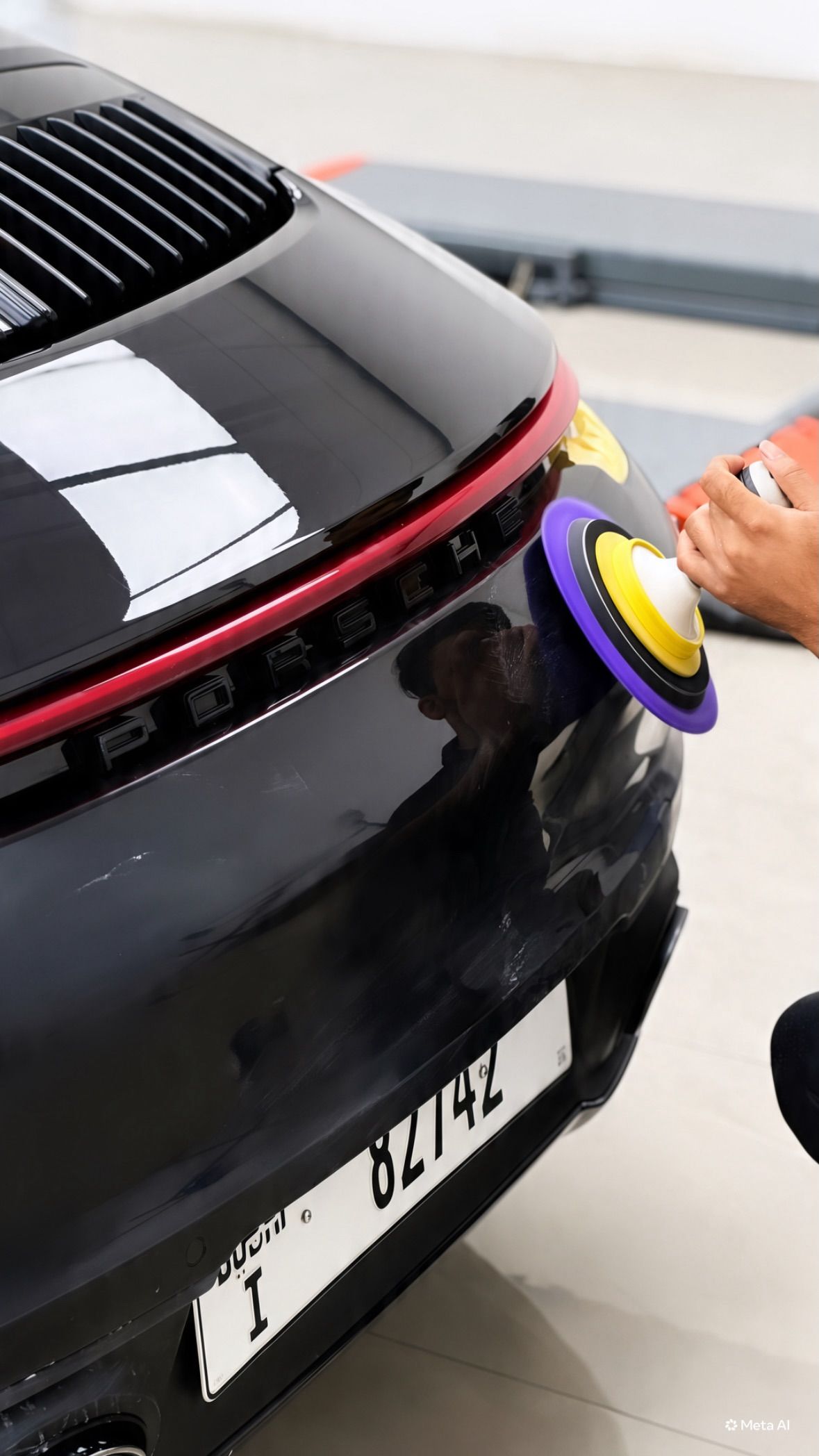
- Prepare. Repair the substrate using methods suited to the material.
- Match. Select the colour variant and confirm it with spray-out cards.
- Paint and cure. Apply basecoat and clearcoat to the product procedures, then cure fully.
- Inspect. Check colour, effect, gloss, texture, edges, overspray, panel alignment, sensors and warning lights.
How can the repaired paint be protected afterwards?
Once the new paint has cured, it can be protected exactly like factory paint. Many owners refit PPF over the repaired area or the whole front end, especially on cars that see highway miles. Compatible ceramic coating adds gloss and makes washing easier.
If the car is a Ferrari, Lamborghini or Porsche, our model guides on Ferrari PPF, Lamborghini PPF and Porsche PPF explain which areas to cover.
Need paint work done? See prices, our PPG process and real jobs on our car painting in Dubai page.
What our PPF customers say
Frequently asked questions
Can supercar paint be colour matched?
Yes, in most cases. The painter uses the factory code, PPG formula variants and spray-out test cards to find the closest blendable match. Tri-coat and pearl colours usually need extra test sprays and blending into neighbouring panels.
Do carbon fibre panels need special care?
Yes. Carbon parts may be painted or clear-coated weave, and resin can be damaged by heat or aggressive sanding. The substrate and existing finish must be assessed before any repair is planned.
Will a paint repair affect my car’s originality?
Any refinish changes paint-depth readings on the panels involved. Keeping the repair as small as is technically right, and documenting it, limits the impact. We explain the options before quoting.
Should a damaged panel be replaced instead of repaired?
Not automatically. Repair or replacement depends on the material, the damage and manufacturer guidance. A new panel still needs painting and blending, so it is not always the better option.
How long does luxury car paint repair take?
It depends on the damage, parts availability, colour complexity, curing and reassembly. A small local repair can be quick; a multi-panel tri-coat repair takes longer. We confirm timing after inspection.
Can I add PPF after the repair?
Yes, once the new paint has fully cured. PPF is a common choice after a repair on a high-value car, because it protects the new finish from stone chips straight away.