For regular Dubai highway driving, the minimum sensible PPF coverage is a full front: bumper, full bonnet, front wings, mirrors and headlights. Daily commuters on roads such as Sheikh Zayed Road (E11) and Sheikh Mohammed Bin Zayed Road (E311) usually benefit from adding the A-pillars, roof leading edge, sills and lower doors, or simply choosing full body.
Jump to section · 9 parts
- Which parts of a car take the most damage on Dubai highways?
- Is a partial bonnet enough for highway driving?
- What PPF coverage suits different highway drivers?
- Which film is best for highway driving?
- What can PPF not protect against on the highway?
- How should highway-driven PPF be maintained?
- How does Apex Detail Studio plan highway PPF coverage?
- Frequently asked questions
- Protect your car before the next highway run
At Apex, full-body PPF starts from AED 12,000 for sedans and AED 13,500 for SUVs and trucks (colour PPF from AED 15,000), depending on options, before 5% VAT, and front-end packages are quoted per car.
Key facts
- Minimum for highway use: full front, including bumper, full bonnet, wings, mirrors and headlights.
- Daily commuters: add A-pillars, roof edge, sills and lower doors, or go full body.
- Full PPF starts from AED 12,000 for sedans and AED 13,500 for SUVs and trucks, and colour PPF from AED 15,000, depending on options, before 5% VAT.
- Limits: PPF absorbs small stones and sand, not large debris or collisions.
Driving the highways every day? WhatsApp us your model and the team will reply with the coverage we recommend for your car.
Dubai’s highways are fast, busy and full of trucks. Construction traffic, gravel loads, sand blown across the road and long runs between Dubai, Abu Dhabi, Sharjah and Al Ain mean the front of a car takes a steady stream of small impacts. Many owners notice their first bonnet chips within weeks of collecting a new car.
Paint protection film is the most effective way to stop that damage reaching the paint, but how much of the car you cover matters. This guide explains which panels take the damage, which coverage suits different drivers, which film to choose and what it costs.
Which parts of a car take the most damage on Dubai highways?
The front of the car takes most highway damage, because it meets stones, sand and debris first at speed. Lower panels and areas behind the wheels take grit thrown up by your own tyres.
| Area | What hits it | Priority for highway drivers |
|---|---|---|
| Front bumper and grille area | Stones and grit from vehicles ahead | Essential |
| Bonnet, especially the leading edge | Stone chips at speed | Essential |
| Front wings | Chips and sand blasting | Essential |
| Mirrors and headlights | Direct impacts | Essential |
| A-pillars and roof leading edge | Debris carried over the windscreen | Recommended for daily commuters |
| Sills, lower doors and rear arches | Grit thrown up by the tyres | Recommended |
| Rear bumper | Less exposed on the highway, scuffs when loading | Optional |
Our article on how PPF handles stone chips and heat explains what the film does on impact.
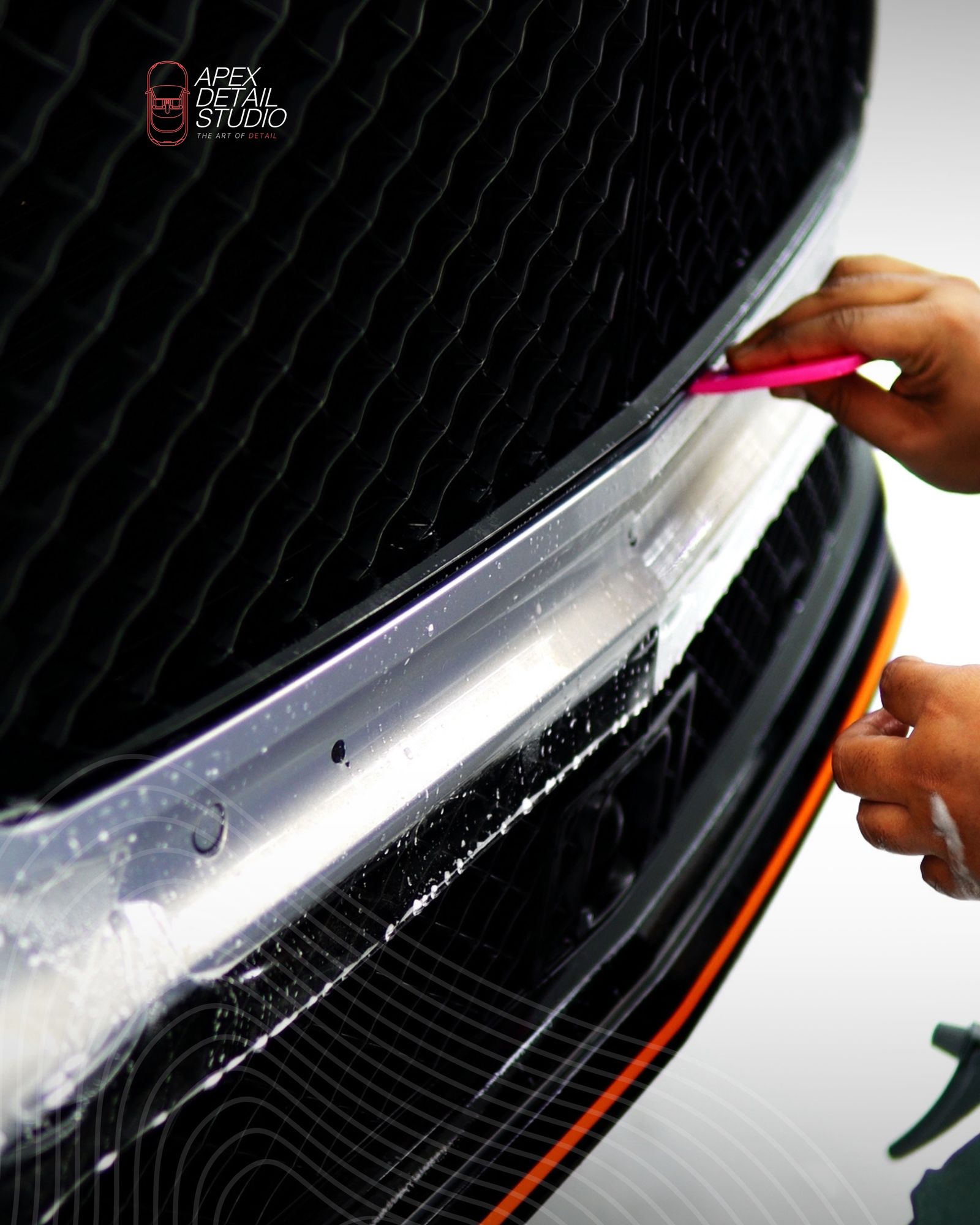
Get a highway PPF estimate
Send your model and a few photos on WhatsApp and the team will reply with a quote.
Is a partial bonnet enough for highway driving?
For regular highway use, a full bonnet is usually better than a partial one. A partial bonnet covers the leading section only and leaves a visible film line across the panel, and chips often land just behind that line.
Partial coverage can suit lighter users on a tight budget, but on Dubai motorways a full bonnet, full wings and a full bumper give a cleaner look and more complete protection. Our partial PPF packages guide compares the options.
What PPF coverage suits different highway drivers?
The right coverage depends on how far you drive, where, and how long you keep the car.
- Occasional highway use: a full-front package covering bumper, bonnet, wings, mirrors and headlights.
- Daily commuter between emirates: extended front, adding A-pillars, roof edge, sills and lower doors.
- High mileage, new or dark car kept long term: full body, so every panel is protected and there are no visible film lines.
- SUVs and 4x4s that also go off road: full body or extended coverage including lower panels and arches. See our off-road SUV PPF guide.
Headlights deserve a mention. Modern LED units are expensive to replace, and our guide on headlight PPF explains how film helps against pitting.
Which film is best for highway driving?
Any premium film will absorb most small stones, but thicker film absorbs more energy. It suits heavy highway use and cars that also do track days.
| Film option | Price at Apex (before 5% VAT) | Highway suitability |
|---|---|---|
| Full PPF, SUV or truck | From AED 13,500 | Premium gloss film with 10-year manufacturer warranty |
| Colour PPF | From AED 15,000 | A new colour that also protects the paint |
| Front-end package | Quoted per car | Focused protection where most chips land |
Our PPF price guide has the full breakdown, and our premium PPF guide explains the product lines.
What can PPF not protect against on the highway?
PPF is very good at absorbing small stones, sand and road grit, but it has limits. Large stones, falling debris from trucks, collisions and kerb strikes can still cut the film or dent the panel beneath.
Deep cuts in the film do not heal, but the damaged panel can be re-filmed without touching the paint. Keeping a safe distance from trucks and construction vehicles still helps. If chips have already reached the paint, read our guide to stone-chip repair options before film goes on.
How should highway-driven PPF be maintained?
Highway cars collect bug residue, tar and fine sand on the front end, so wash them regularly and gently.
- Rinse off loose sand before touching the surface.
- Soften bug residue and tar with a PPF-safe pre-wash.
- Hand wash with a pH-neutral shampoo and clean mitts.
- Keep pressure-washer nozzles away from film edges.
- Check the bonnet edge, bumper corners and mirrors for lifting or deep marks every few weeks.
A coating made for film makes this easier; see our guide to ceramic coating over PPF. Our article on how long PPF lasts in Dubai covers the film’s lifespan.
How does Apex Detail Studio plan highway PPF coverage?
We plan coverage around how you actually drive, then prepare the car so the film stays put at highway speeds.
- Driving review. We ask about your routes, mileage and how long you plan to keep the car.
- Inspection. We check existing chips, repairs and the condition of the front end.
- Coverage plan. We recommend full front, extended front or full body, and the right film.
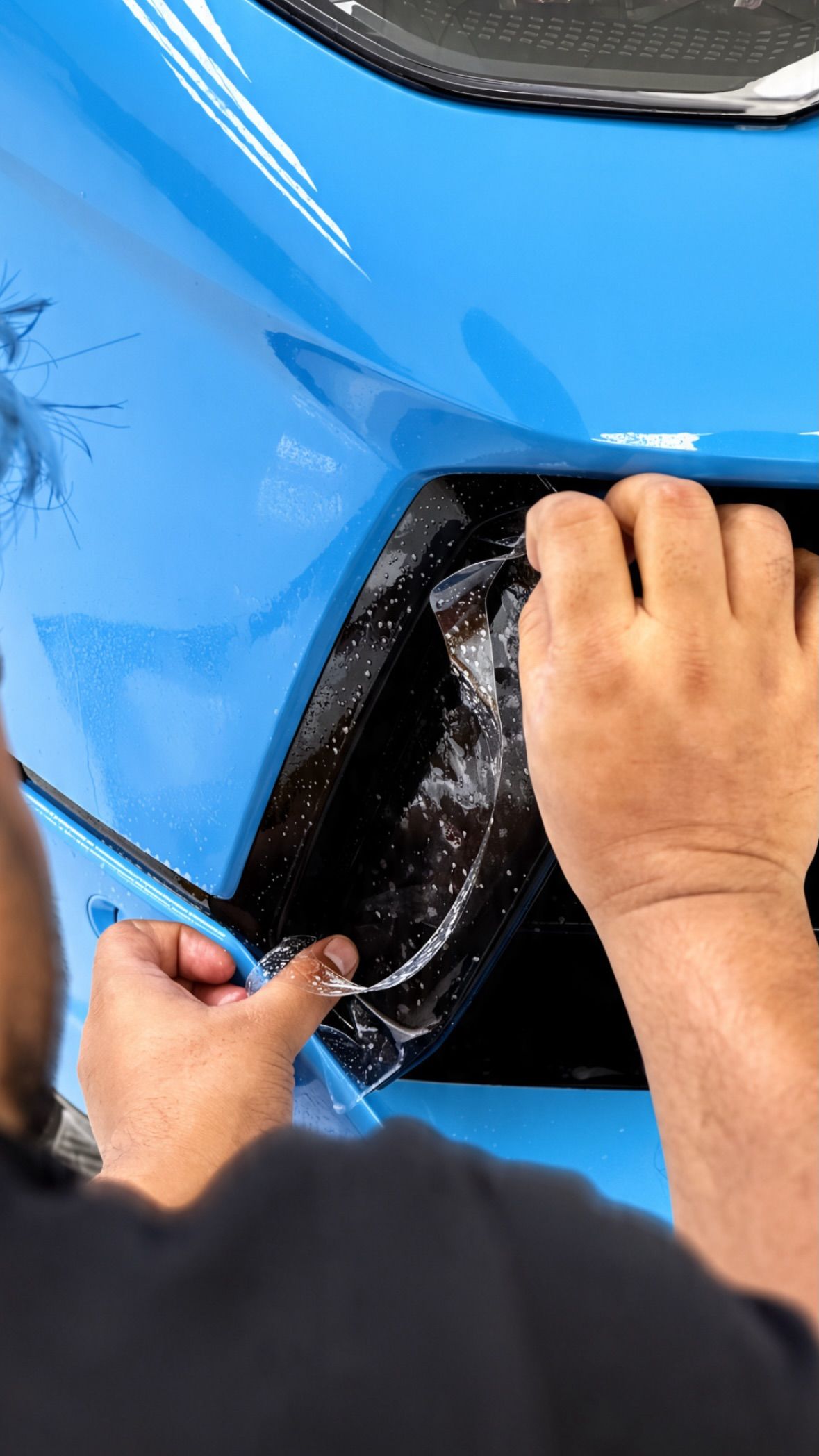
- Patterns. Digital patterns are adjusted to wrap leading edges where safe.
- Installation. Film is laid panel by panel; full body generally takes two to three days.
- Final check. Edges on the bonnet, bumper and mirrors are inspected before release.
Read more about our paint protection film service and our installation process.
Frequently asked questions
What is the best PPF coverage for highway driving in Dubai?
For regular highway use, at least a full front: bumper, full bonnet, front wings, mirrors and headlights. Daily commuters and owners of new or dark cars often choose extended front or full body.
Is full-front PPF enough for Dubai highways?
For many drivers, yes. It covers the panels that take most stone chips. Daily long-distance commuters may still see chips on the A-pillars, sills and lower doors, which extended coverage or full body protects.
How much does highway PPF coverage cost in Dubai?
At Apex, full-body PPF starts from AED 12,000 for sedans and AED 13,500 for SUVs and trucks (colour PPF from AED 15,000), depending on options, before 5% VAT. Front-end packages are quoted per car.
Is thicker PPF worth it for highway driving?
For heavy highway use, often yes. It still cannot stop large debris.
Can PPF stop all stone chips?
No. PPF absorbs most small stones and sand on the covered panels, but large stones and heavy debris can still cut the film or dent the panel. Damaged film can be replaced panel by panel.
How long does highway PPF installation take?
A front-end package is usually quicker, while a standard full-body installation generally takes two to three days. We confirm the schedule after inspection.
Protect your car before the next highway run
Tell us your car and your daily routes, and we will recommend the coverage and film that suit how you drive.
WhatsApp ApexCall +971 58 549 2739
Apex Detail Studio, 6A Street, Al Quoz Industrial 3, Dubai · Saturday to Thursday, 10am to 7pm