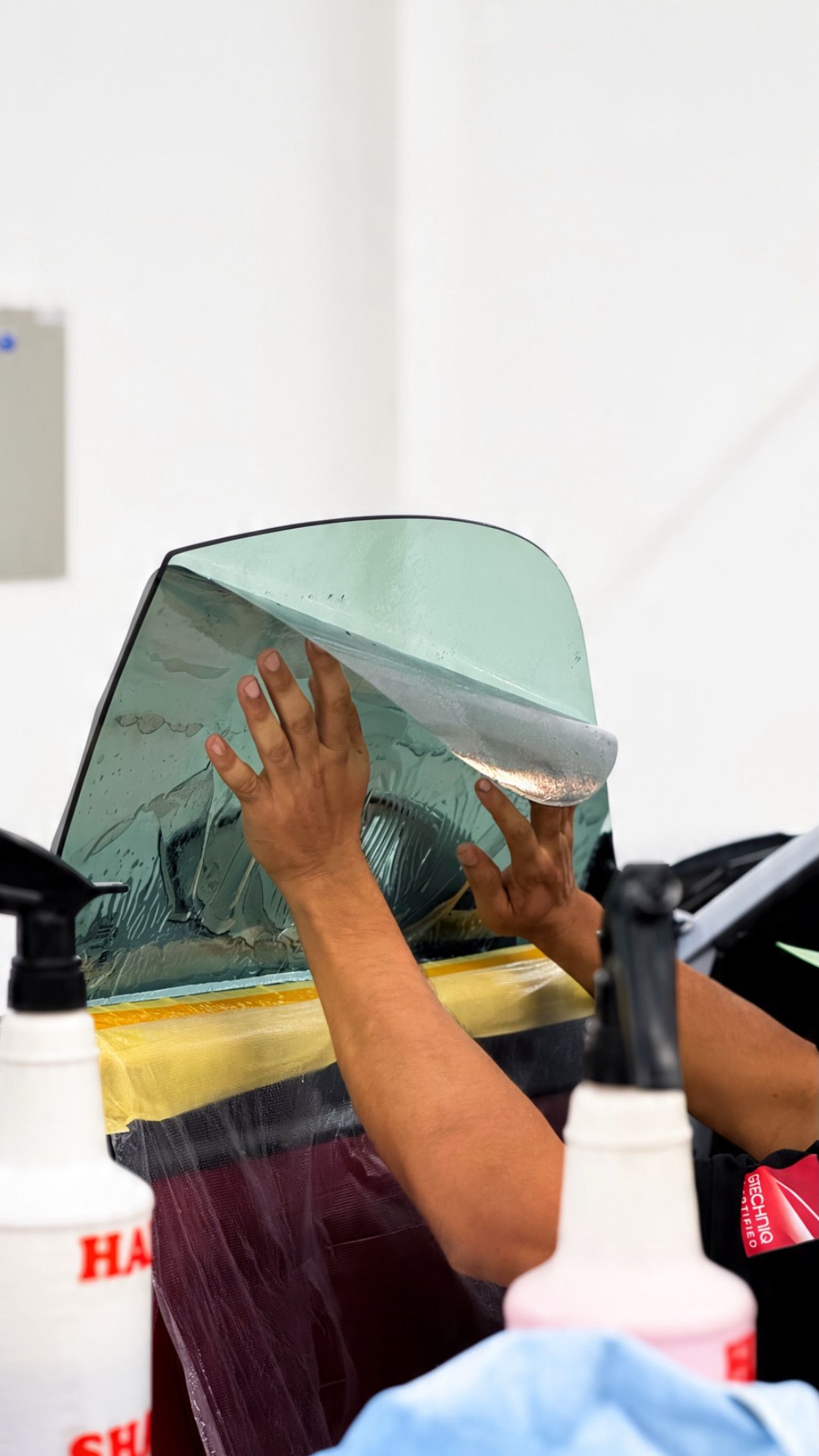
As widely reported in 2026, the UAE window tinting legal limit for private vehicles is generally up to 50% tint on the front side, rear side and rear windows, while the front windscreen must stay clear unless an official exemption is approved. Over-limit tint can mean an AED 1,500 fine, and in Dubai a vehicle release fee may also apply. Rules can change, so confirm the current requirement before installation. Within the limit, choose film on heat rejection, UV protection and clarity, not darkness alone.
Jump to section · 9 parts
- What is the legal window tint limit in the UAE?
- What do VLT and tint percentage mean?
- Does darker tint reject more heat?
- What types of window tint film are available?
- How do I choose the right window tint for my car?
- How does Apex Detail Studio install window tint?
- How much does window tinting cost in the UAE?
- What our window tint customers say
- Frequently asked questions
Key facts
- Legal limit (as widely reported, confirm current rules): generally up to 50% tint on side and rear windows of private vehicles.
- Windscreen: must stay clear unless an official exemption, usually medical, is approved.
- Penalty: over-limit tint can mean an AED 1,500 fine; in Dubai a vehicle release fee may apply.
- Heat: rejection depends on film construction, so a lighter ceramic film can outperform a darker dyed one.
- At Apex: we install premium ceramic window films at our Al Quoz studio.
Choosing tint for your car? WhatsApp us your model and the team will reply with film options that stay within the rules.
Window tint is close to essential in the UAE. Summer cabin temperatures climb fast in an open car park, the sun is low and harsh on morning and evening commutes, and UV exposure through side glass adds up for anyone who spends hours behind the wheel.
But tint is also regulated, and the cheapest dark film is rarely the coolest. This guide gives you the broad picture: the legal limits in summary, how heat rejection actually works, the main film types and how to choose. For the detailed checklist of rules to confirm before installation, read our UAE car tint rules guide.
What is the legal window tint limit in the UAE?
As widely reported in 2026, private vehicles in the UAE can generally have tint of up to 50% on the front side windows, rear side windows and rear windscreen. The front windscreen must stay clear unless the owner has an official exemption, which is usually granted for medical reasons.
| Glass | General position for private vehicles (confirm current rules) |
|---|---|
| Front windscreen | Must stay clear unless an official exemption is approved |
| Front side windows | Generally up to 50% tint |
| Rear side windows | Generally up to 50% tint |
| Rear windscreen | Generally up to 50% tint |
Over-limit tint can mean an AED 1,500 fine, and in Dubai a vehicle release fee may apply. Rules, measurement methods and exemptions can change, so confirm the current position with the authorities. The UAE government’s road safety page is a good starting point, and our tint rules checklist lists what to confirm. For the windscreen specifically, see can a windscreen be tinted in Dubai.
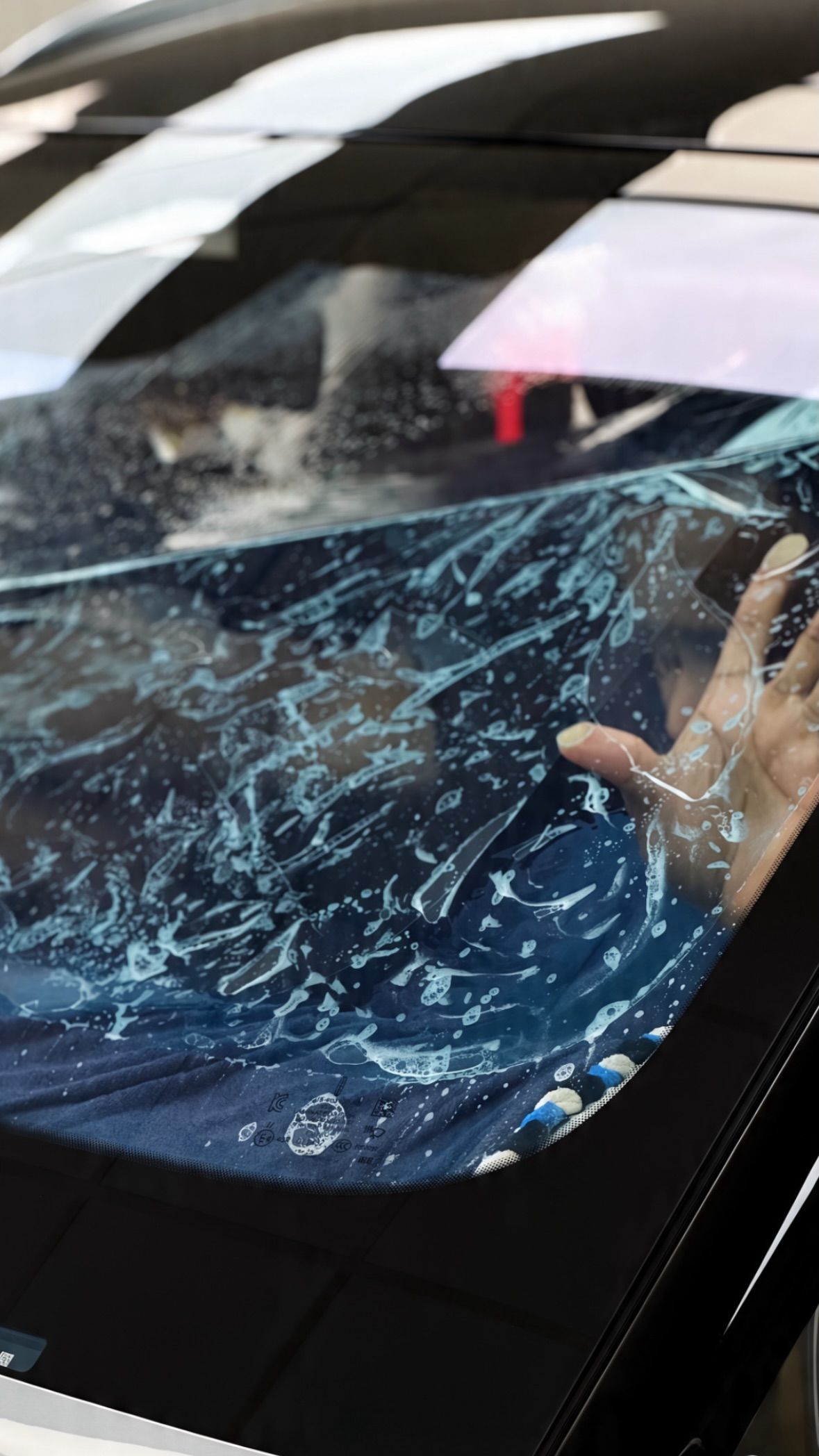
Get a window tint estimate for your car
Send your model and a few photos on WhatsApp and the team will reply with a quote.
What do VLT and tint percentage mean?
VLT, or visible light transmission, is the percentage of visible light that passes through the glass and film together. A lower VLT means a darker window.
Tint percentages are sometimes quoted differently by different sellers, and factory glass already has its own slight tint before any film is added. Ask your installer to show the film’s VLT and how the finished window relates to the legal limit. Our guide to what VLT means in car window tinting explains this in more detail.
Does darker tint reject more heat?
Not necessarily. Heat rejection depends on the film’s construction, not its shade. Much of the sun’s heat comes from infrared energy, which you cannot see, so a light film built to block infrared can keep a cabin cooler than a darker film that only blocks visible light.
When comparing films, look at the manufacturer’s published figures for total solar energy rejected and infrared rejection, not only the shade. Our article on heat rejection vs tint darkness explains each figure, and does car window tint block UV rays covers UV protection.
What types of window tint film are available?
The main types are dyed, metallised, carbon and ceramic films, and they differ in heat rejection, clarity, signal interference and lifespan.
| Film type | How it works | Strengths | Weaknesses |
|---|---|---|---|
| Dyed | Dye absorbs visible light | Low cost, dark look | Lower heat rejection, can fade or turn purple over time |
| Metallised | Metal particles reflect heat | Good heat rejection, durable | Can interfere with phone, GPS and toll tag signals; shiny look |
| Carbon | Carbon particles absorb infrared | Matte look, better heat rejection than dyed, no signal issues | Usually less infrared rejection than good ceramic films |
| Ceramic | Ceramic particles block infrared | High heat rejection at lighter shades, clear view, no signal interference | Higher price |
Our comparison of ceramic tint vs dyed tint goes further, and why tint bubbles, peels or turns purple shows what happens when cheap film ages.
How do I choose the right window tint for my car?
Start by choosing a shade within the legal limit, then pick the film with the best heat rejection and clarity you can afford, and check the warranty.
- Confirm the legal limit for your vehicle and glass positions.
- Decide what matters most: heat, glare, privacy, UV or night visibility.
- Compare heat rejection figures, not just darkness.
- Check signal compatibility if you rely on phone, GPS or Salik tag reception.
- Ask about the warranty and what it covers.
- Confirm the installer’s process, including cutting, heat-shaping and edge finishing.
If you are torn on shade, privacy vs visibility and tint darkness and night visibility help. EV owners should read the best tint for Tesla and electric vehicles, and owners with large glass roofs should see panoramic roof tinting.
How does Apex Detail Studio install window tint?
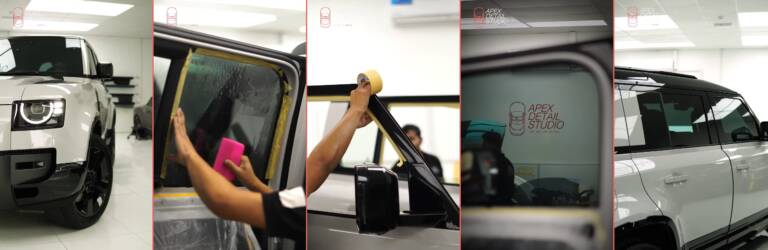
We install premium ceramic window films in a clean, controlled bay at our Al Quoz studio, with the same process on every car.
- Consultation. We discuss heat, glare, privacy and the legal limit for your car, and recommend a film and shade.
- Glass inspection. We check for chips, old film, adhesive residue and damaged seals.
- Preparation. Glass is deep cleaned inside and out so no dust is trapped under the film.
- Cutting and shaping. Film is cut to the glass and heat-shaped to fit curved windows.
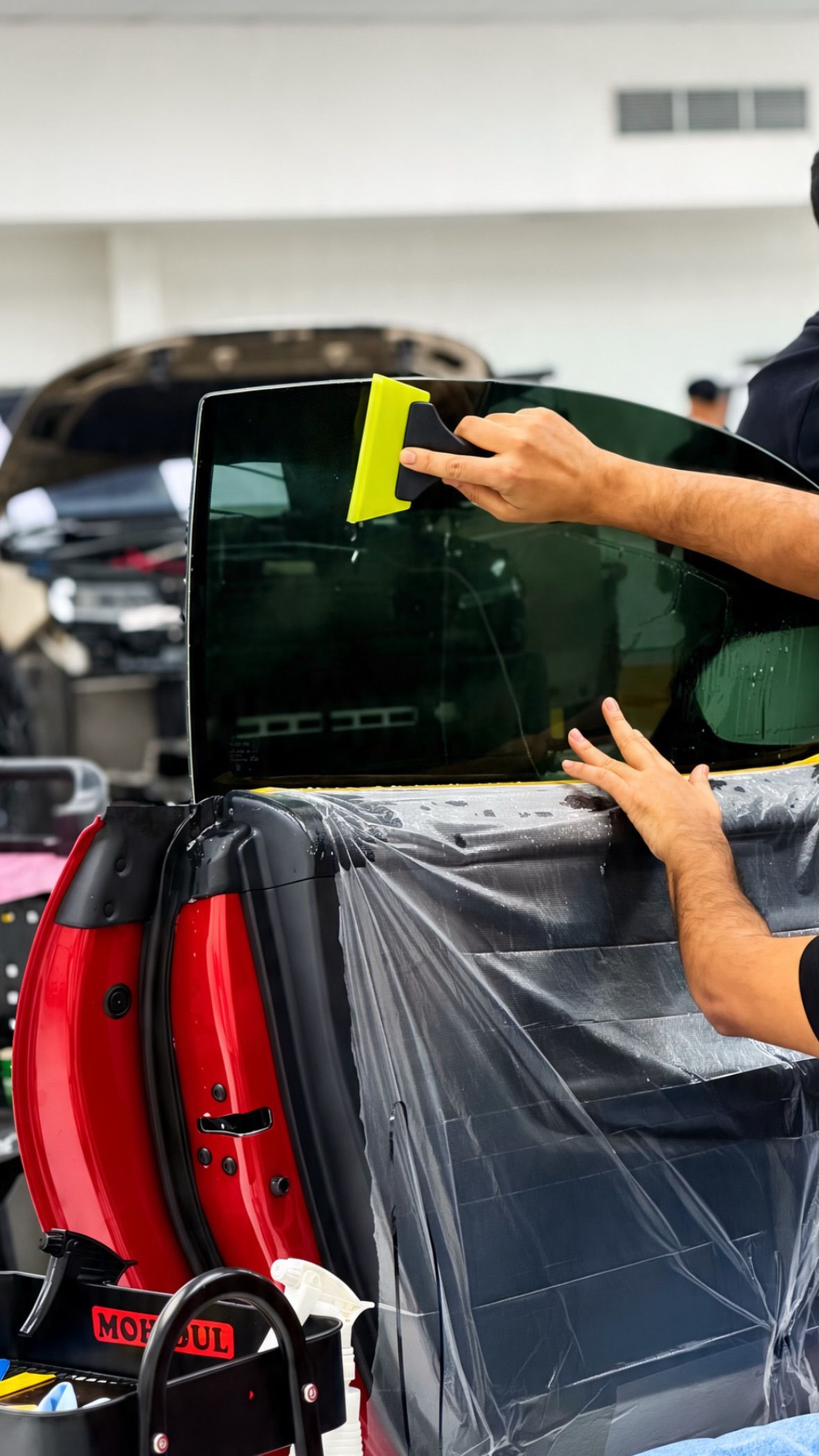
- Installation. Film is applied from inside the car and squeegeed to remove water and air.
- Final check and aftercare. We check edges and clarity and explain how long to keep the windows up.
Our guide to premium ceramic tint vs premium ceramic tint compares the ceramic options we fit most often.
How much does window tinting cost in the UAE?
Window tinting cost depends on the film type, the number and size of windows and the vehicle.
Apex quotes tint per car and film rather than publishing one price. Read our window tinting cost guide for what drives the price, and look after the new film with our tint aftercare guide.
What our window tint customers say
Frequently asked questions
What is the legal tint percentage in the UAE?
As widely reported in 2026, private vehicles can generally have up to 50% tint on the front side, rear side and rear windows. The windscreen must stay clear unless an official exemption is approved. Confirm the current rules before installation, because they can change.
Can I tint my front windscreen in the UAE?
Generally no. The front windscreen must stay clear unless an official exemption, usually medical, is approved. Our guide on whether a windscreen can be tinted in Dubai explains more.
What is the fine for illegal tint in the UAE?
Over-limit tint can mean an AED 1,500 fine, and in Dubai a vehicle release fee may also apply. Check current penalties with the authorities, as they can change.
Does darker tint keep the car cooler?
Not always. Heat rejection depends on the film’s construction. A lighter ceramic film that blocks infrared can keep the cabin cooler than a darker dyed film.
Which tint film is best for the UAE heat?
Ceramic films usually offer the best balance of heat rejection, clarity and no signal interference. Compare the manufacturer’s published heat rejection figures and warranty, not just the shade.
How do I get a window tint quote?
Send your make, model and year on WhatsApp. We will recommend a premium ceramic film and shade within the rules and confirm the price.